Aurora. Part 5. A workshop on my own engine
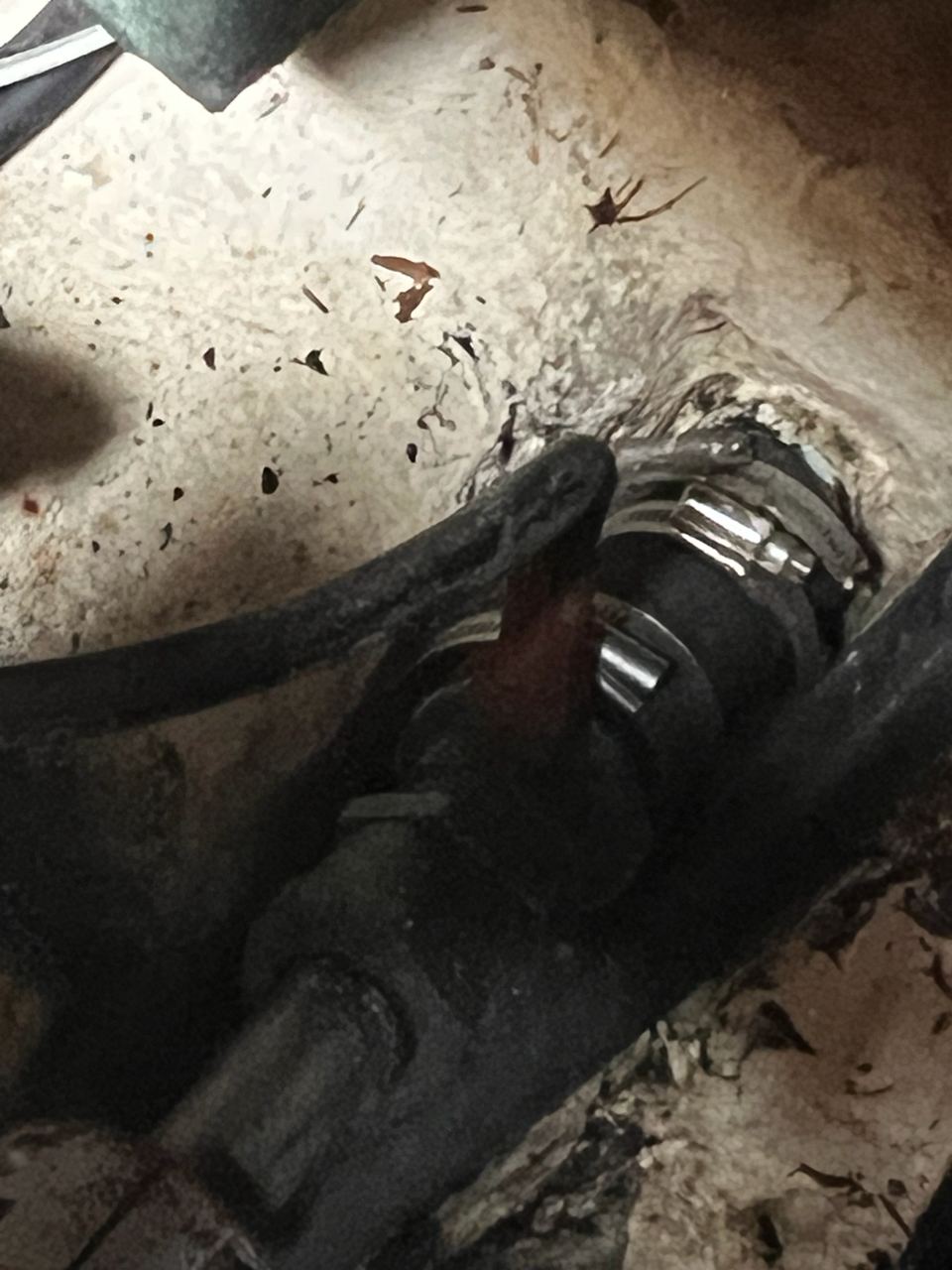
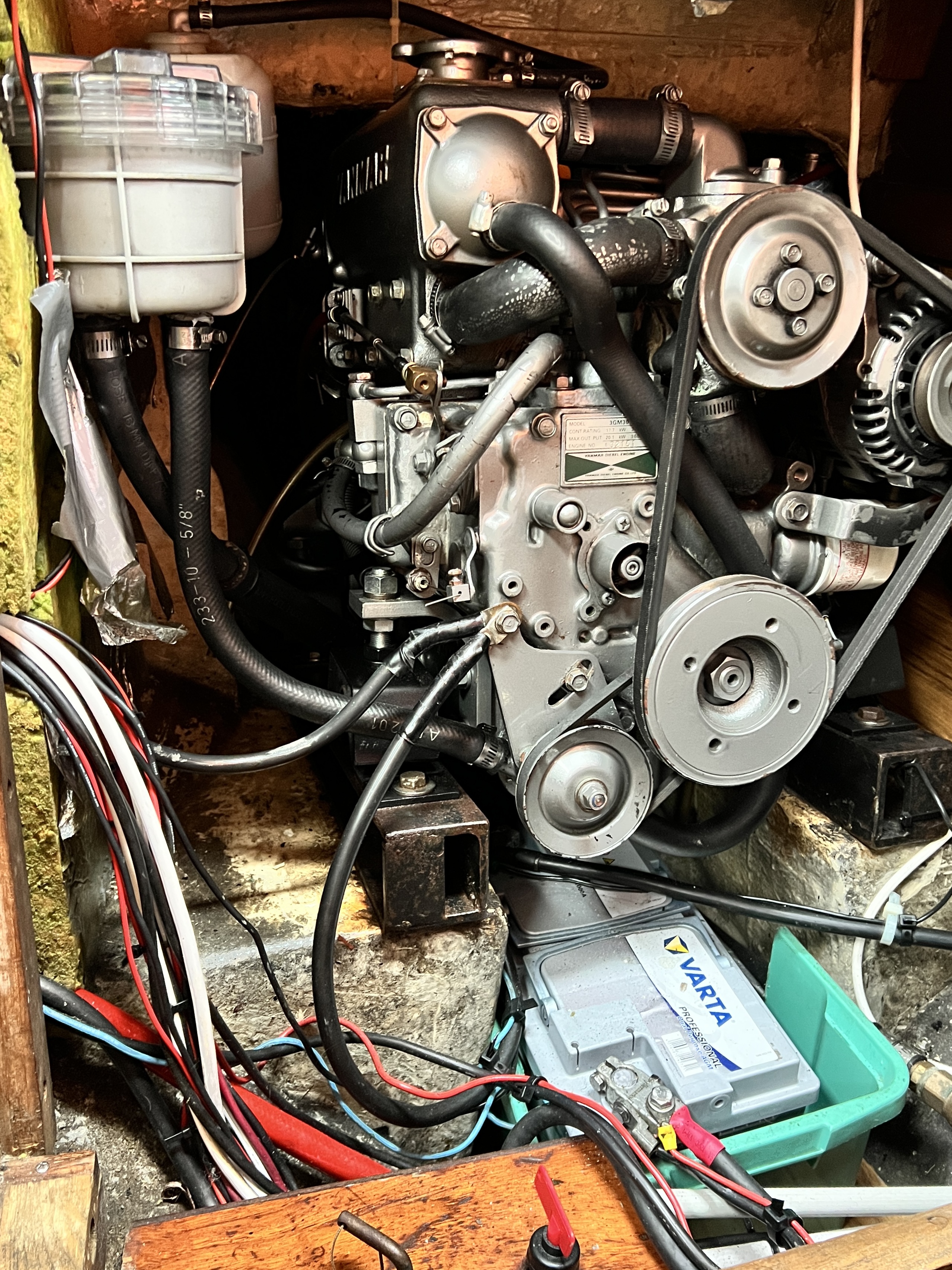
Grisha and I had only just relaxed after berthing in Kiel when he noticed a strong smell of hot diesel. We lifted the cabin sole boards and started looking for the leak.
Workshop / experience of your boats
How to find the cause, disassemble the assembly and check the result. Stories of work that lasted from one weekend to several seasons.
Keel joint: a story of three seasons ↗ Boat navigation
Select a node from the diagram or list. Related works will appear below.
In the workshop
Materials and work
Select material or seasonal work - separately or together with the boat assembly.
Search by work
The node is selected according to its purpose. The clew winch belongs to the rigging, the anchor winch to the deck. Kingstons and body entries - to the body; the fuel tank is to the engine, the water tank is to the water supply. The leak refers to the node where it originated.
The tree shows the material and carpentry, the season shows preparation and conservation. They complement the node categories. If there are several different works in a publication, all relevant nodes are marked.
From the first symptom to the finished repair: related posts arranged in order.

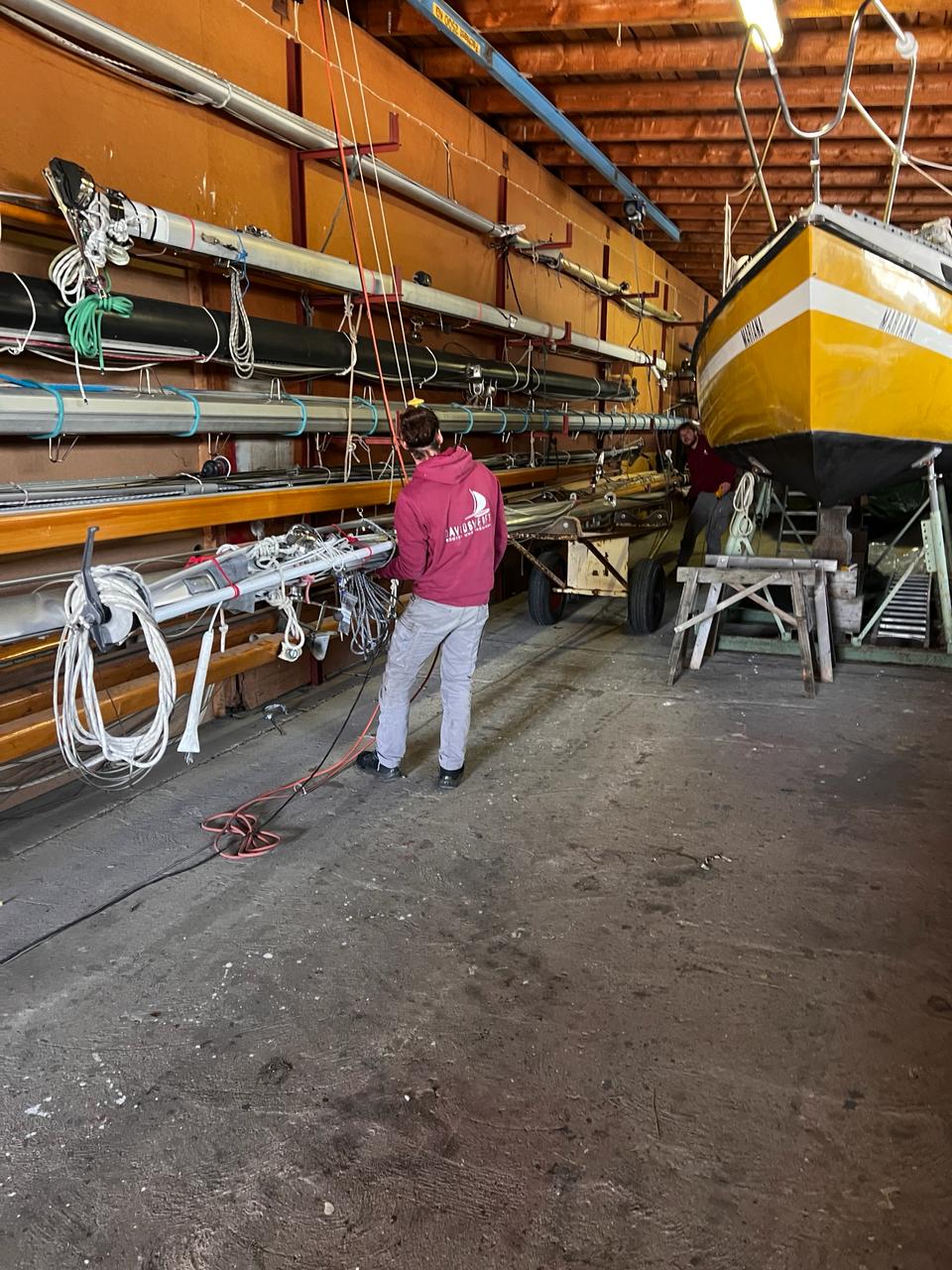
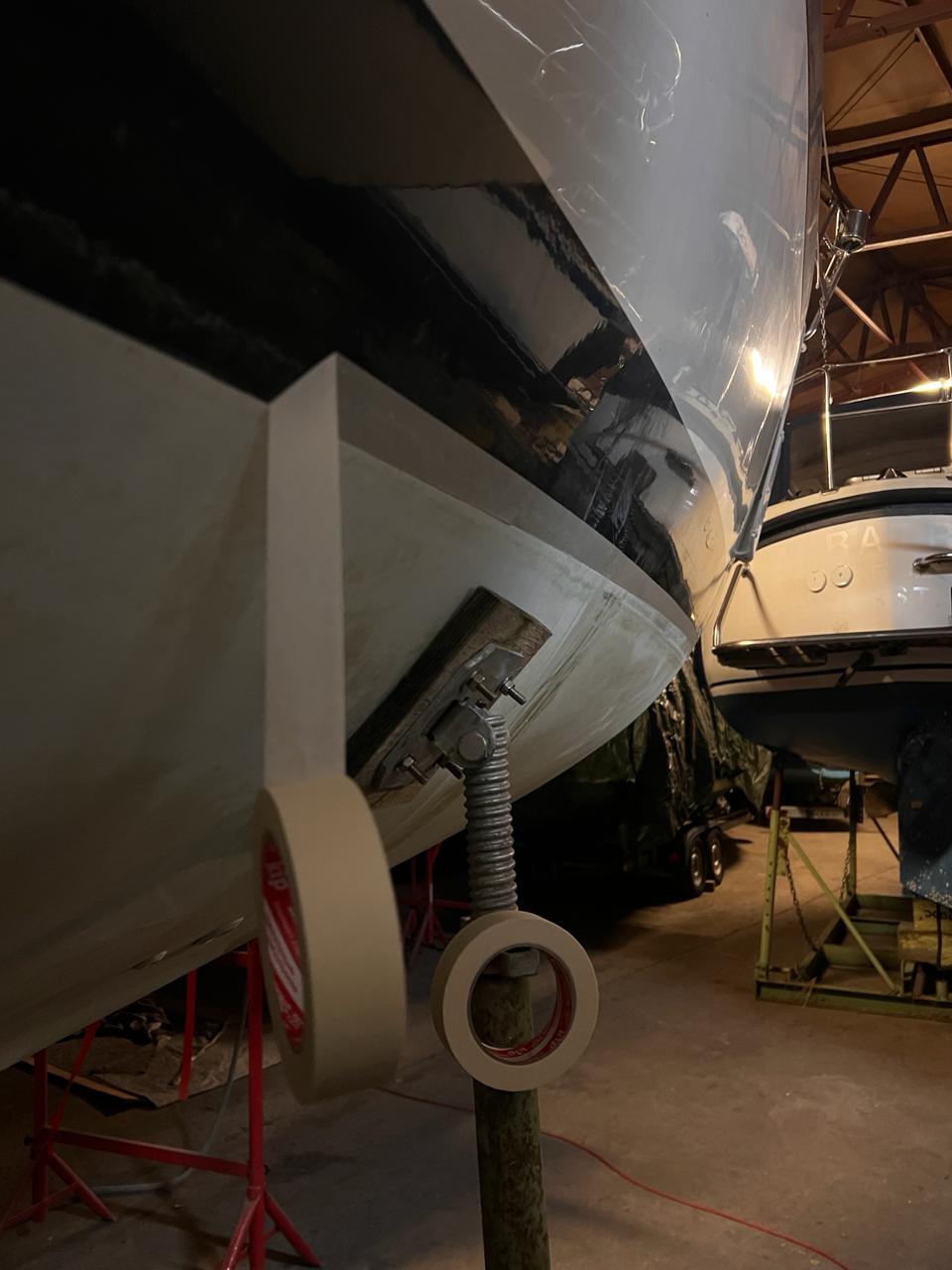
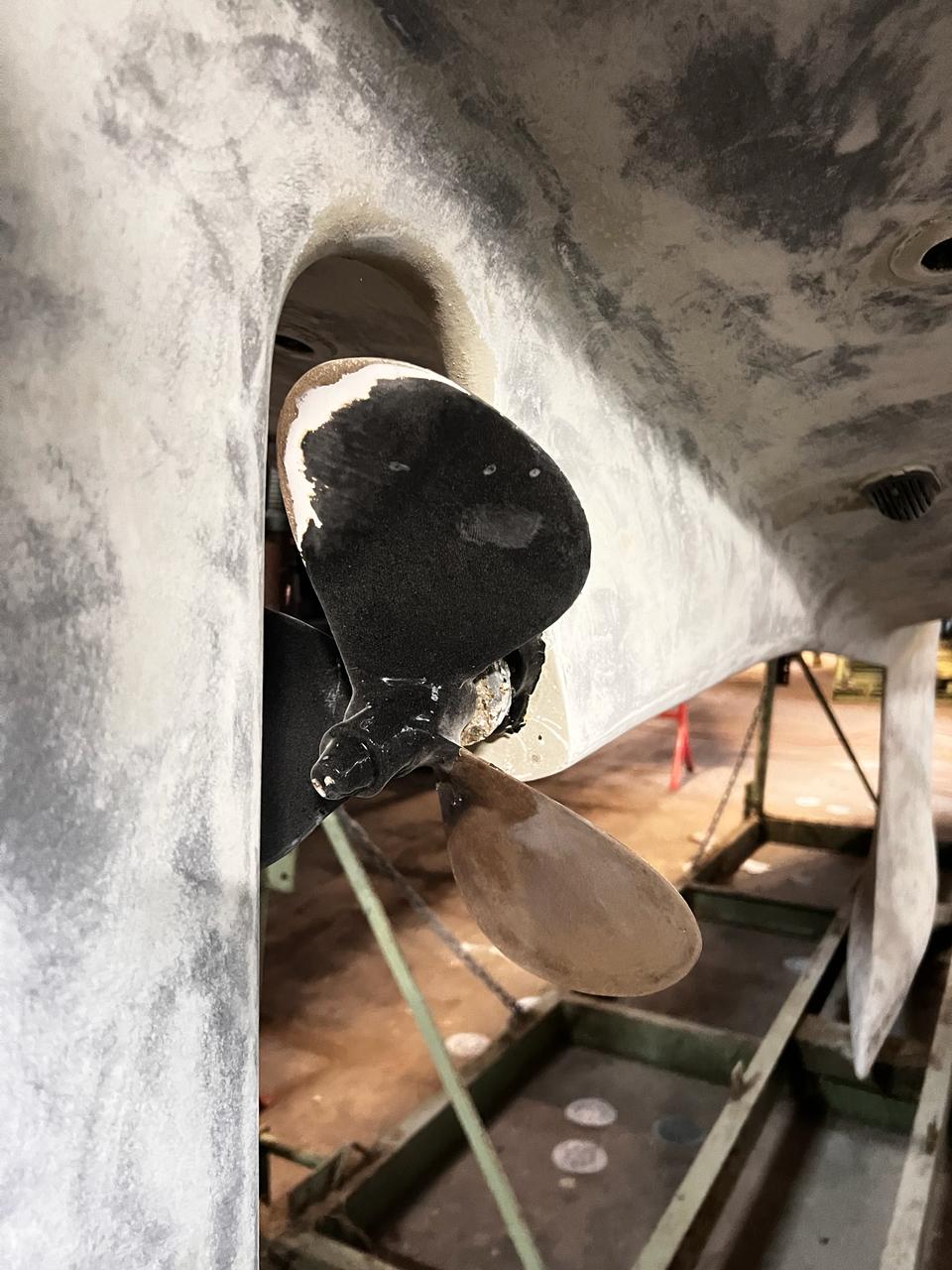
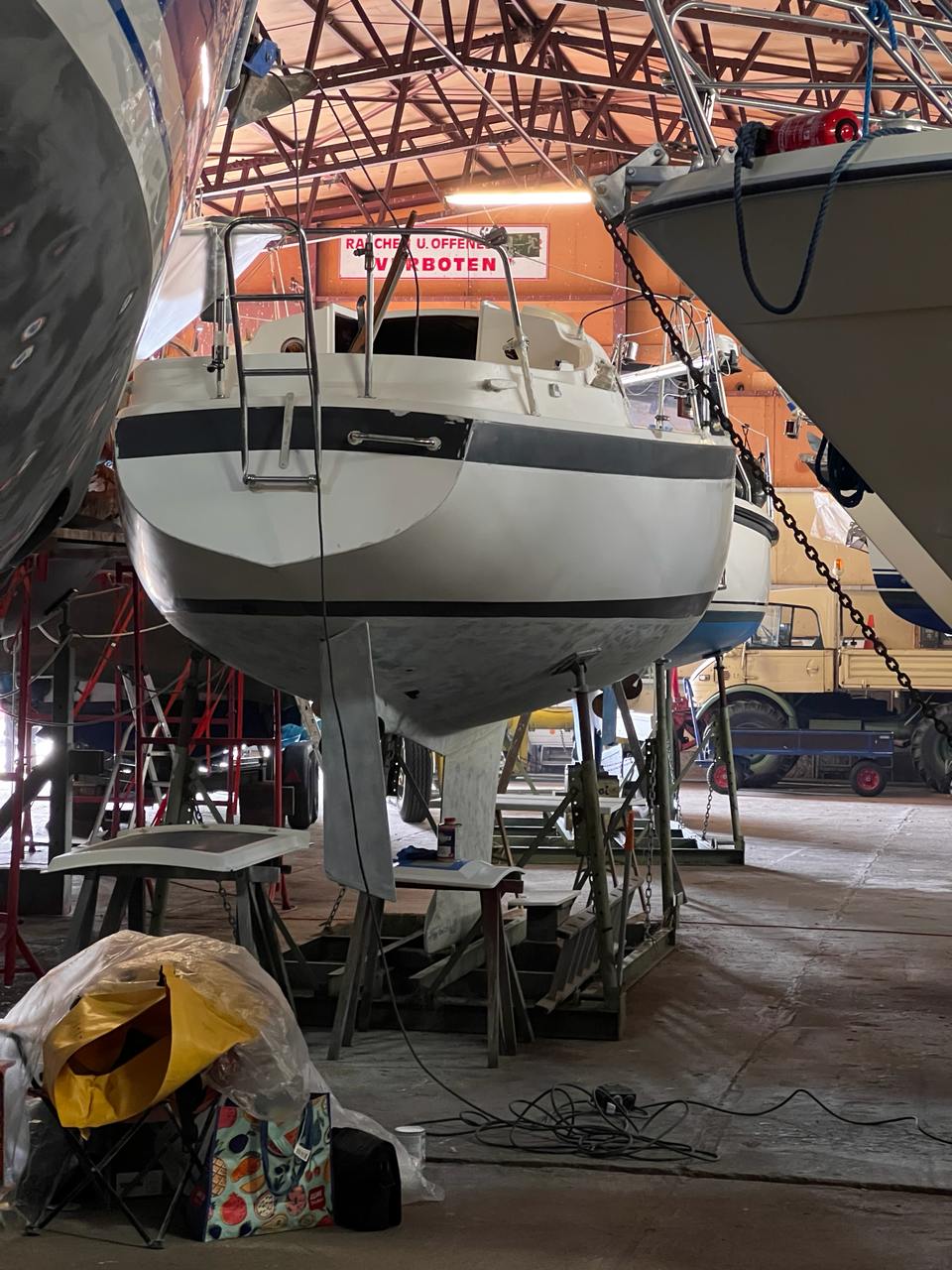
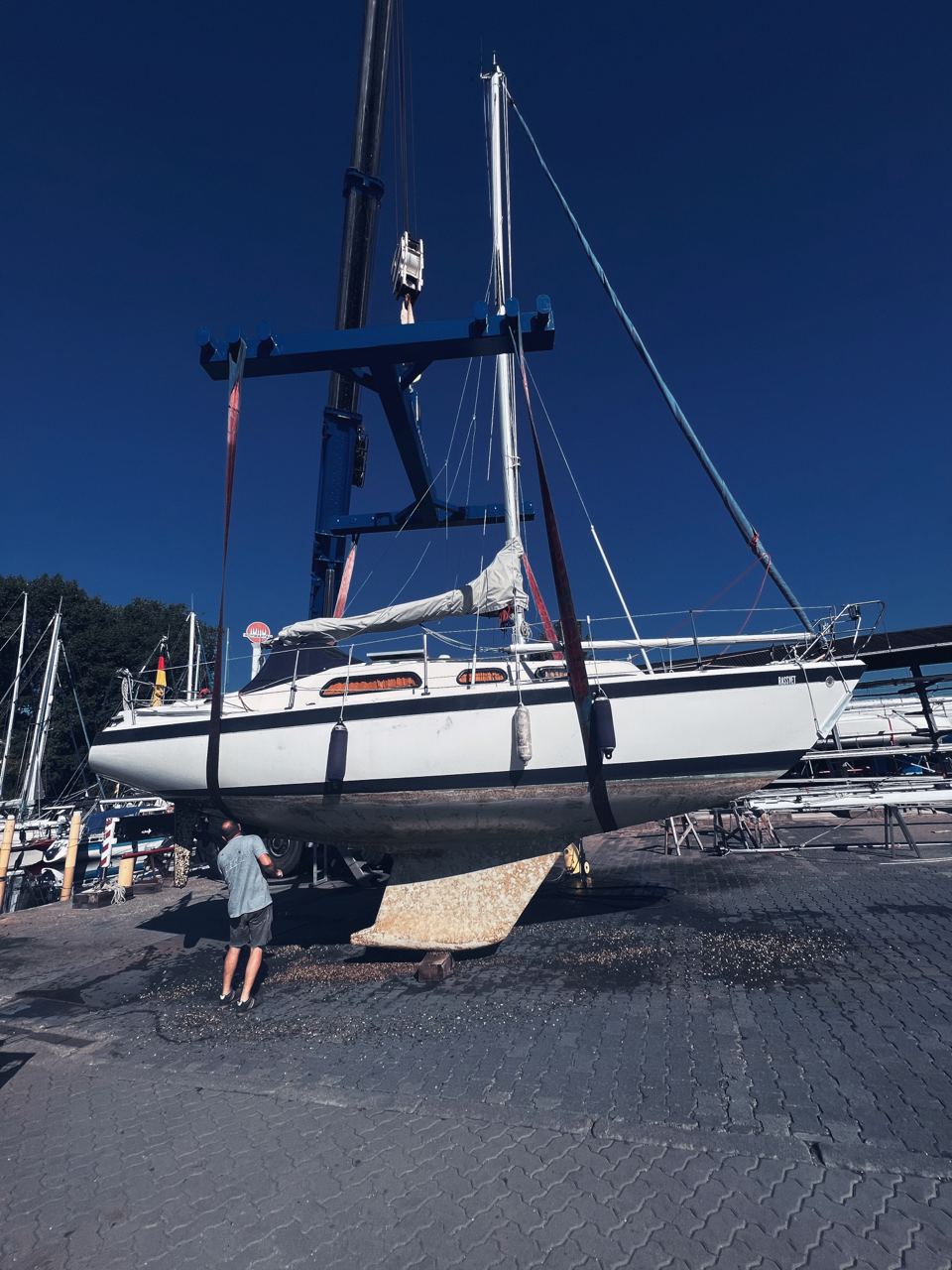
Over the winter the yard in my marina was to service the engine, replace the shaft seal and the shrouds, and fit a bow platform and a chain hawse. The spring plan was simple: launch in the morning, step the mast by lunchtime and leave for Kiel straight away.
I finished the anode, the transducers and the cut edge under the hawse myself. The boat did not leak after launching, but the new shrouds turned out too long: the yard admitted its mistake, and the mast went up only two weeks later. After work on critical systems the boat needs a shake-down pause in the marina, not an immediate long passage.

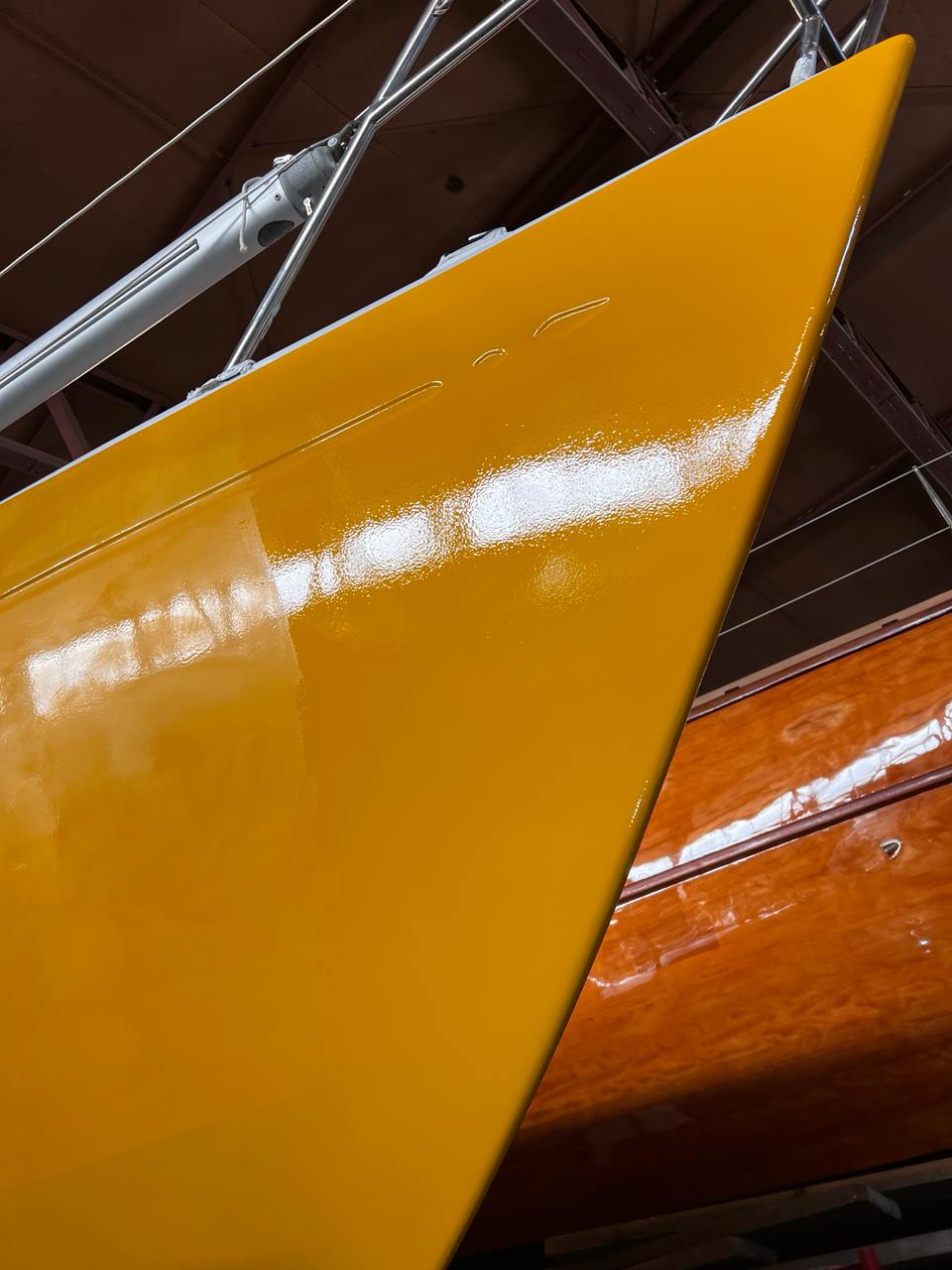
From old gelcoat and scratches to yellow sides, white deck and new non-slip surface. Two months of work in the hangar - with mistakes, shopping lists and joy from the result.
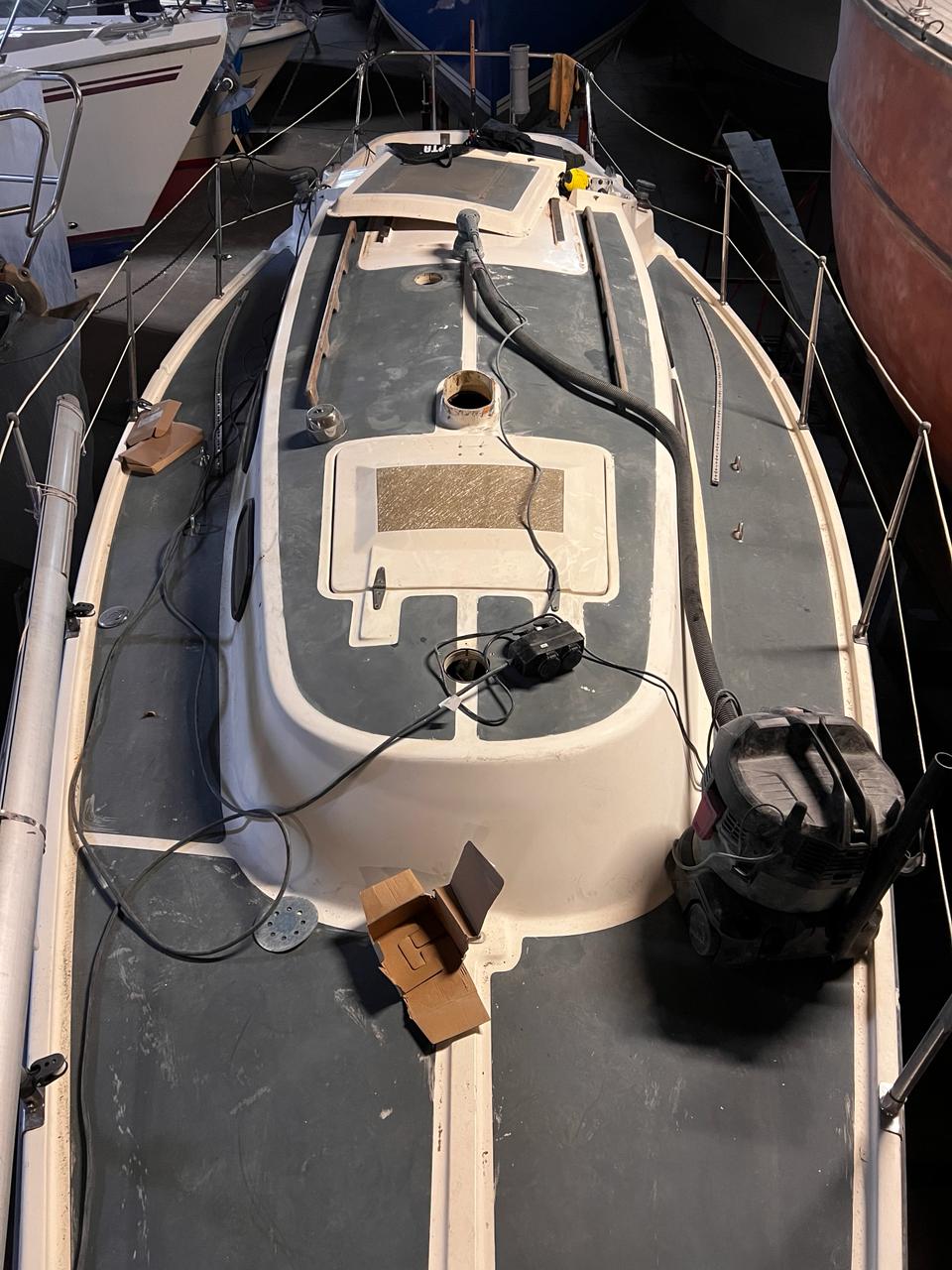
In the spring of 2025, Rassvet received yellow sides, a white deck, KiwiGrip and an updated bottom coating. After a season, we had to return to painting: correct the waterline and restore areas after new work on the hull.

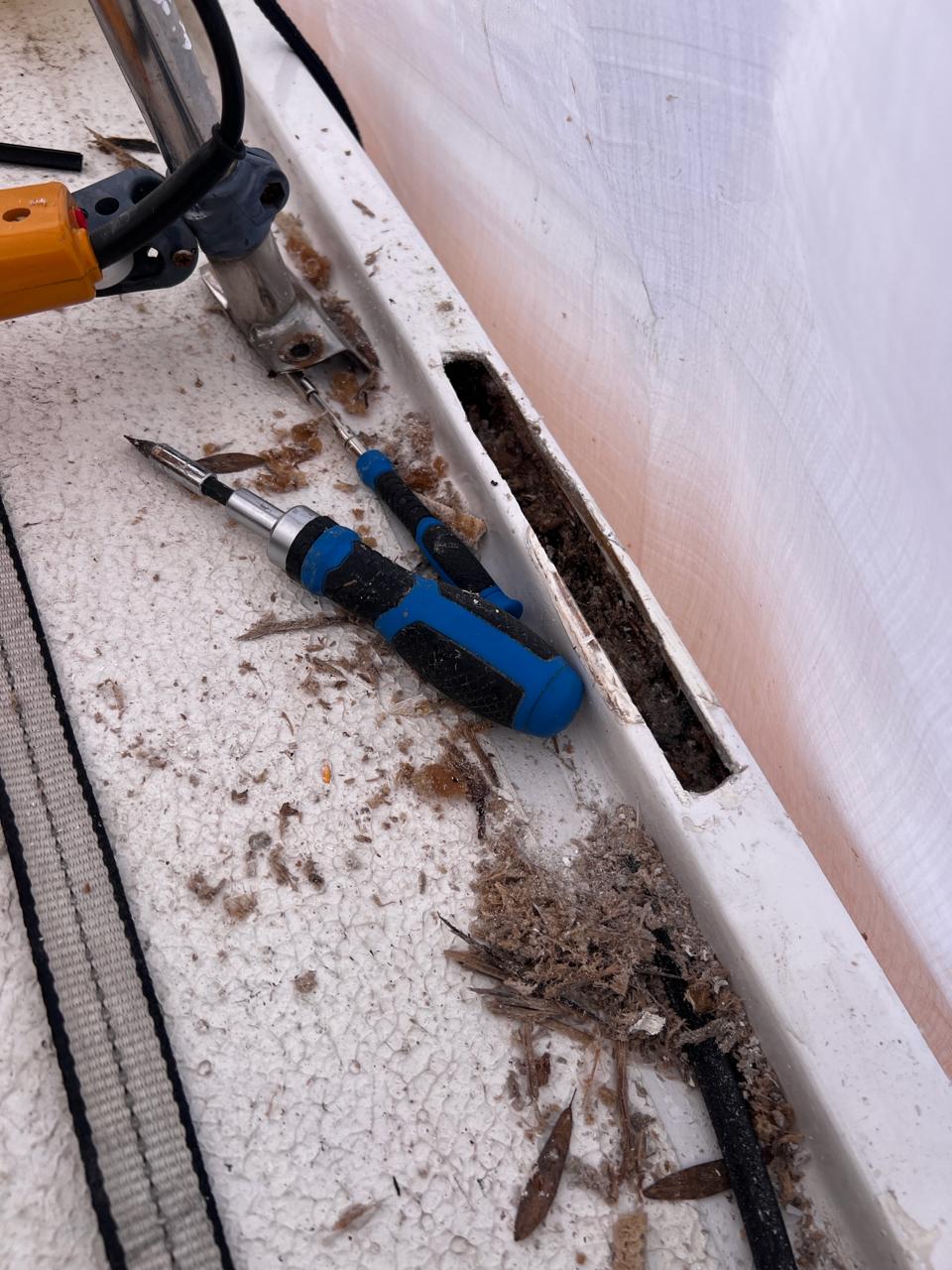
The rack torn out on Bornholm received temporary fastening. A year later, a repeated breakdown opened the wet mortgages and turned into a rebuild of the side.
Wet filler removed, bead refilled and painted. The rack is secured with through bolts from inside the wardroom.

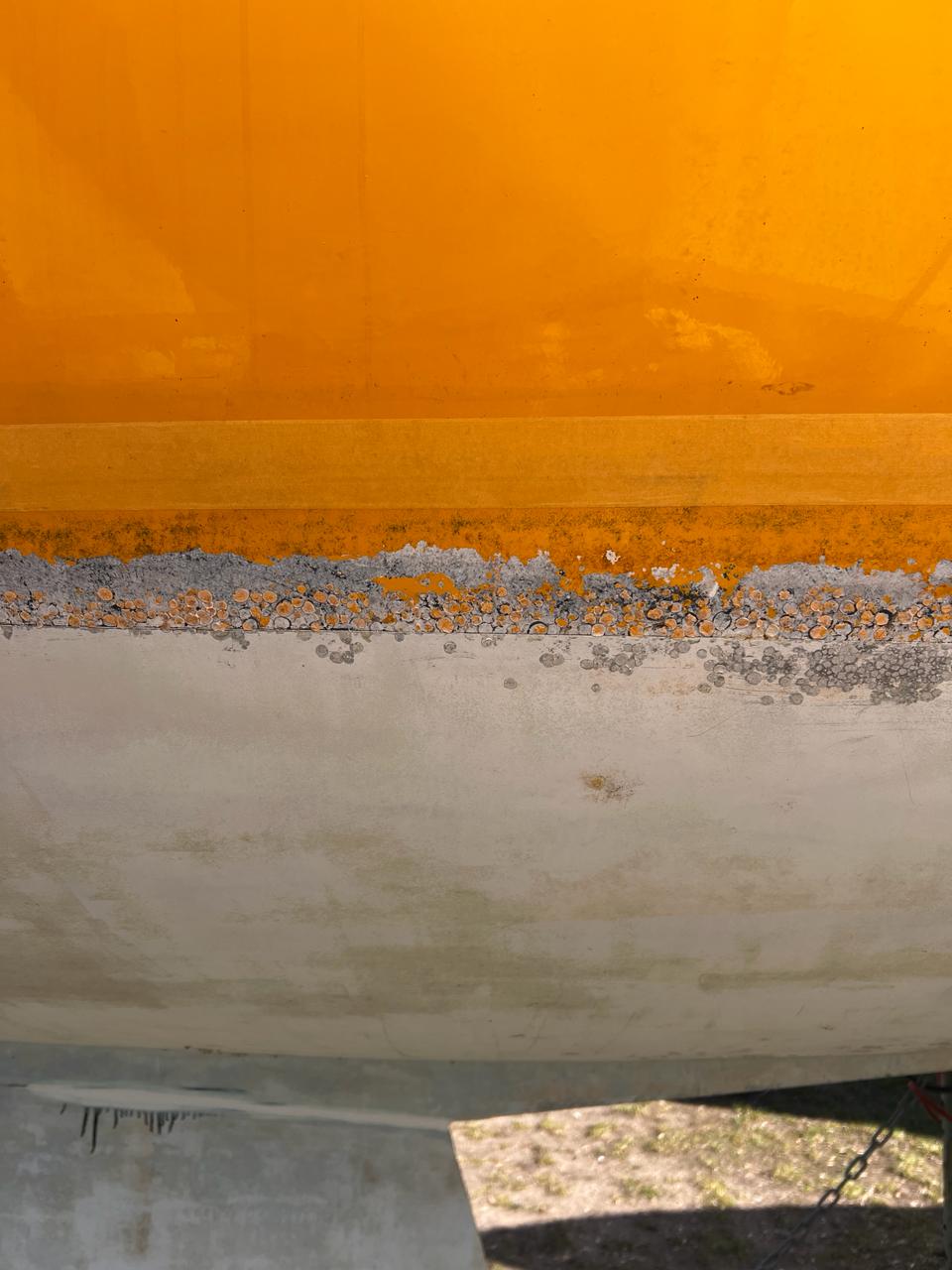
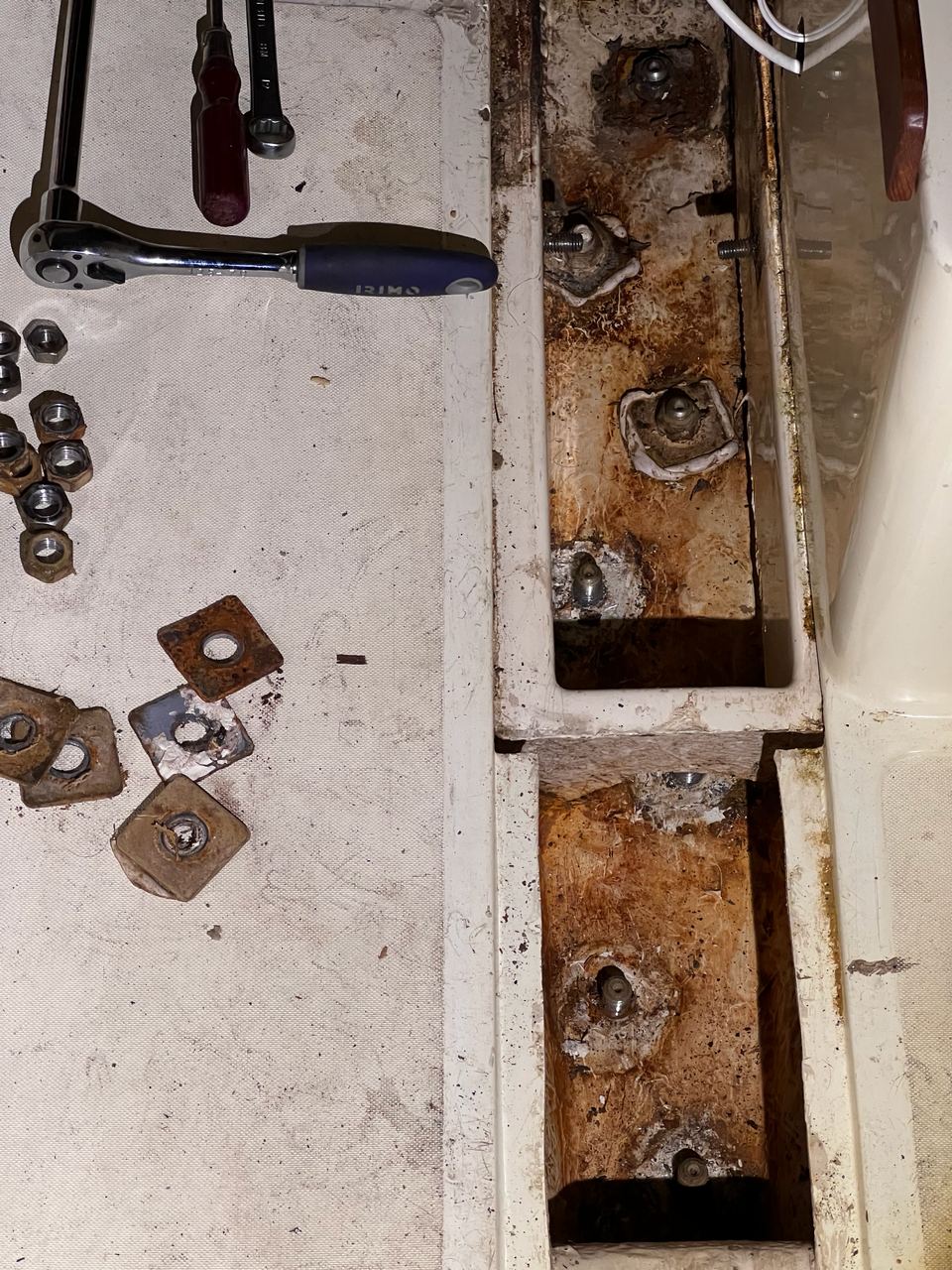
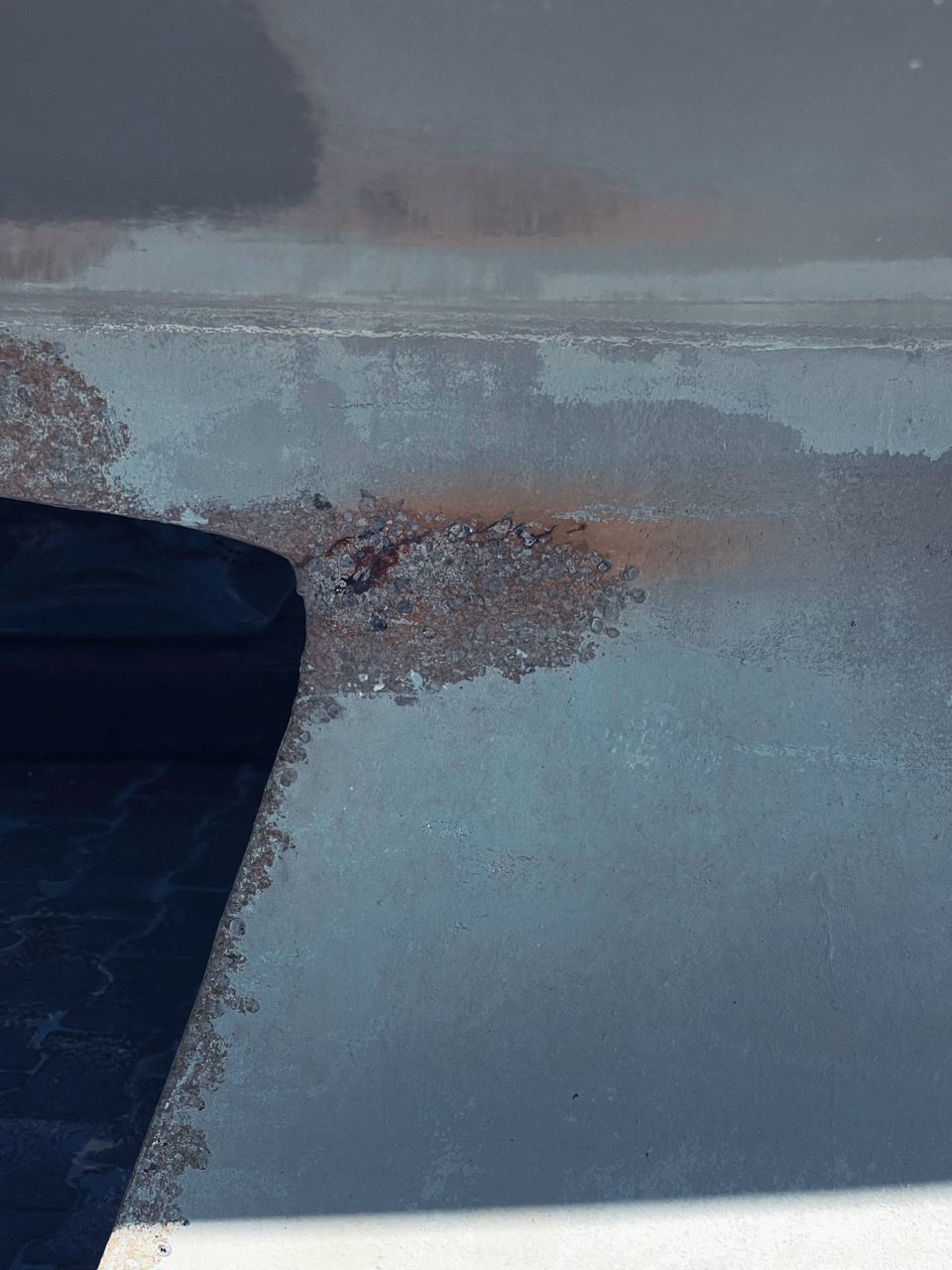
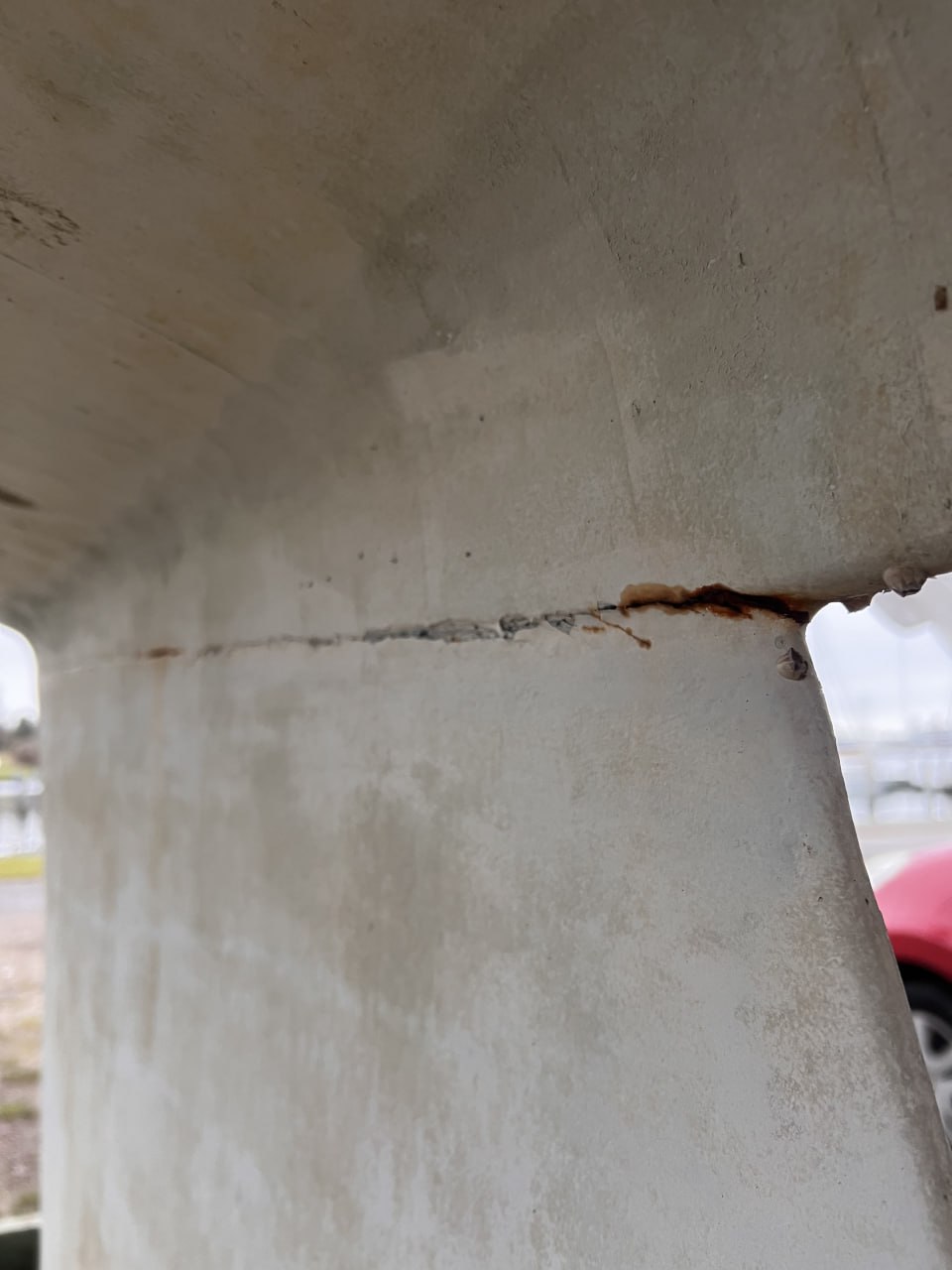
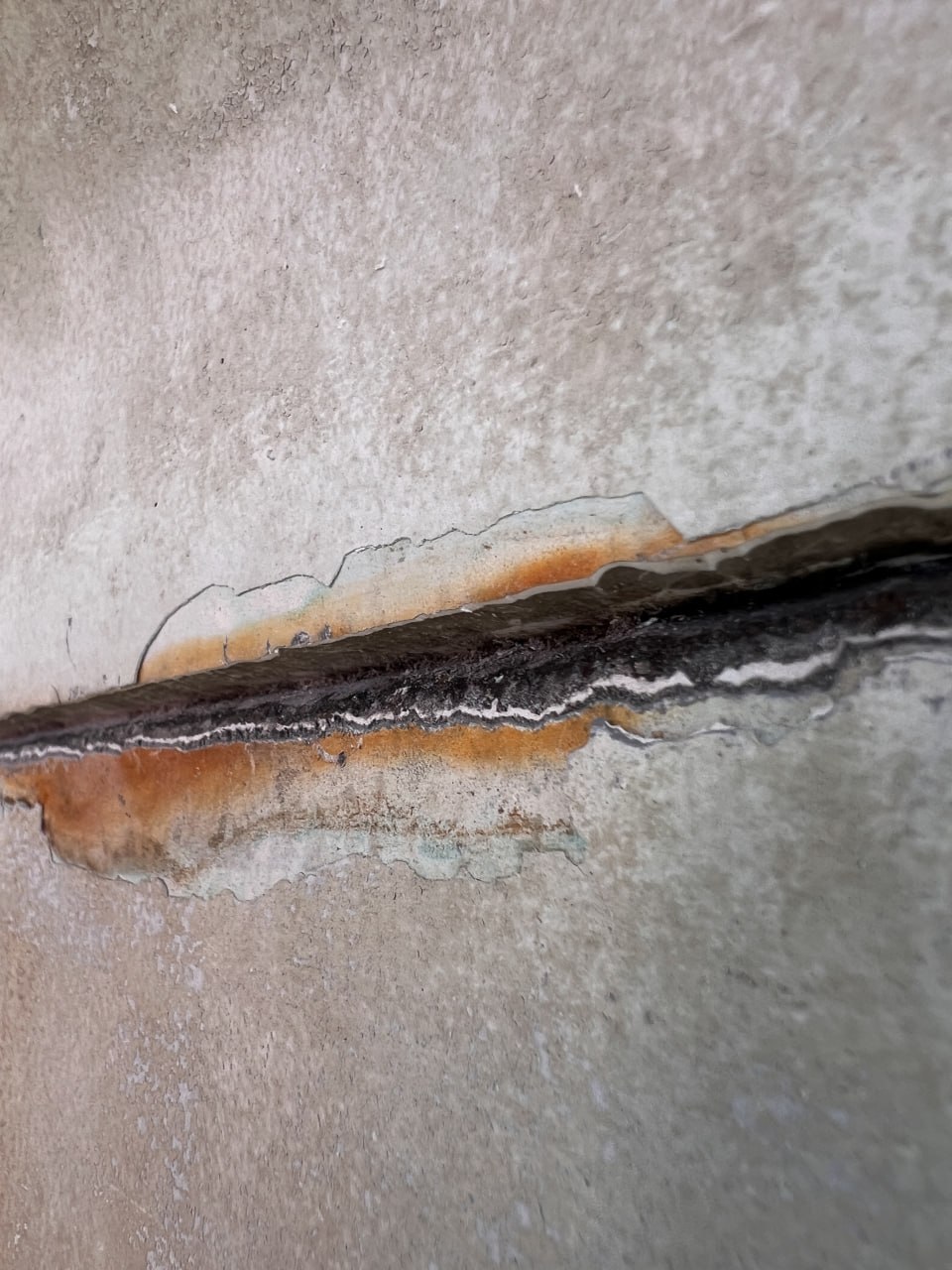
Rusty leaks at the junction of the keel and the hull led first to repairs at the shipyard, and then to independent maintenance of the seam.
In the spring of 2026, the seam was serviced independently. In the last entry, the author leaves the result under observation until the next season.

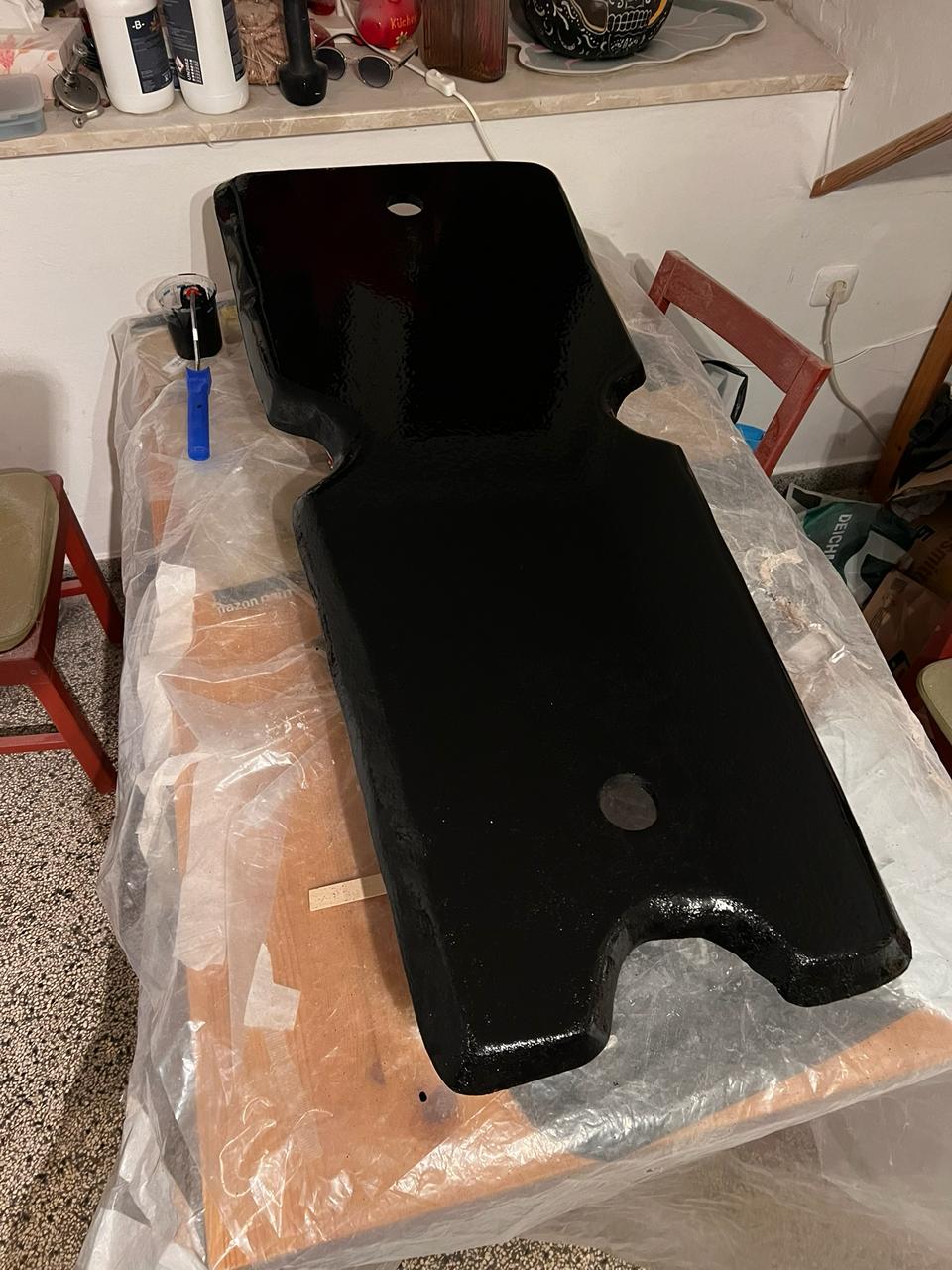
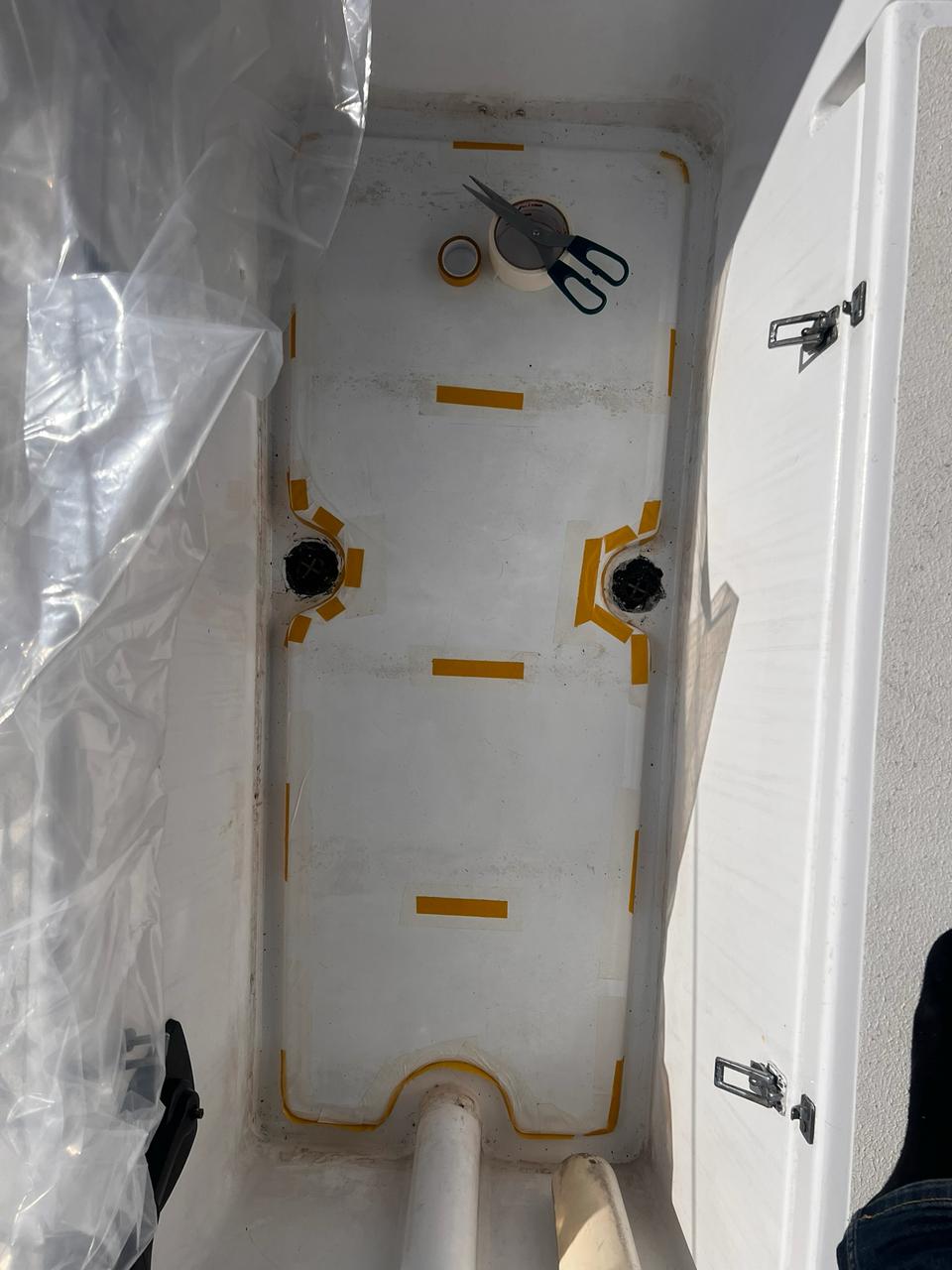
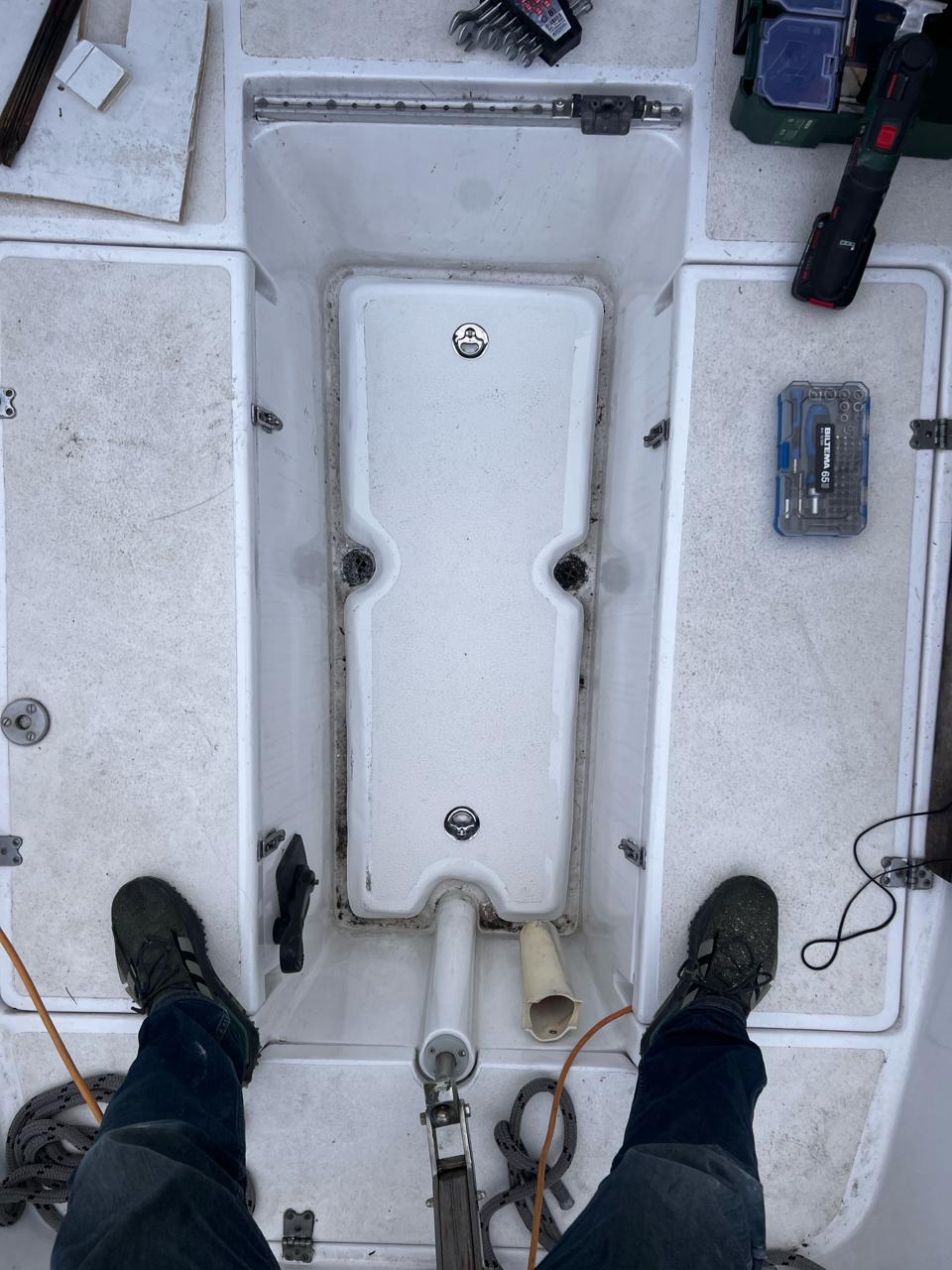
A stern tube seal leak led to the fabrication of a new removable cockpit cover. Matrix, plywood, fiberglass, painting and fittings - in two consecutive entries.
The new cover is installed with locks and seal. The technological hole provides access to the oil seal and gearbox.

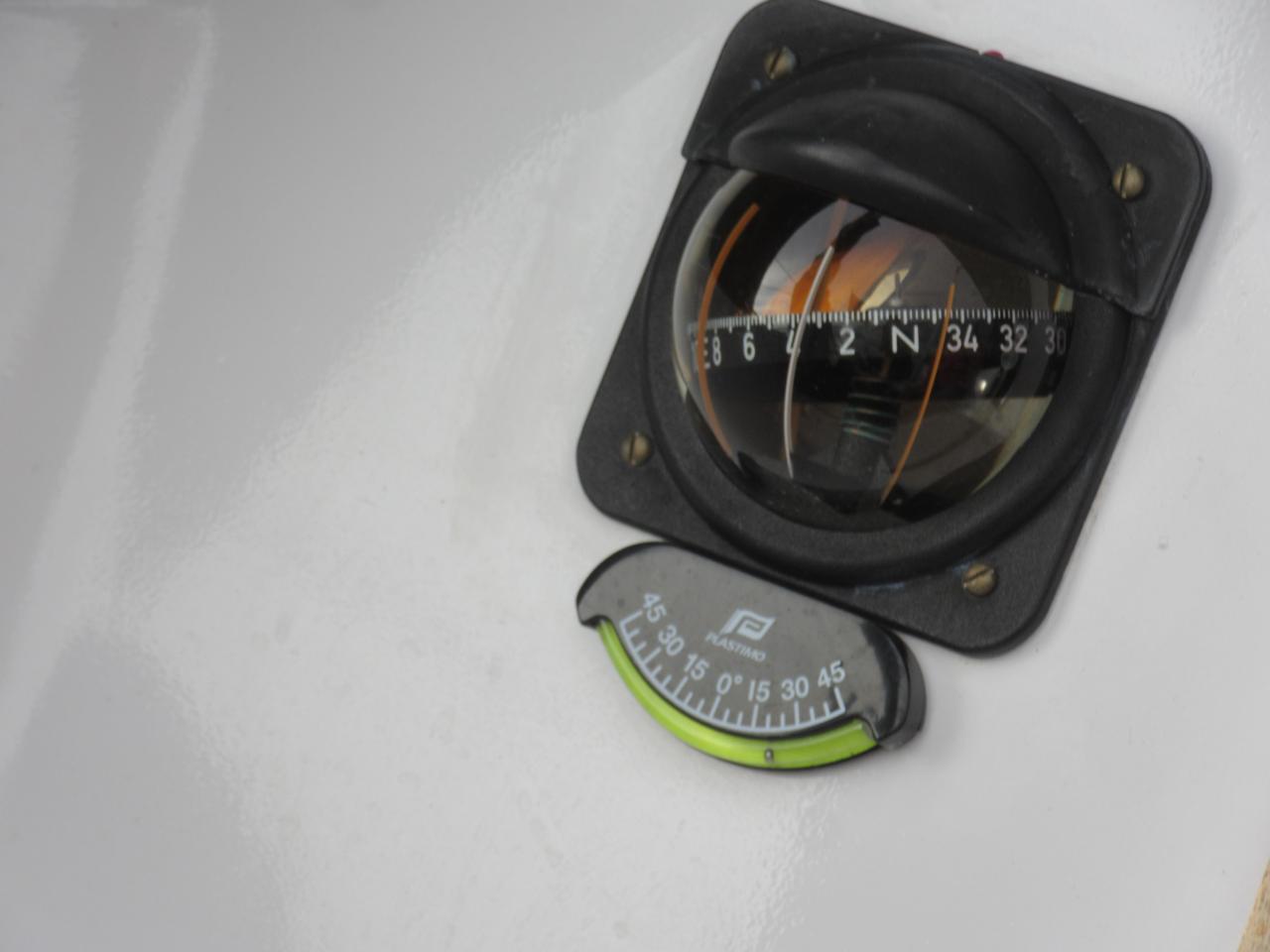
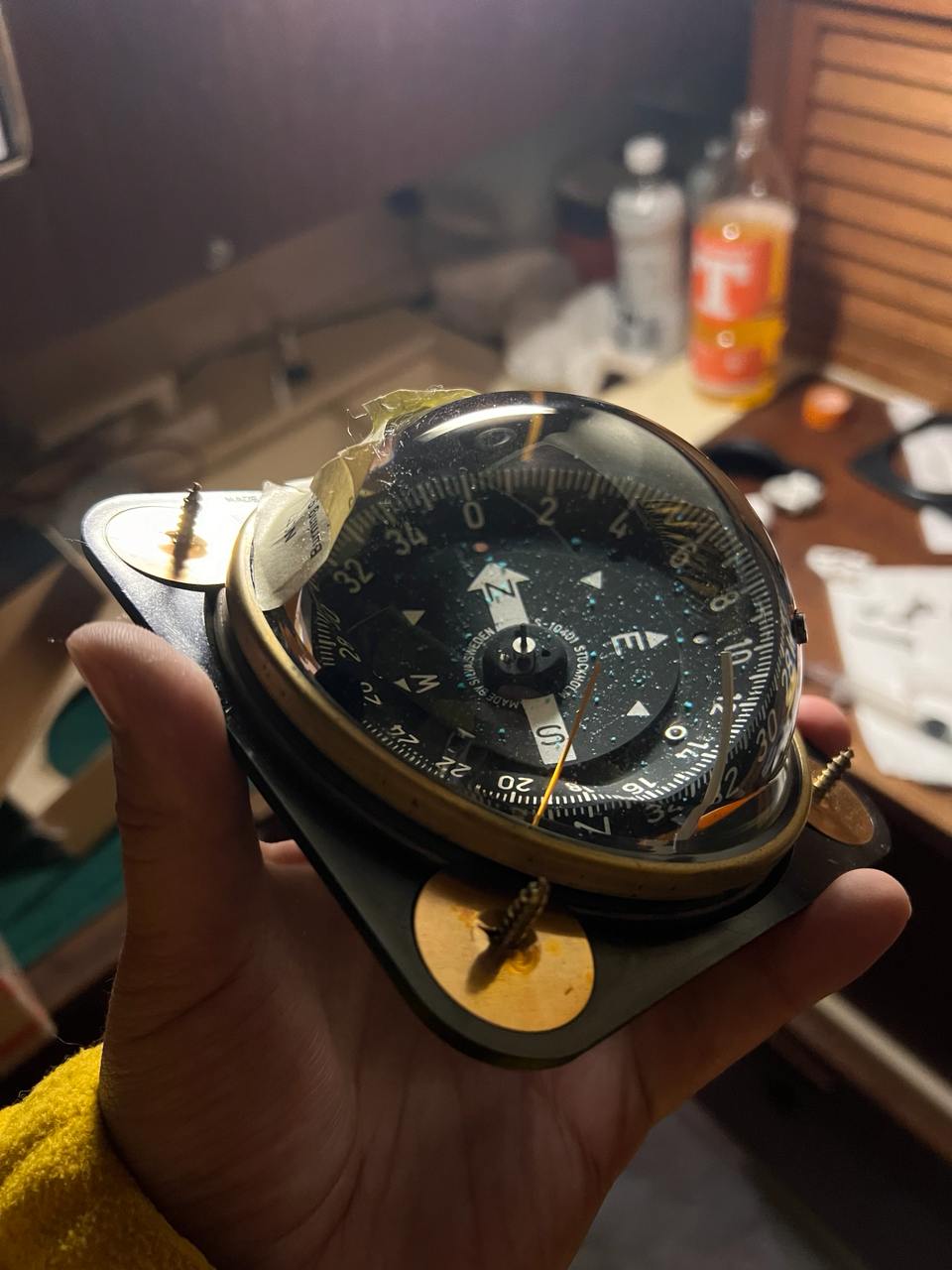
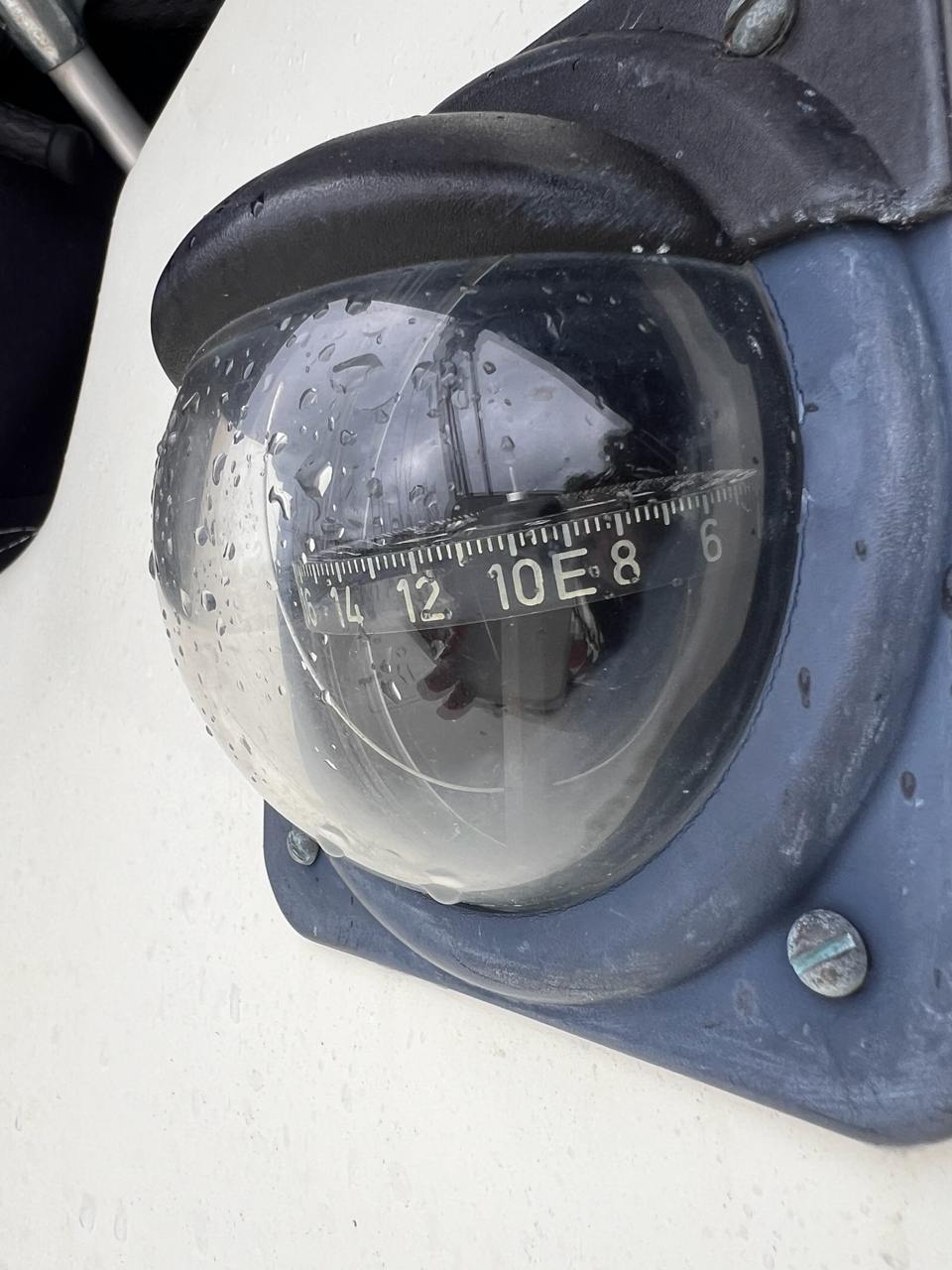
The old compass lost its backlight and leaked liquid. Attempts to restore the case ended with the search for a replacement of the same model.
Installed Silva 100PT with new red LED lighting. At the same time, two hand-held direction finders appeared.

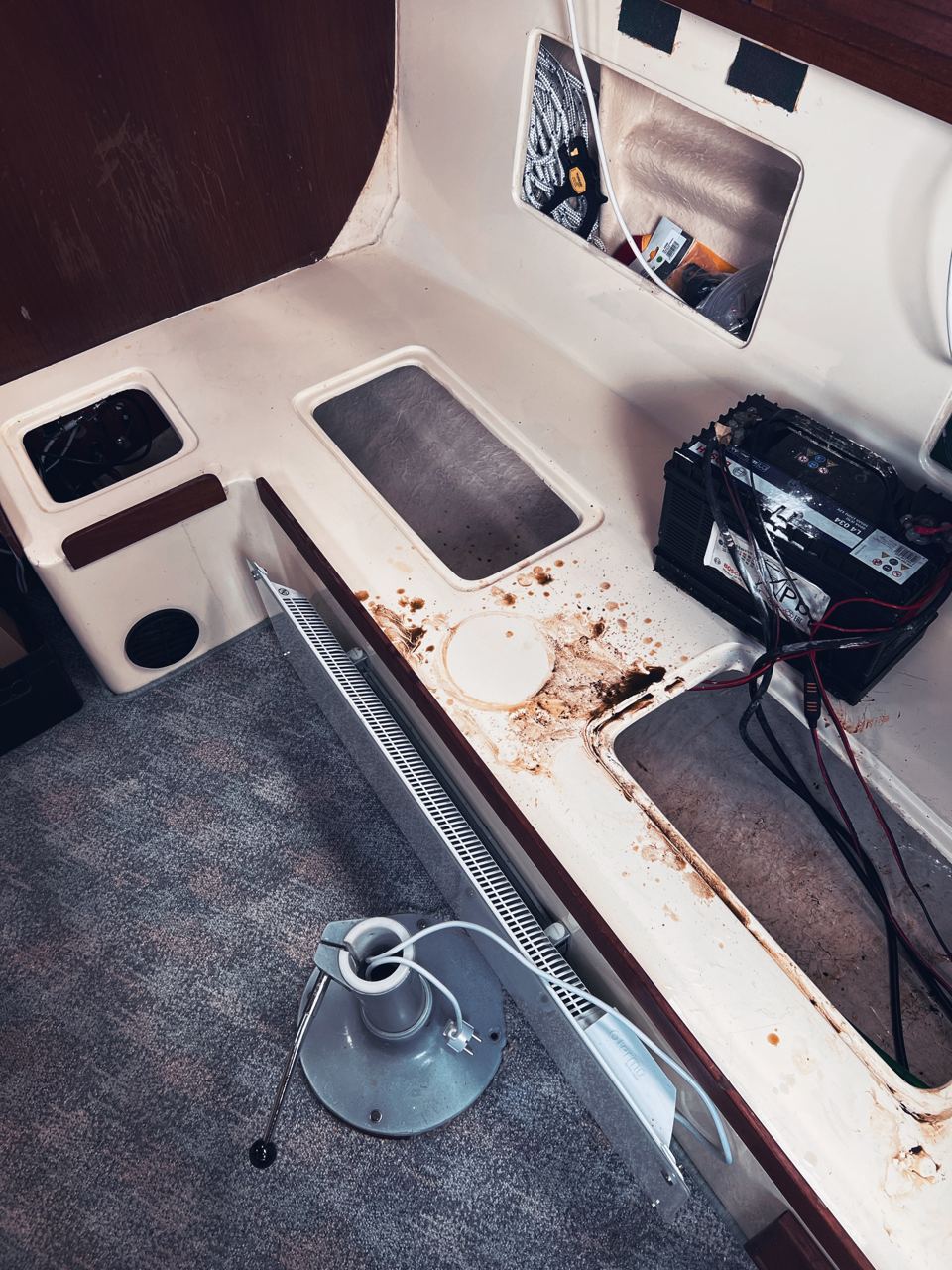
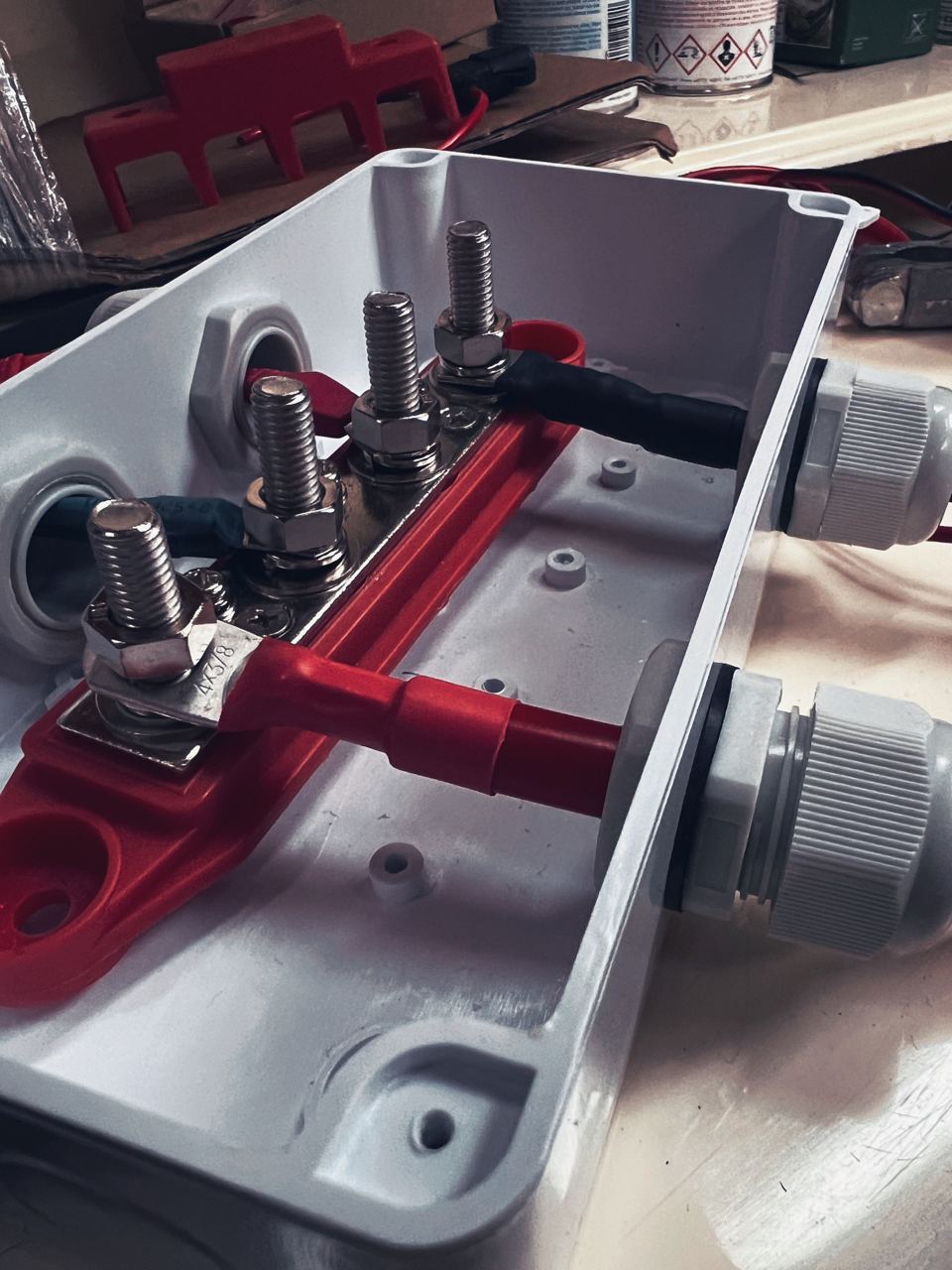
After the passage, leaks of battery acid and problems with attaching the batteries were discovered. Thus began the reworking of the service and starting circuits, charging and solar panels.
There are two controlled circuits, new AGM batteries and solar charging. Next spring - separate charging from the shore and a DC-DC converter from the alternator.

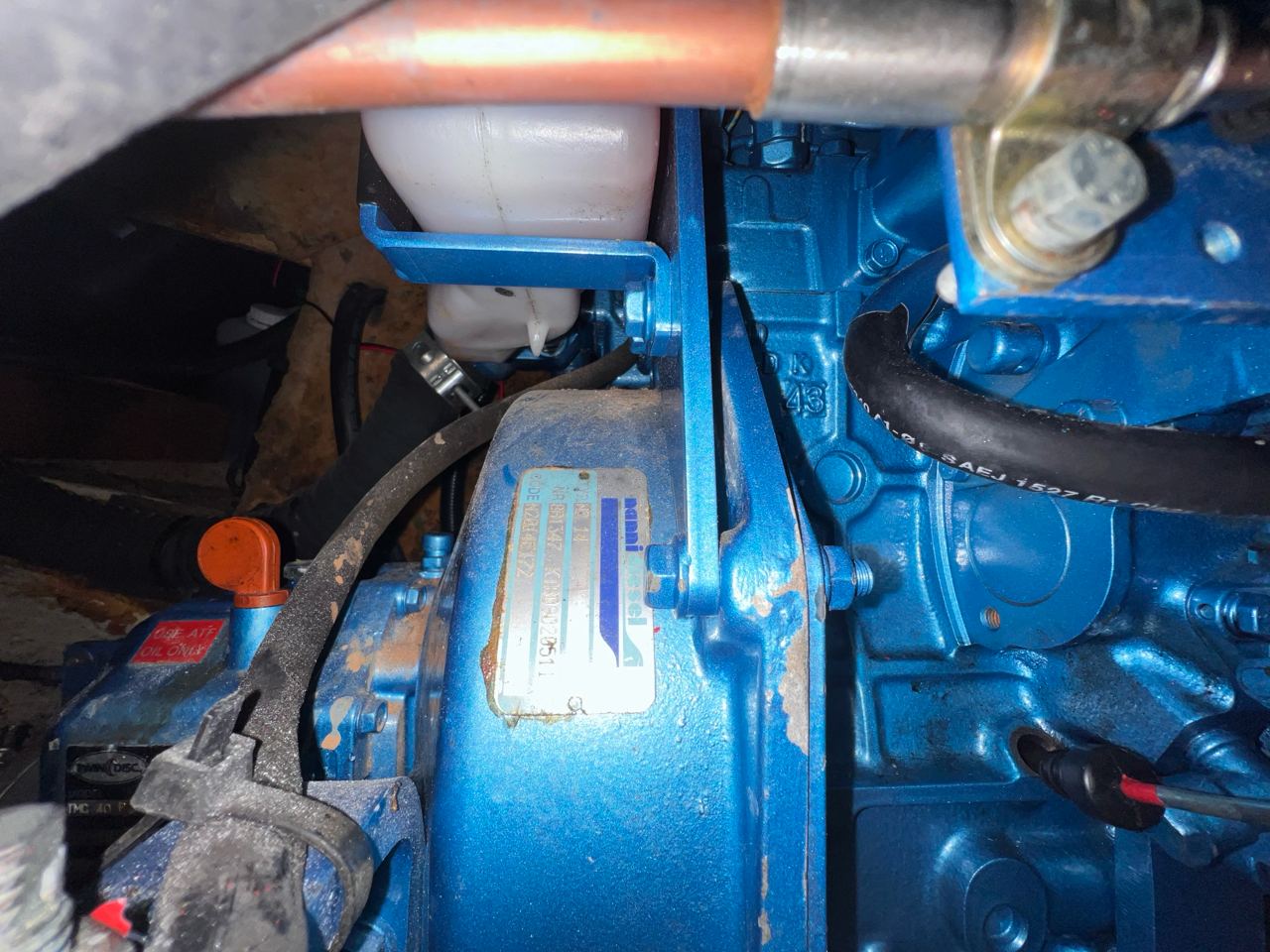
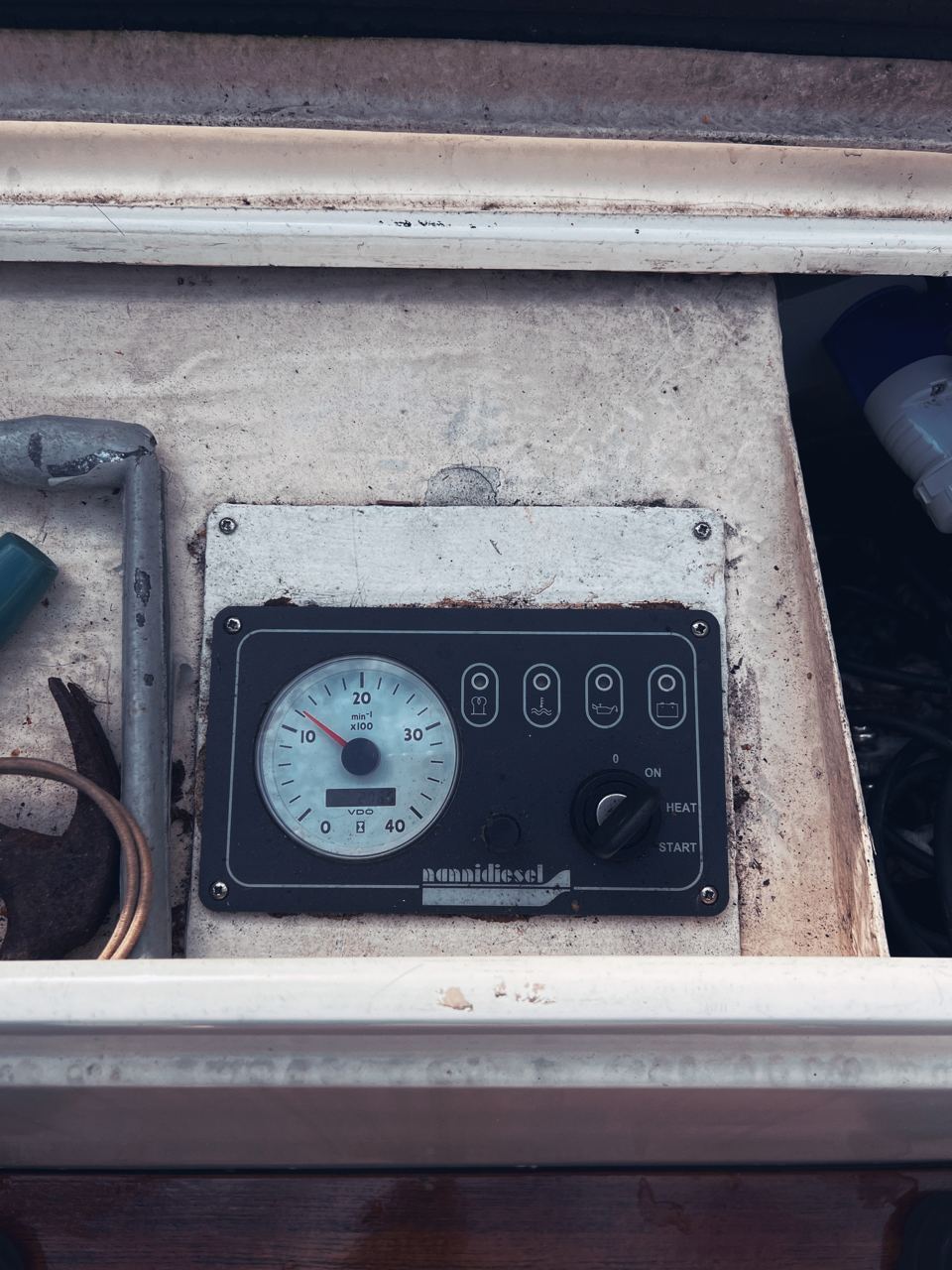
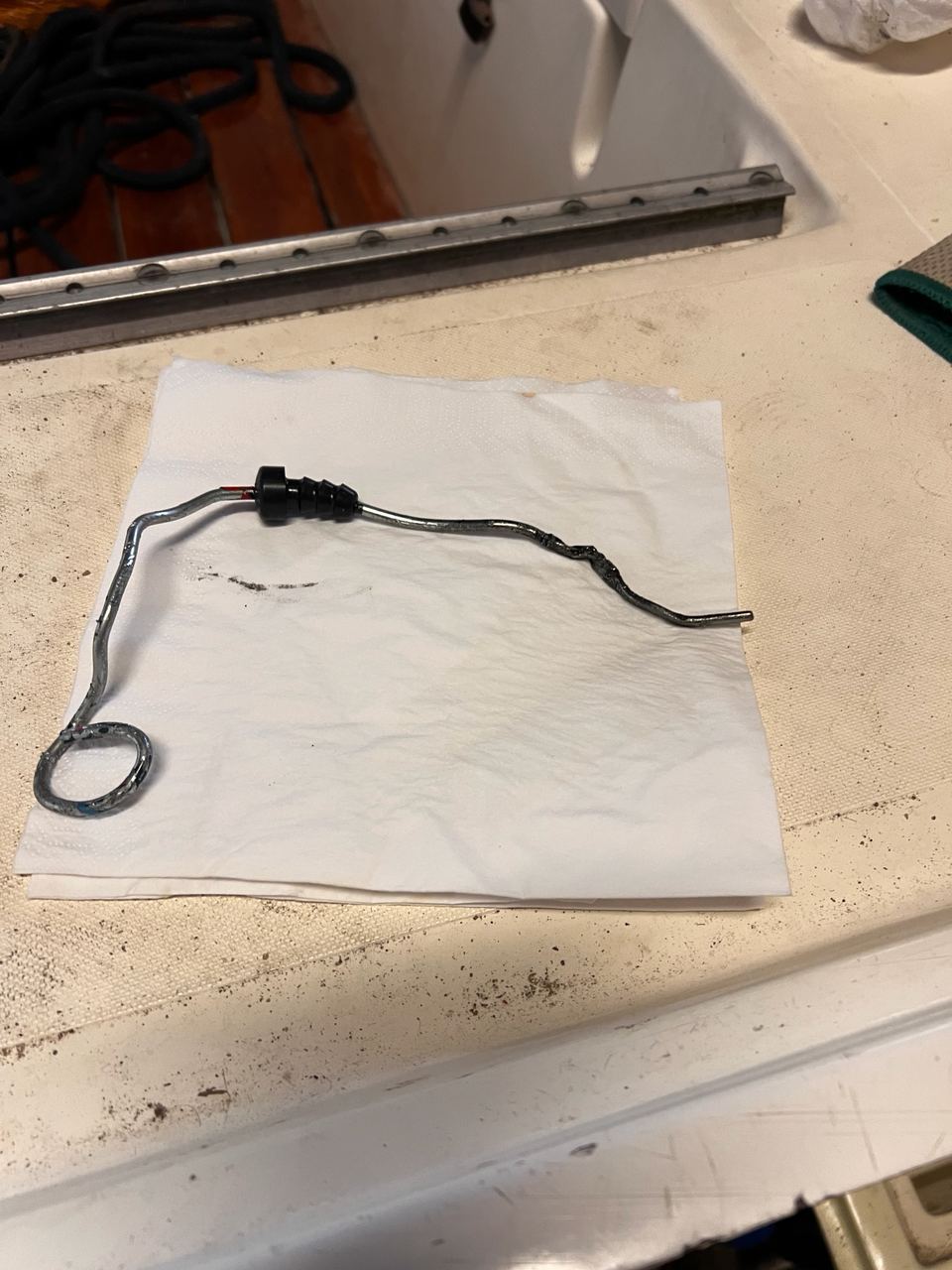
The Nanni N2.14 dipstick was twisted by the crankshaft. After an unsuccessful visit by mechanics and a search for options, Grigory helped pull it out without lifting the engine.
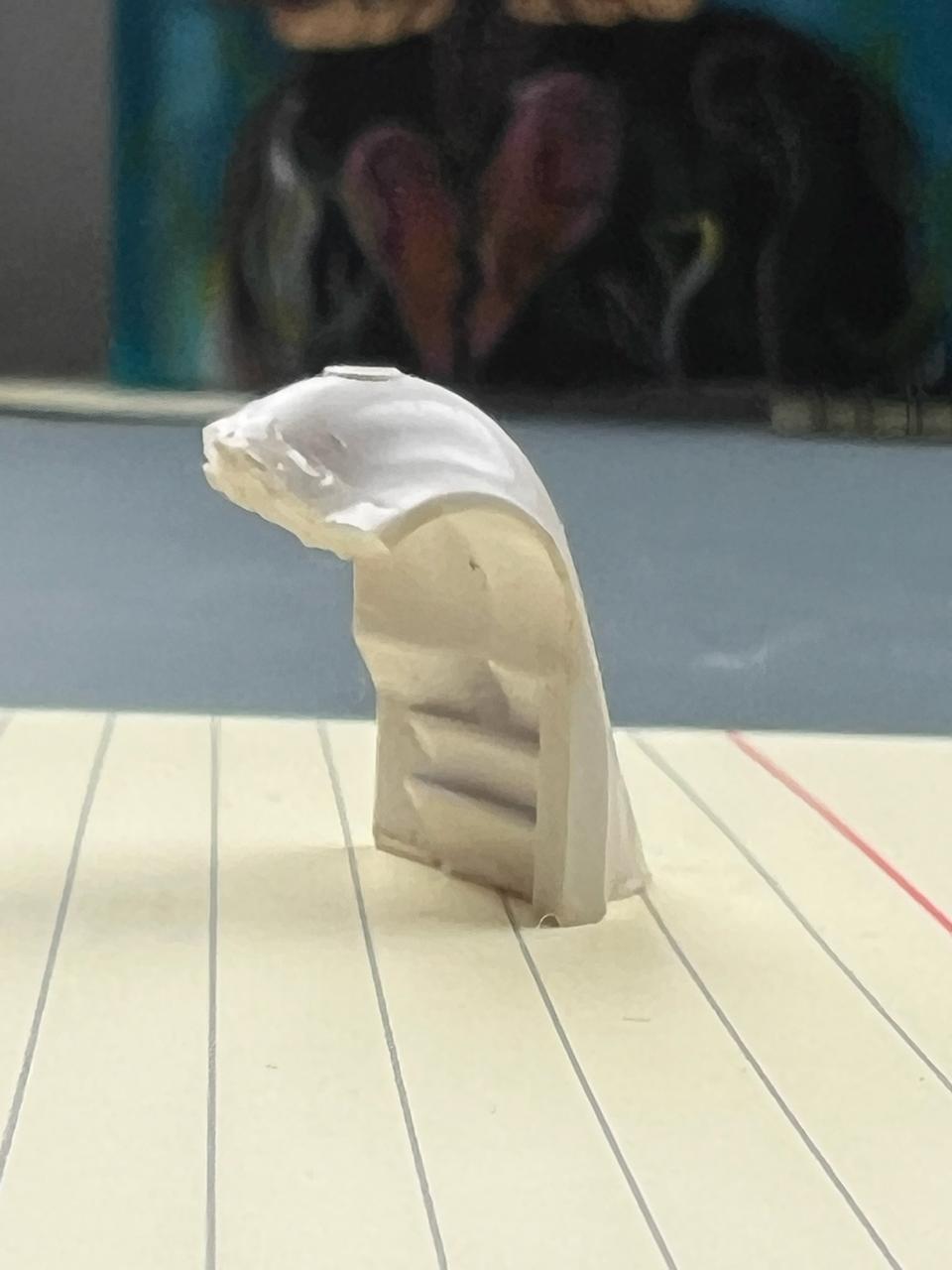
The dipstick is removed without lifting the engine. The last entry shows its deformed form and redesign as a stub to avoid history repeating itself.

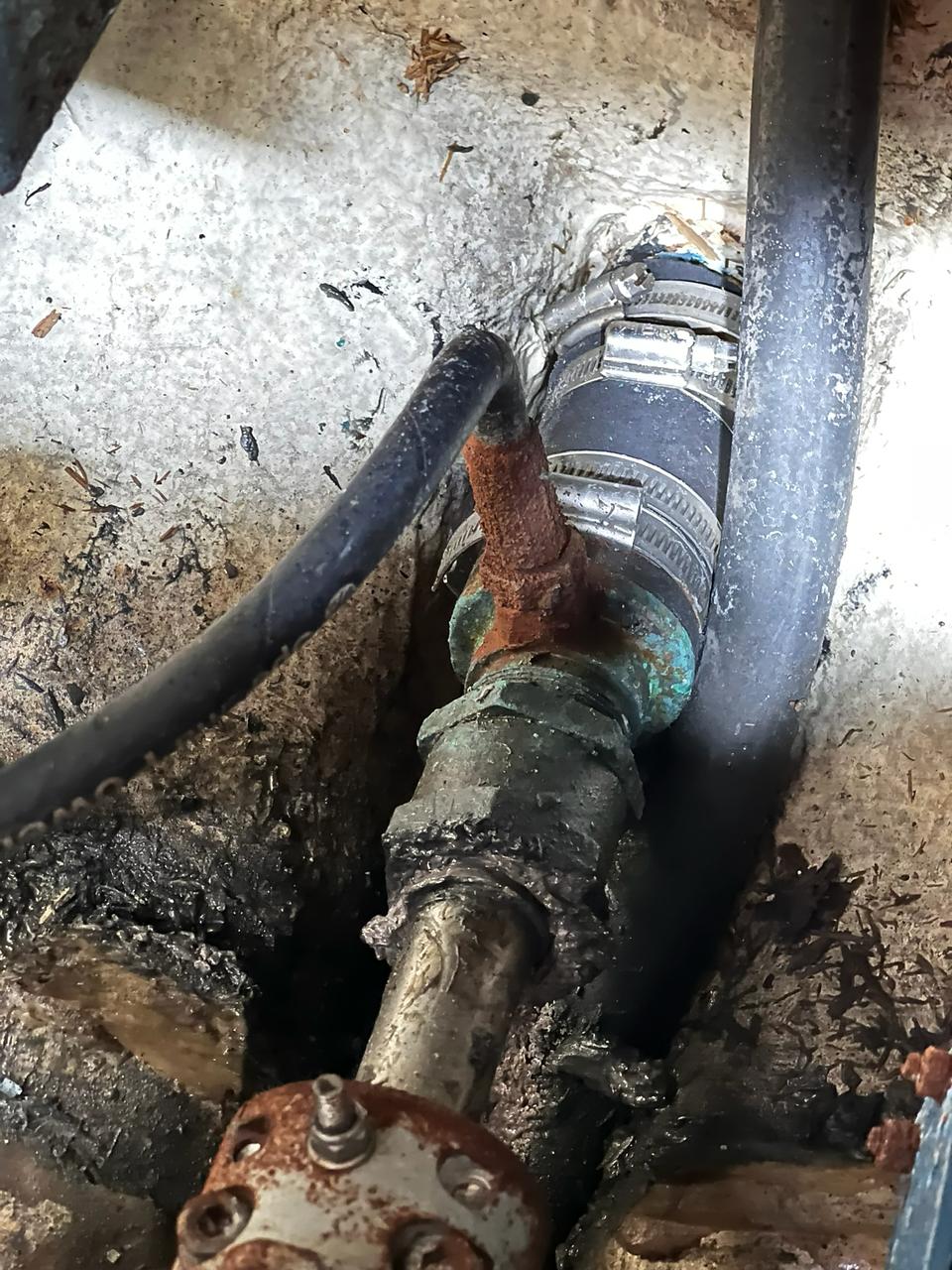
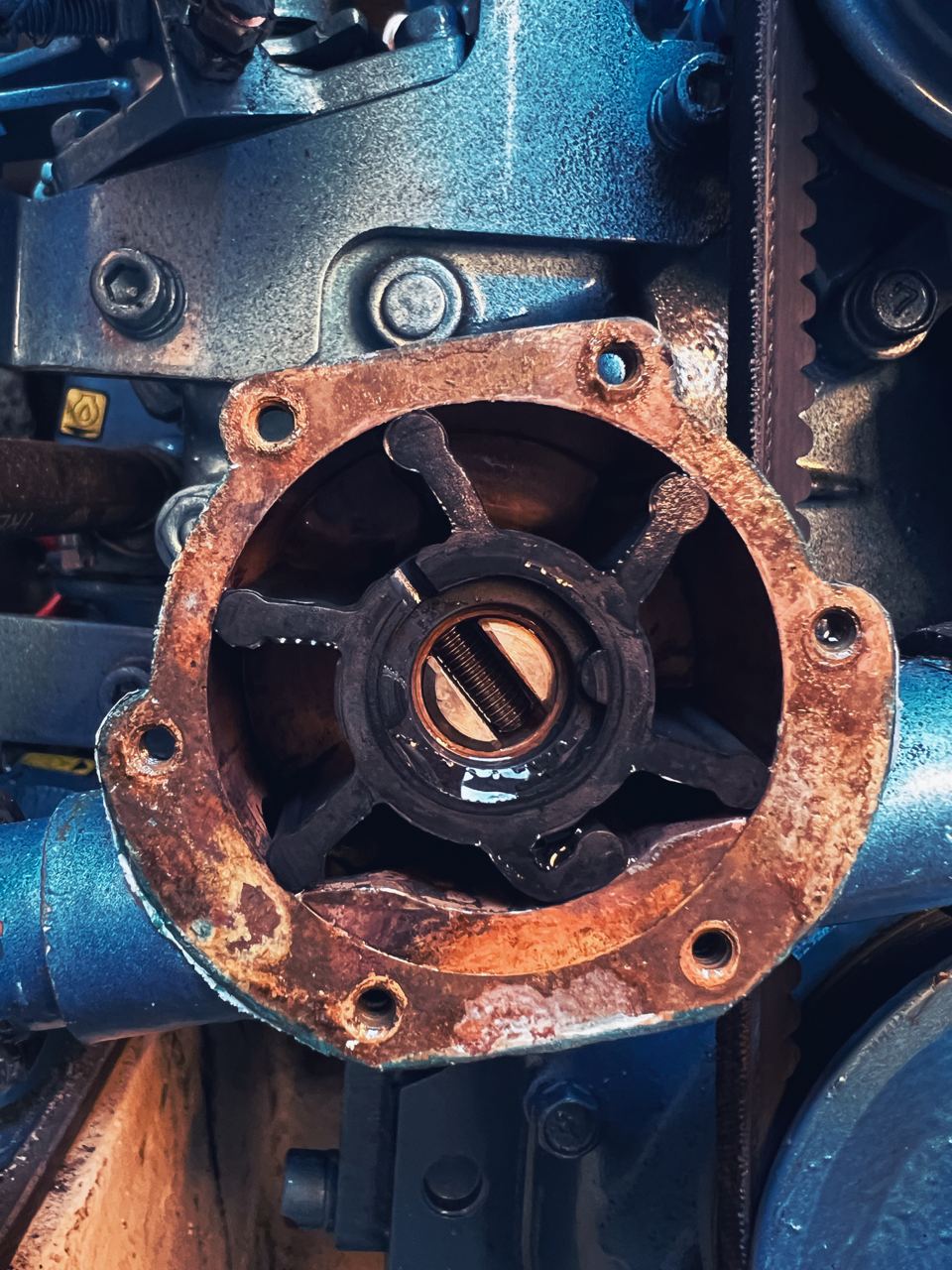
The search for the cause of the low speed went through the cooling system, fuel and consultations with services. The junction was under water.
After cleaning the hull and propeller, the speed increased to 5.5 knots. The tachometer readings under load remained the same.
Individual posts are on the Posts tab.
Grisha and I had only just relaxed after berthing in Kiel when he noticed a strong smell of hot diesel. We lifted the cabin sole boards and started looking for the leak.
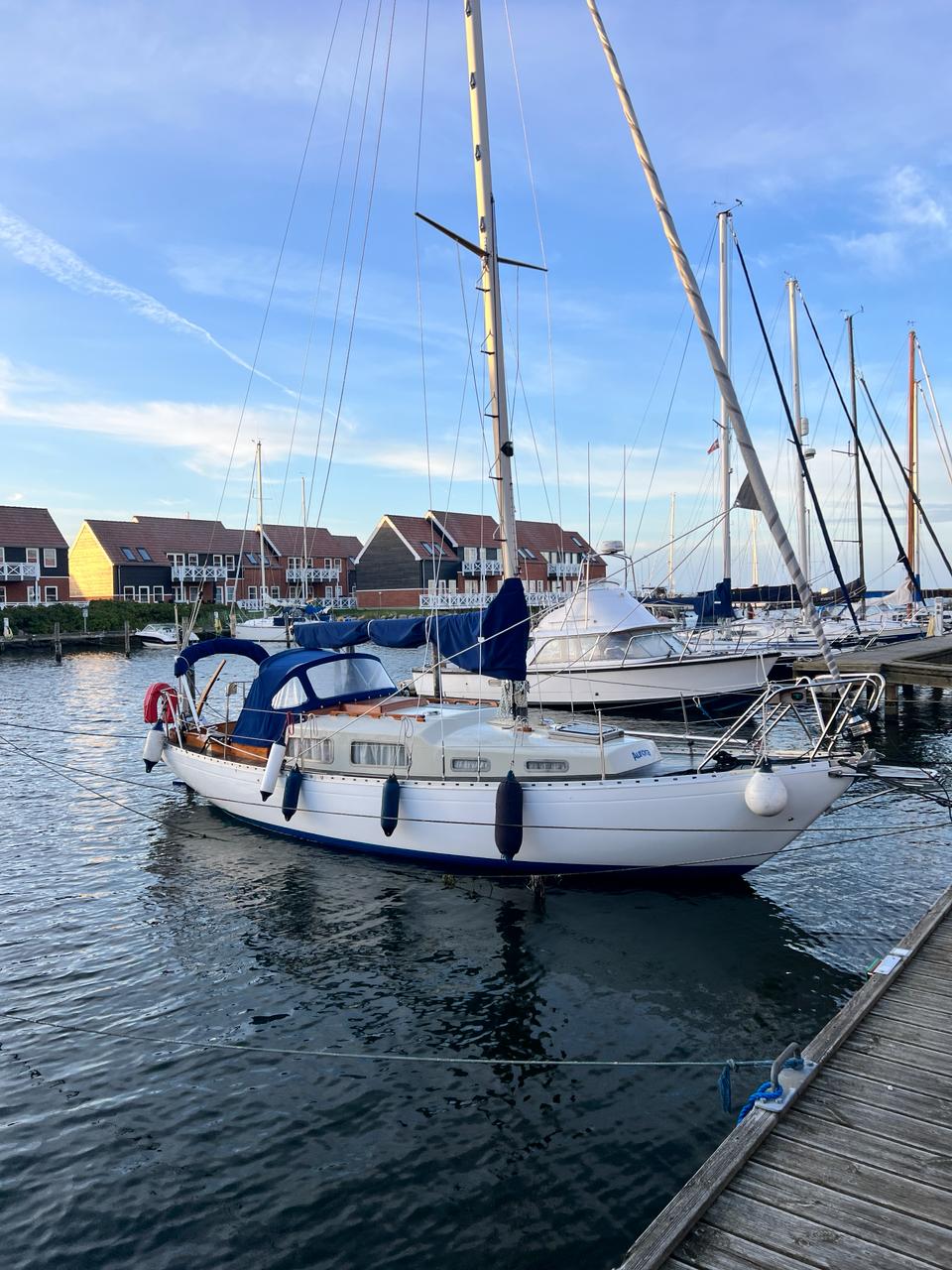
On 6 September, I waited until the forecast gusts had eased to 25 knots and left Klintholm. The engine produced a huge white cloud on starting. Under genoa, I was making about 4.5 knots.
Video I got up at five to clear the fuel berth in Klintholm. With the wind pinning the boat against the pontoon, the proper manoeuvre was to spring the stern off. I tried turning under engine alone.
My first visit to Aurora since buying her. The forecast left little choice: leave soon, or wait. First came provisions, AIS and a replacement chartplotter. Then a ten-centimetre problem stopped departure.
In that time Rassvet covered 905 nautical miles. Twenty-five days were spent on passage. We visited Denmark, Norway and Sweden, crossed the Skagerrak, sailed at night, waited out storms, worked from the boat and, at one point, quite accidentally bought another yacht.
After our unscheduled return to Malmön, it was time to move on. We were beginning to fall behind schedule, and I really wanted to reach Marstrand, known here as Sweden's sailing capital. It was about 20 miles by the direct route.
Video After three nights in Strömstad the storm ended, and the real test of my plan began. At 16:00 I closed the laptop, cast off and we headed for Havstenssund. Just 13 nautical miles, almost entirely under engine into the wind. North-western Sweden was stunning.
23 June, a high and almost no wind forecast. Prepared for eight hours motoring to Oslo. A gift instead: following wind almost throughout, Rassvet sometimes reaching six knots. Rocky ridges both sides, surprisingly little large traffic.
The last two passages and the coming Norway trip highlighted the boat’s condition. Almost ready, provided you didn’t look too closely. First, winter storage in Kiel secured. One big question gone; finish technical loose ends.
Video Friday, seven: the yard resumed fitting the bow platform, welded the lift-pump lever back and retrieved their tools beneath the engine. Finished only at ten. Launch near noon.
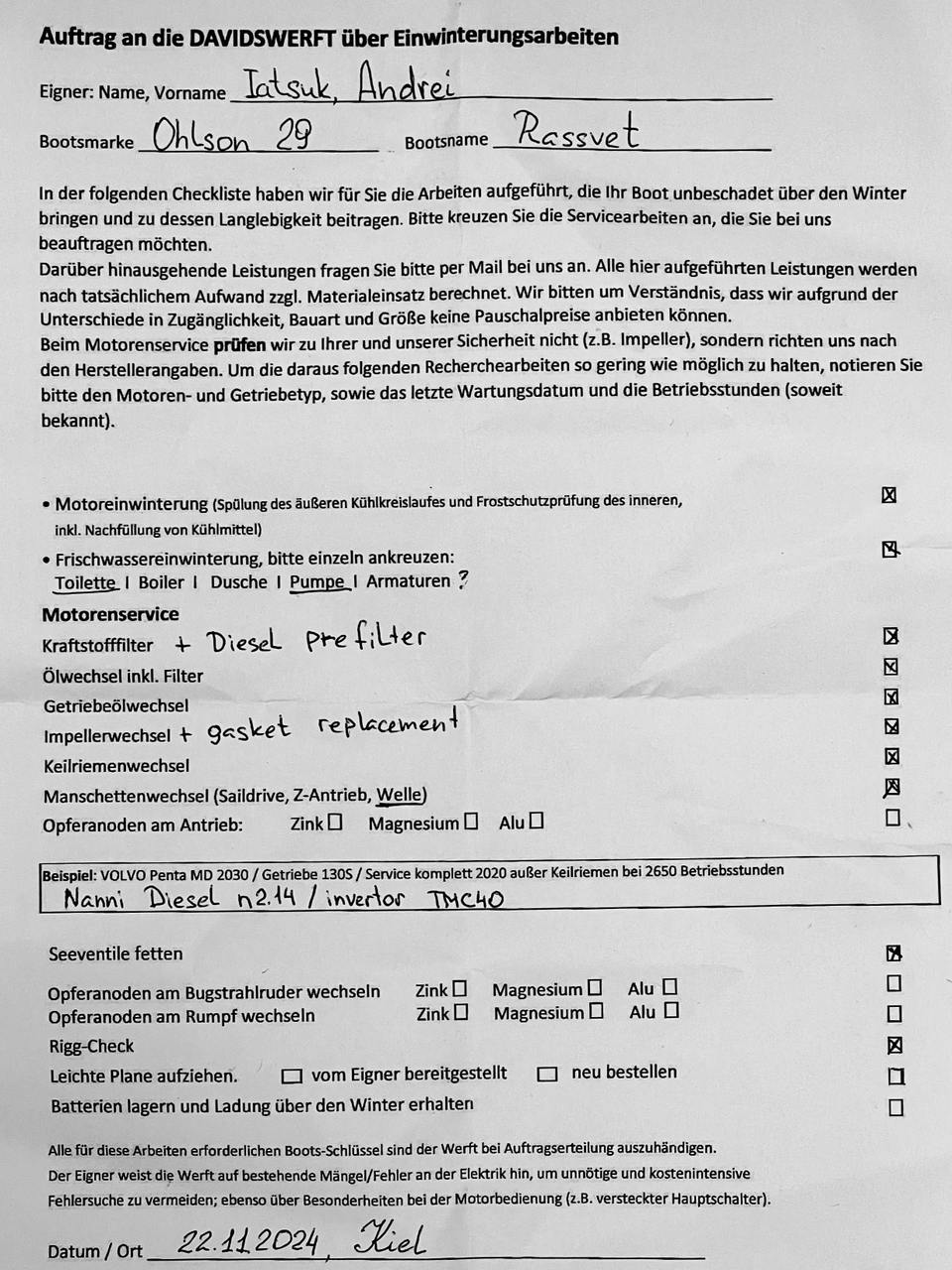
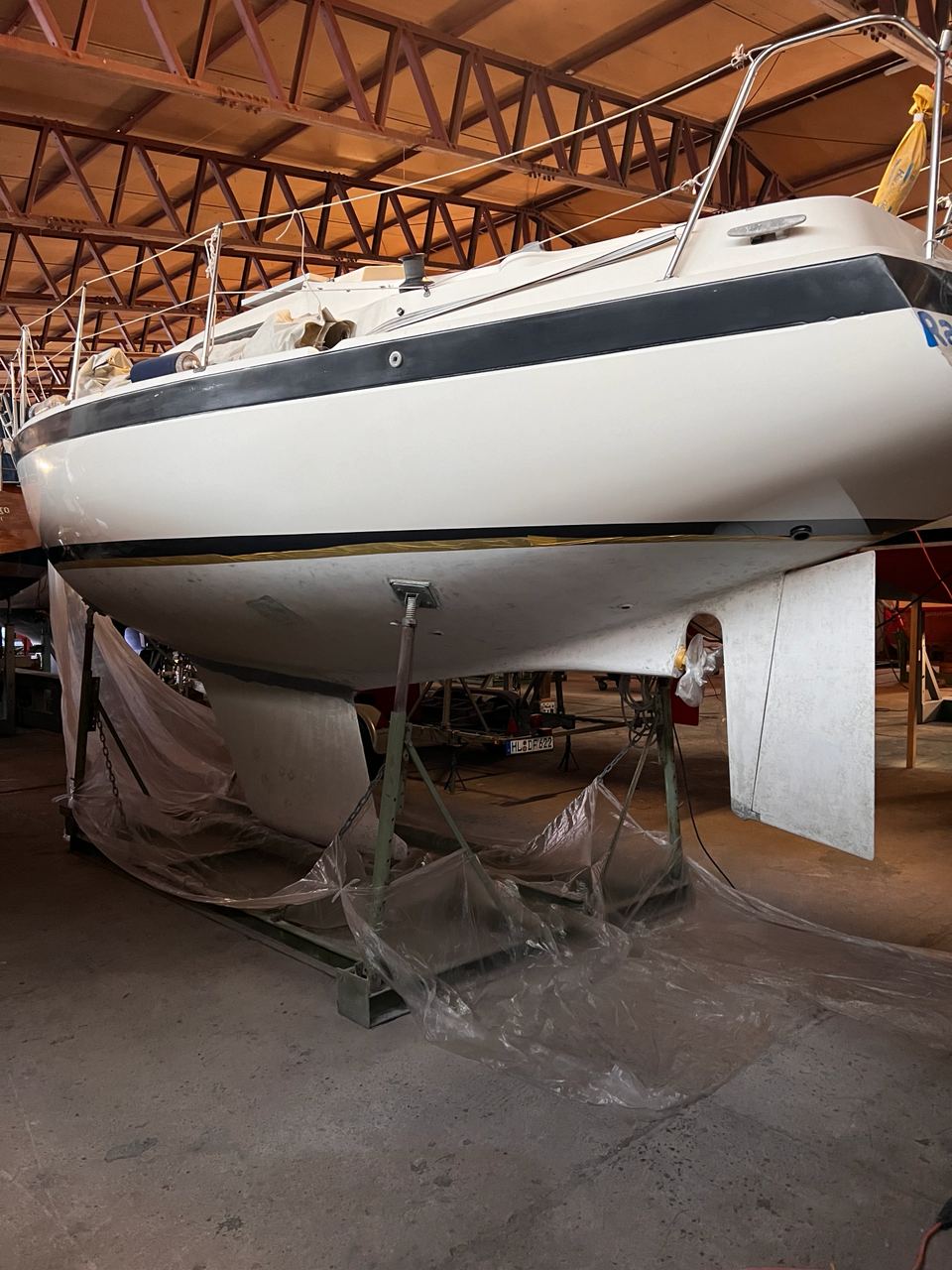
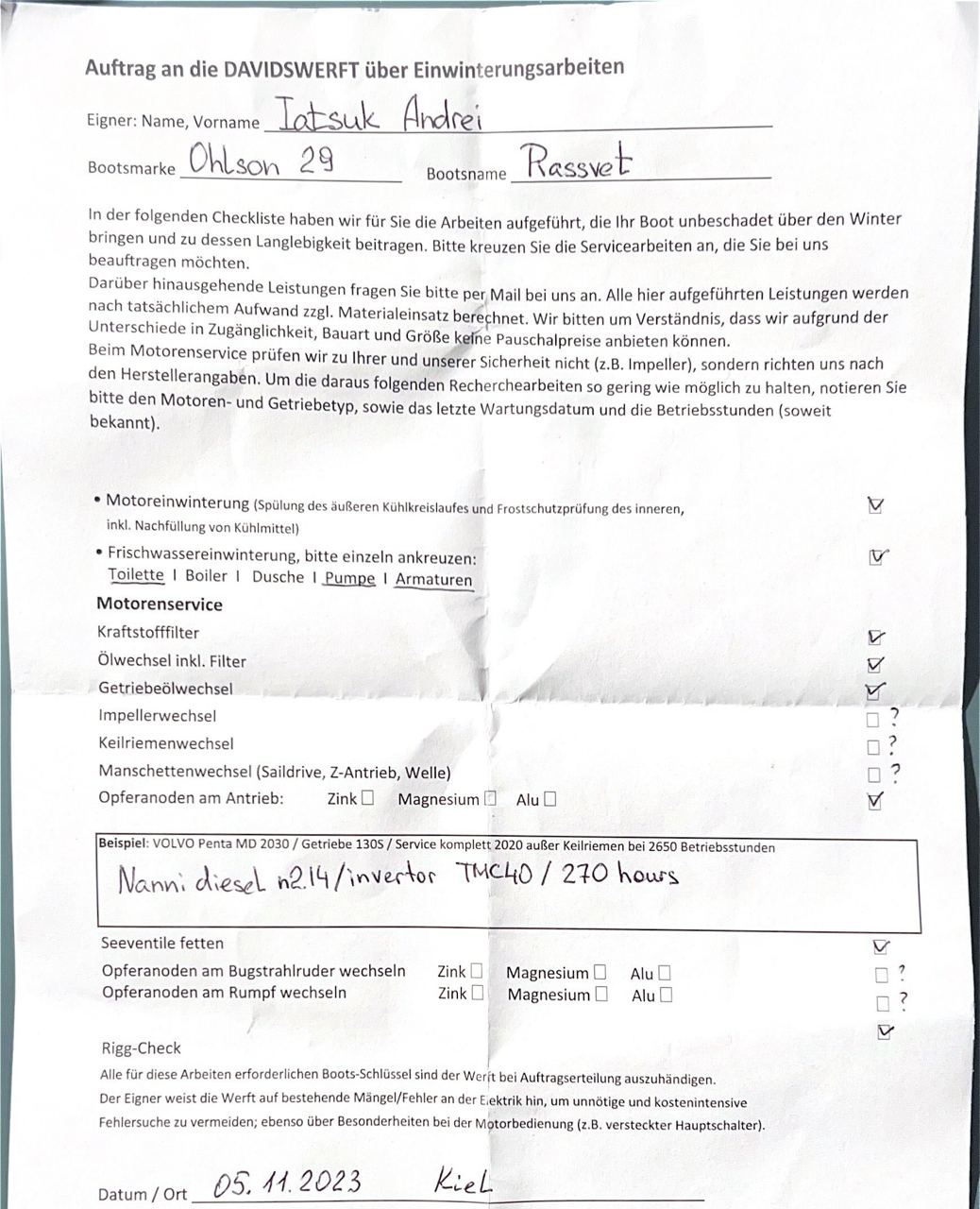
Back in November, I gave DavidsWerft a winter list. Workshop in my marina: convenient, reassuring in theory. Engine service, bow platform, new propeller-shaft seal and anode, shrouds and backstay, deck chain pipe into the forepeak.
Yacht woodwork became its own story. Two years ago, my first pressure wash stripped old exterior varnish. I chose to try teak oil instead of more varnish. Instantly lovely: deep colour, water beading like on ceramic, matt and not too slippery.
After hull work, damaged paint almost everywhere I’d touched. Deck marks from sealant and primer. On the bulwark, exposed epoxy. Resin on non-slip, yellow hull scratches after the lock impact. Barnacles along the old waterline. On the keel, exposed metal.
A year ago, storm-bound on Bornholm, a stanchion tore out. I made a repair to suit the moment: tapped M5 threads inside old M8 steel bolts remaining in the hull, and refitted it. This spring, torn out again. Apparently, wind on the tarpaulin had pulled it hard sideways.
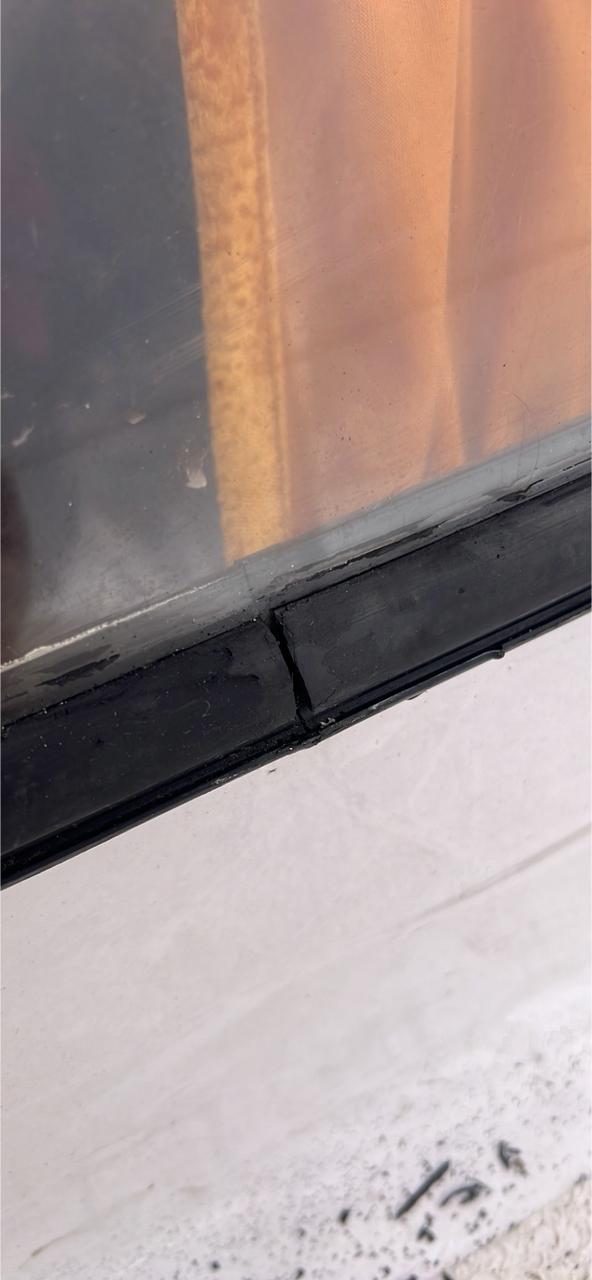
In autumn, cracked window sealant began leaking. I’d applied Sikaflex 591 eighteen months earlier, after accidentally pressure-washing the previous seal away. More thorough this time.
The keel provides the righting moment, returning a heeled yacht upright. Massive metal though it is, it needs attention beyond the occasional lift-out. A bolted keel always has a hull joint, working under load. The hull flexes; the keel takes impacts and vibration.
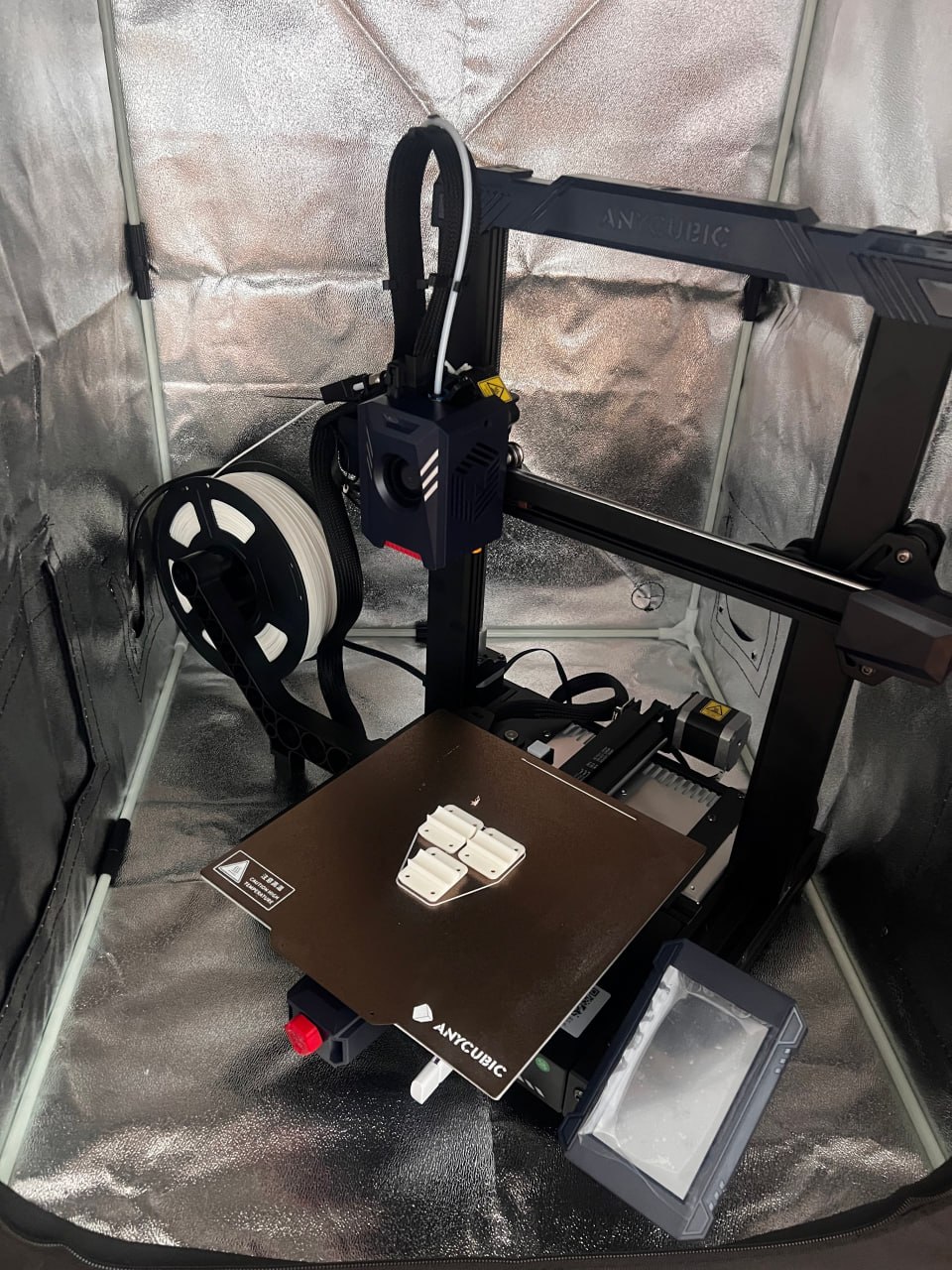
Last summer, I bought an Anycubic Kobra 2 Pro. Obvious idea: the boat constantly needs small parts, hard to buy quickly and harder to fit accurately. A printer should fill that gap. A deferred decision The box became furniture in a corner.
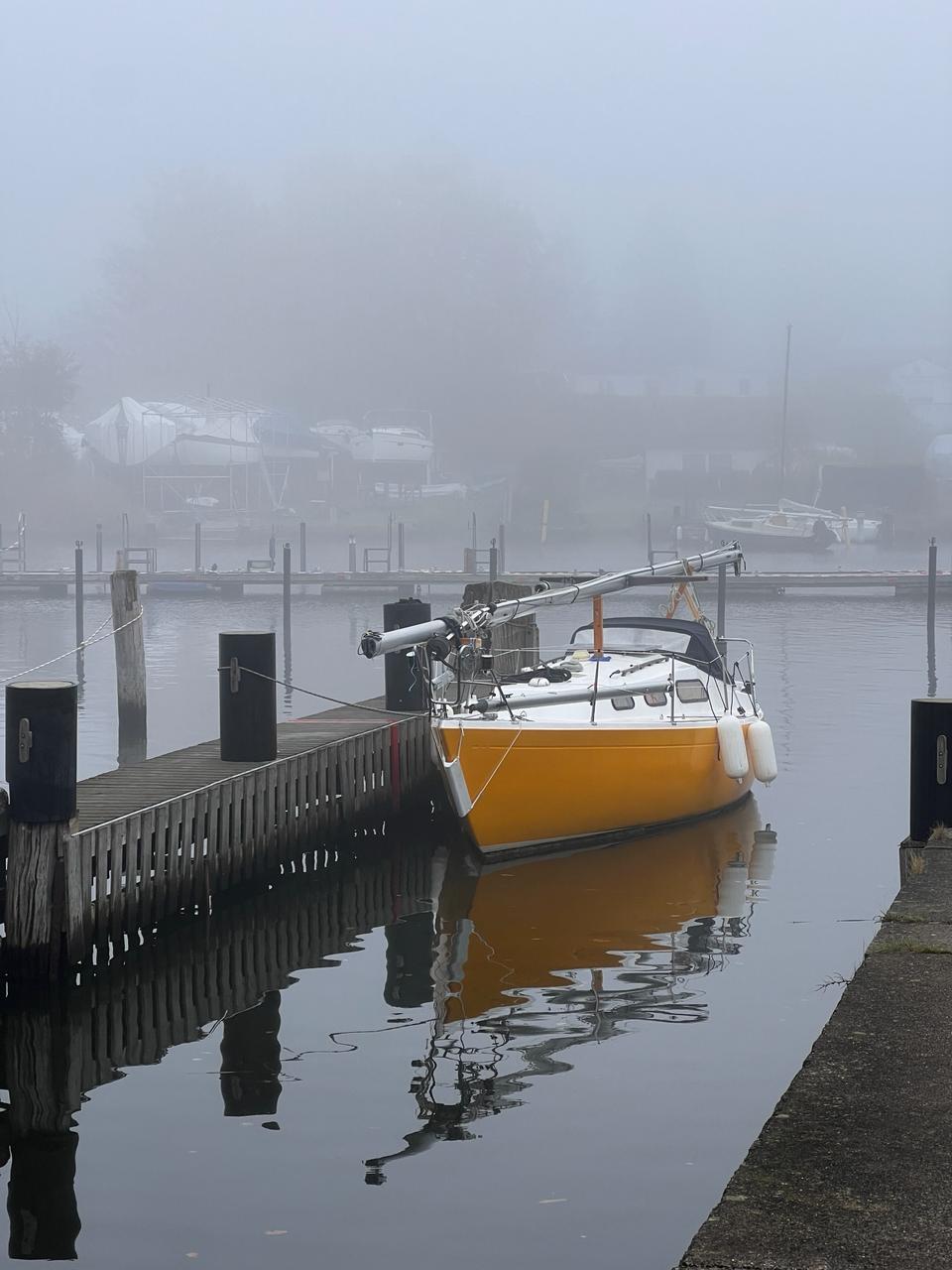
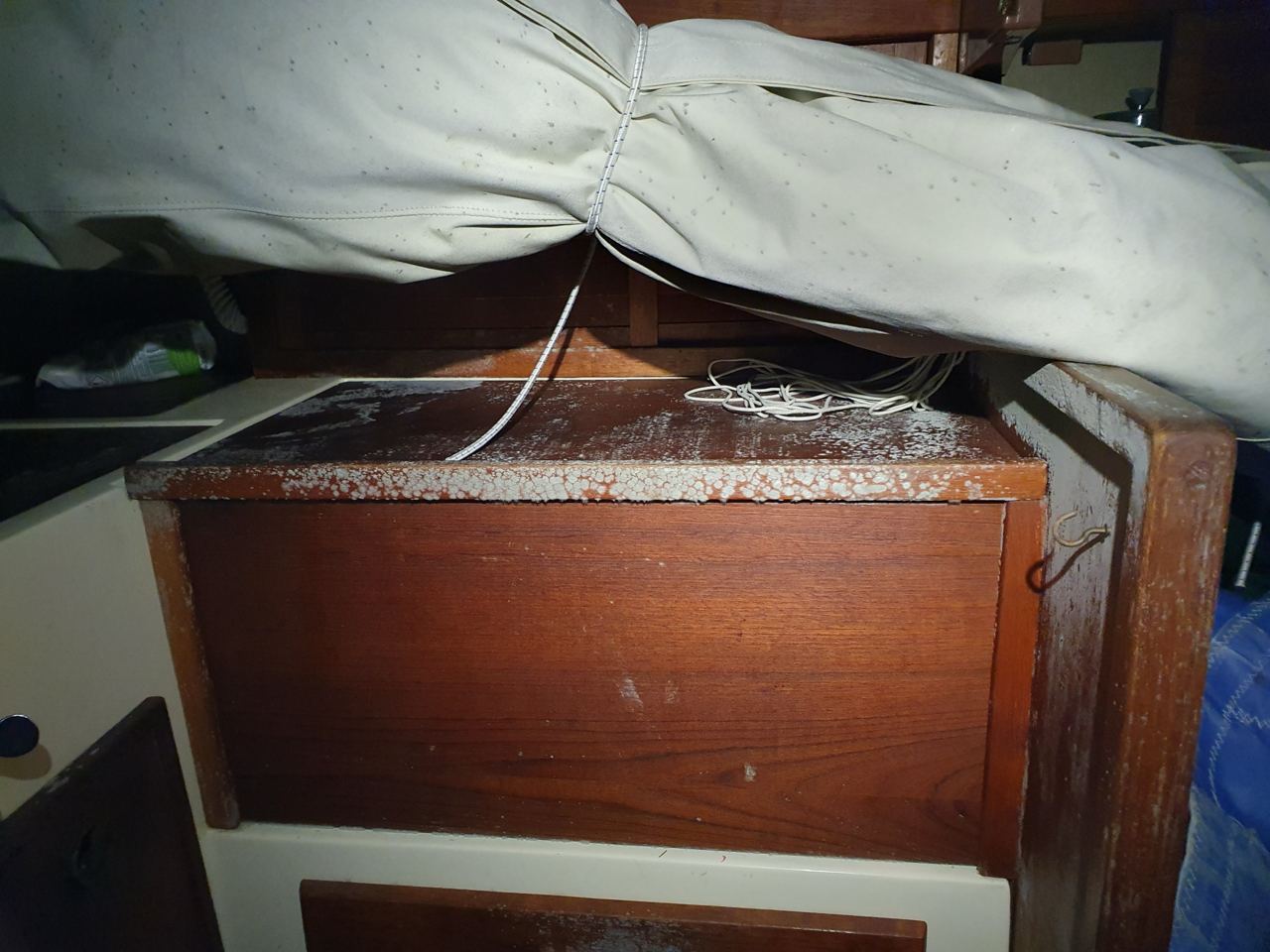
Friday, 7 November 2025. Thick fog, like an old sea novel. Cold dew dripping from deck. I washed, drained the tank, spread eight kilos of moisture absorbers below. Slightly late: first mould in cupboards. Treat, doors open, mattresses upright.
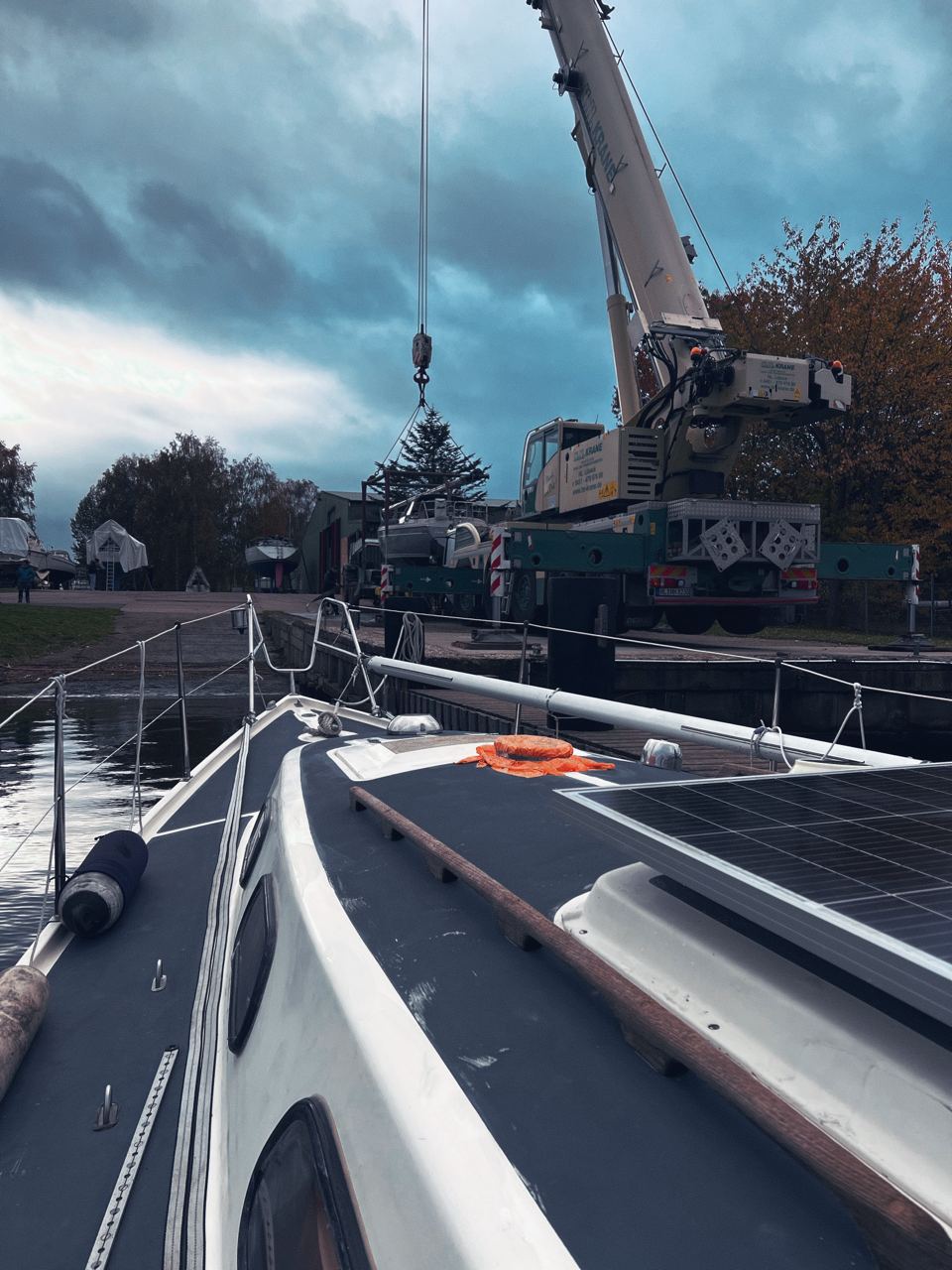
Monday, 3 November 2025. Yard help booked for the morning, mast crane by ten. Alexander’s words from the recent berthing seminar came back: ‘If you’re approaching alongside at a steep angle and your hair stands on end, count to three and turn.’ I laughed inwardly. True.
Always something to fix aboard, not everything worth a separate article. Here are small jobs making life a little easier. Curtain-rail bracket Curtains hang on a rail; the rail, on plastic brackets. One cracked, no replacement available. Epoxy held for months, then failed again.
In August, at Delfzijl lock in the Netherlands, an incident reminded me that even in a canal, the sea won’t forgive complacency. A barge entered ahead. I drifted at the gates while she berthed, then followed when the engine fell quiet.
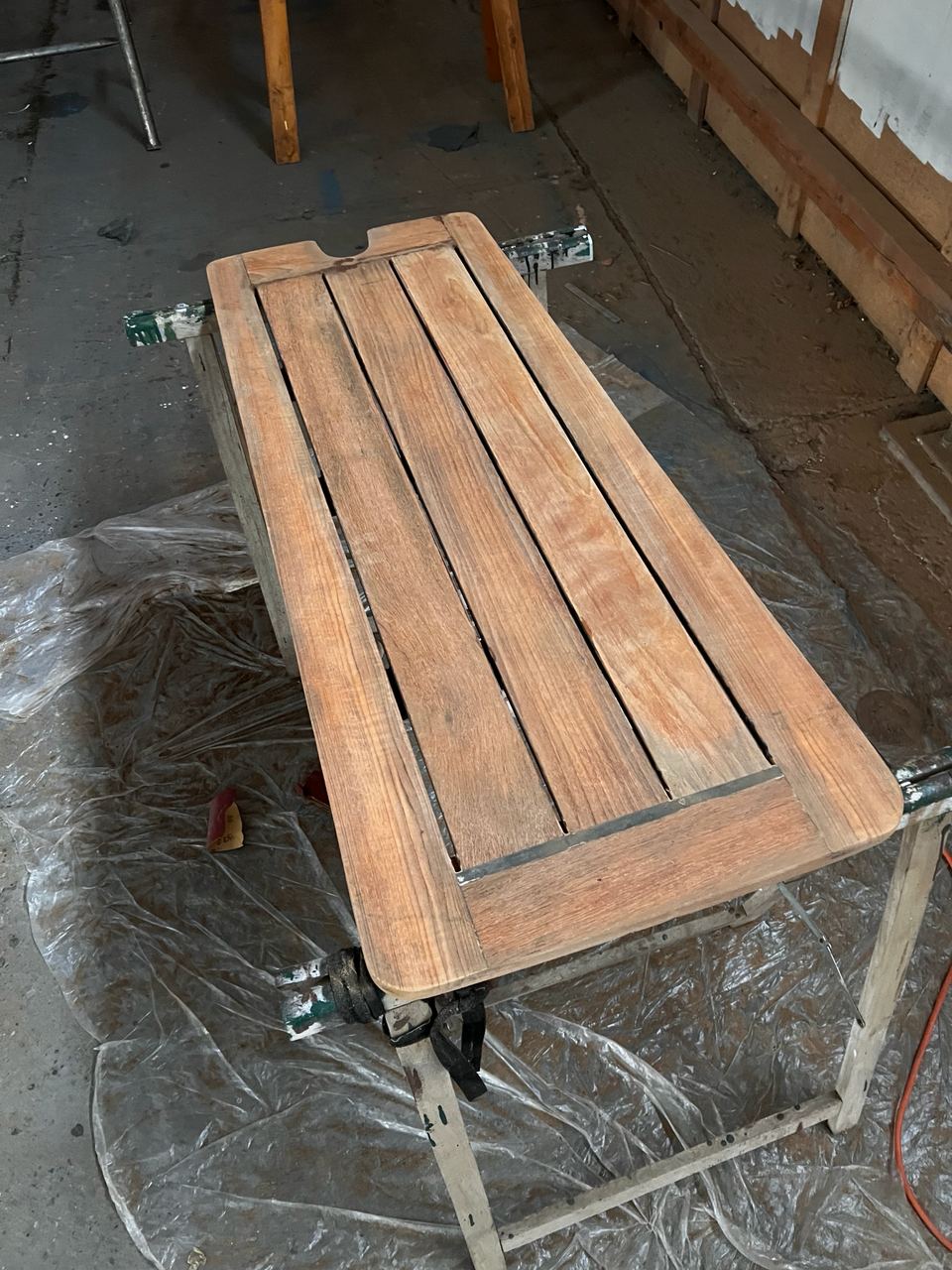
Paint dry, masked and sanded the KiwiGrip areas. This non-slip finish had already survived a season aboard and performed flawlessly. A day later, fitted the latches with Sikaflex-295 UV, then soft EPDM seal round the edge. Ready to fit!
As usual, every voyage leaves something to repair. Water had begun to leak past the stern-tube seal, almost impossible to replace without removing the engine. The answer: a new cockpit panel with an access opening for the seal and gearbox.
Leaving Kiel in early August, I expected the North Sea to toughen me up, test decisions and bring strong wind and high waves. It did. Long planning sessions daily: wind, waves, currents, tide tables. No room for mistakes, no refuges or anchorages nearby.
Video 11 July 2025. A rare Baltic combination: north-westerly Friday, easterly Sunday. East to Fehmarn, then home with following wind. Military areas and a shortcut Between Kiel and Fehmarn, the exercise areas Todendorf and Putlos. Closed when active.
Almost as soon as I bought the boat, I wanted a lazy bag, to end the daily dance with the sail cover. Alexei, who helped inspect her, said: ‘Perhaps the one thing really worth investing in.’ A lazy bag is a cover fixed beneath the sail.
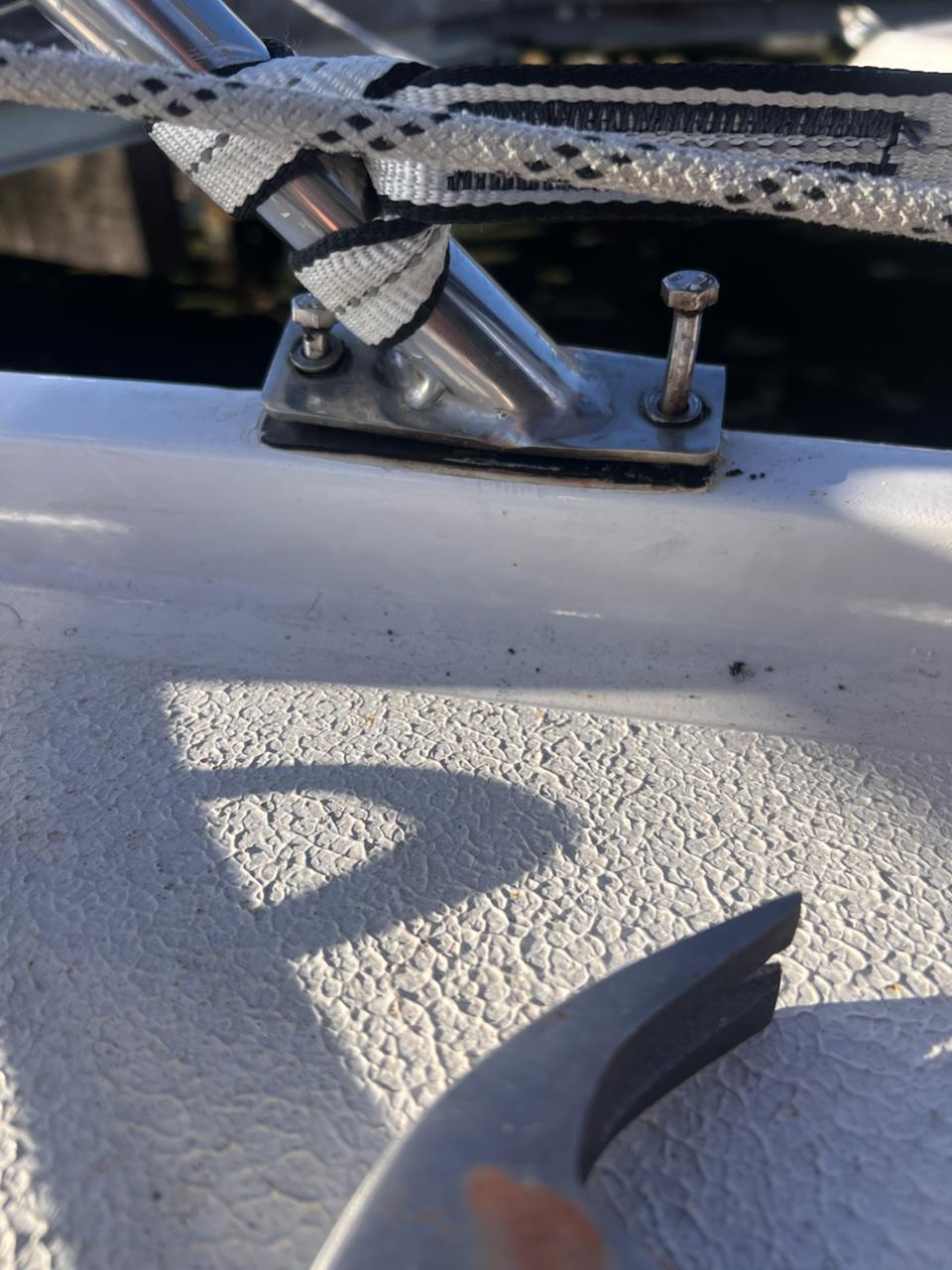
One windy day in Rønne the boat was pinned hard against the quay. Fenders working overtime. The final straw for a fifty-year-old stanchion: the middle one, holding both main fenders. I first thought of replacing it, but a new one would stand out.
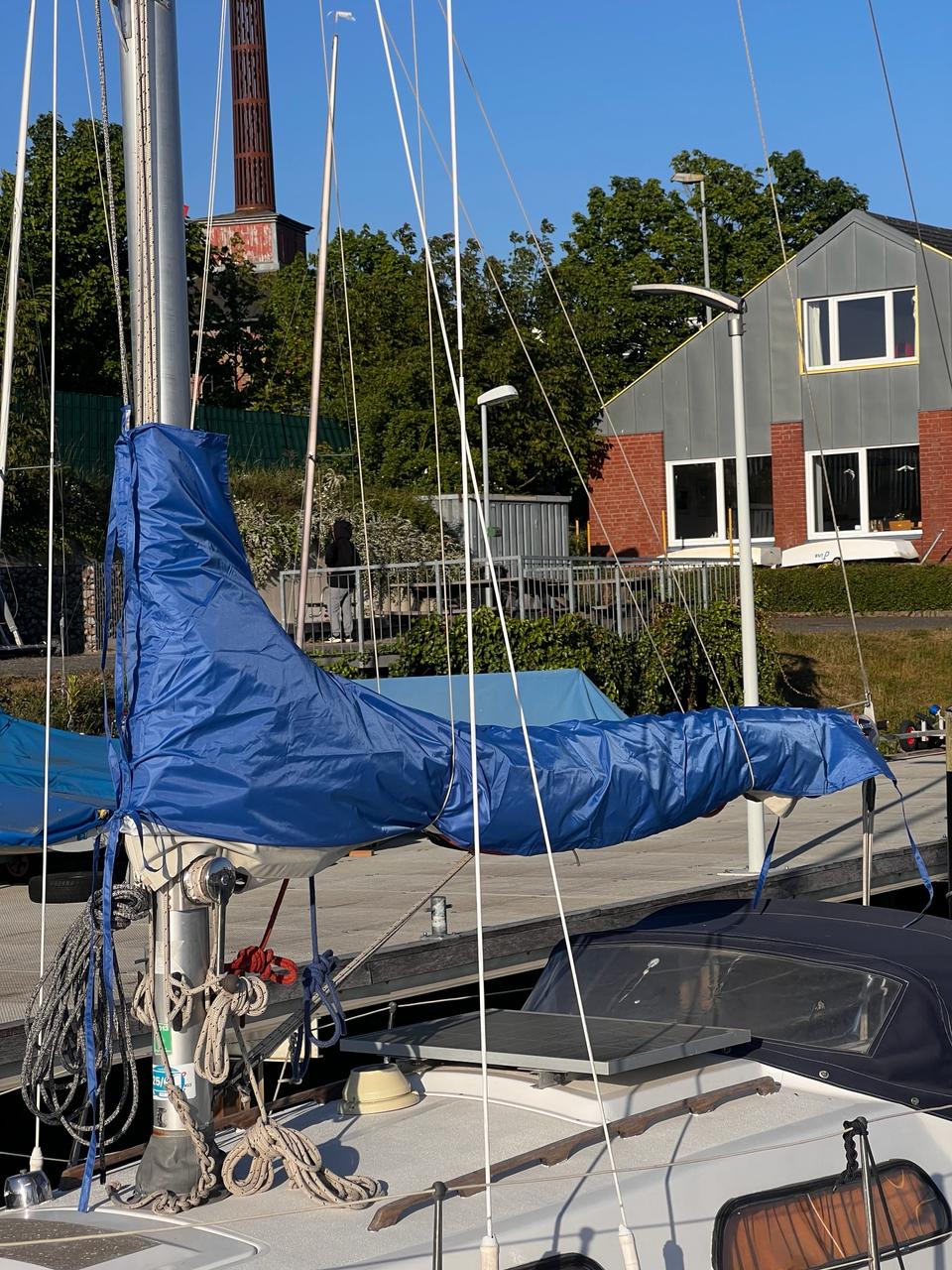
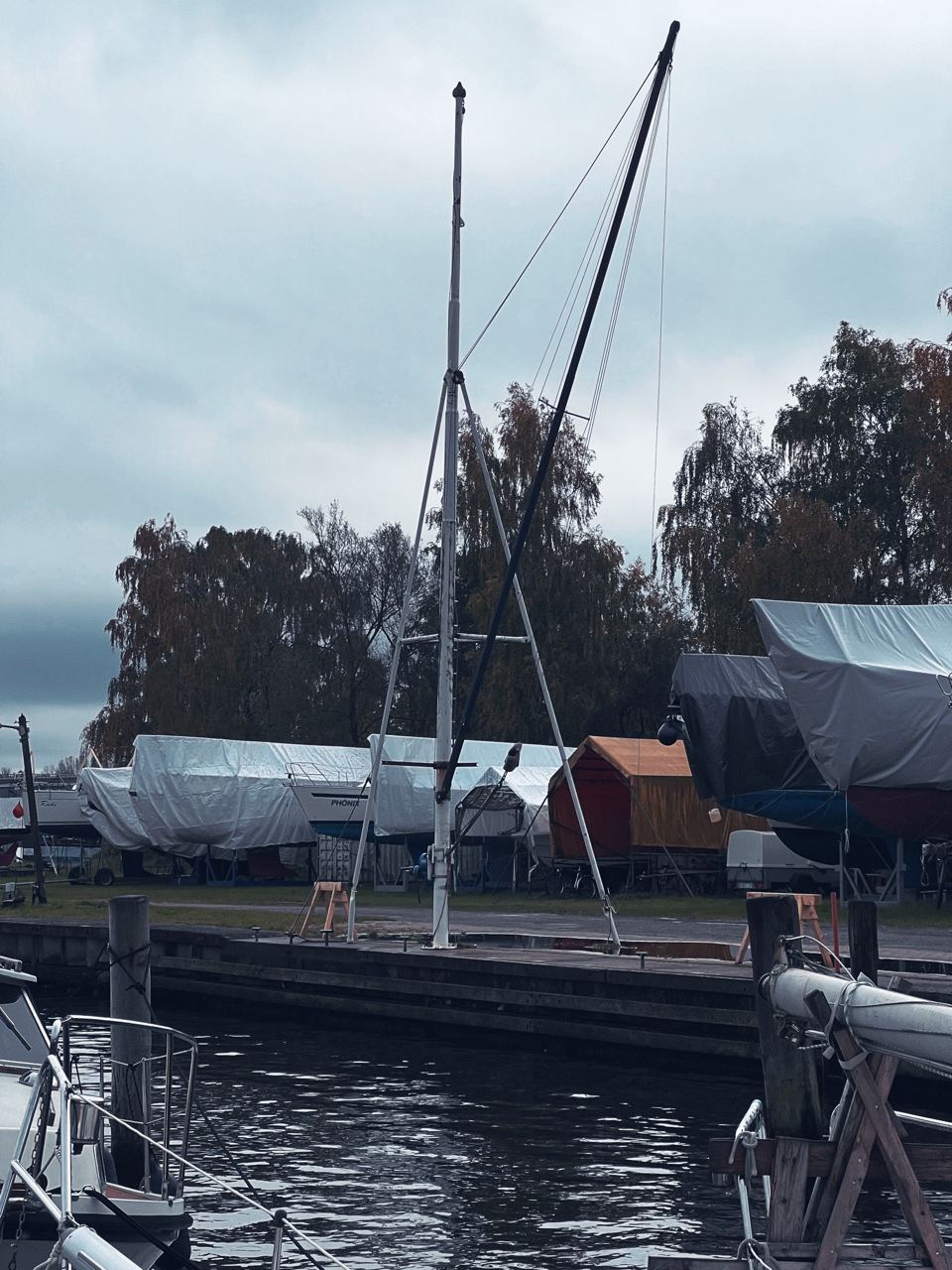
Boat afloat, season open. Except without mast and sails, she’s a floating cottage. The fun begins with stepping the mast and trying not to have a heart attack when a twenty-knot gust hits as you hoist the sails.
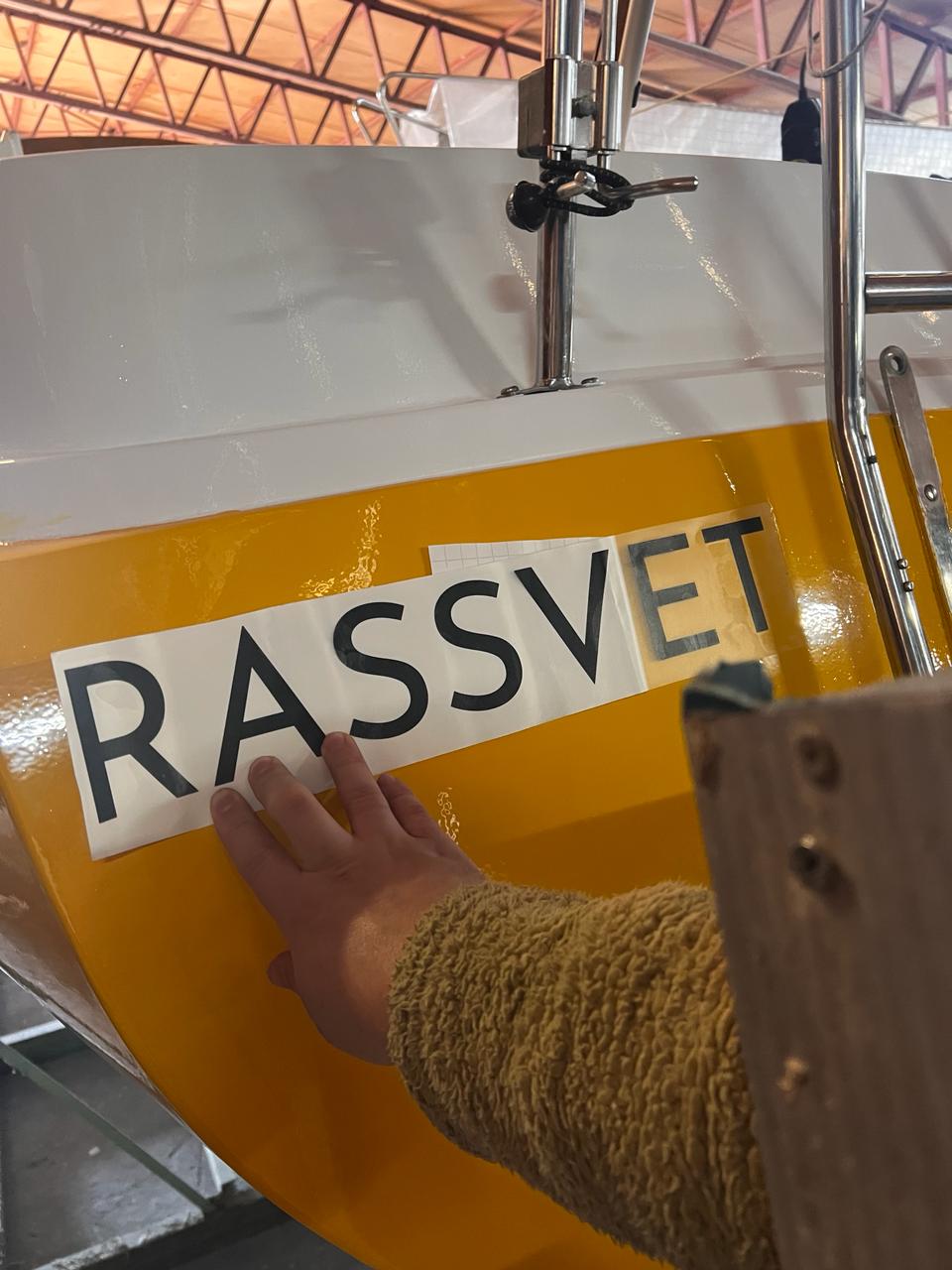
My yacht’s launch was booked for 4 April 2024. A special, nervous moment needing careful preparation: even a small detail can wreck the plan. Preparation I arrived in the morning. After painting the hull, one important task remained: the boat’s name and home port.
Over the last couple of years, working on the hull, watching neighbours, reading everything and listening to experienced owners, I’ve formed my own picture of what to do, why and in which order. Here it is, so I don’t forget — and perhaps it’ll help someone else.
Perhaps the most important preparation for a new season is renewing the antifouling. It keeps marine life off the hull. A few shells or strands of weed hardly sound alarming, but they add weight and noticeably reduce speed.
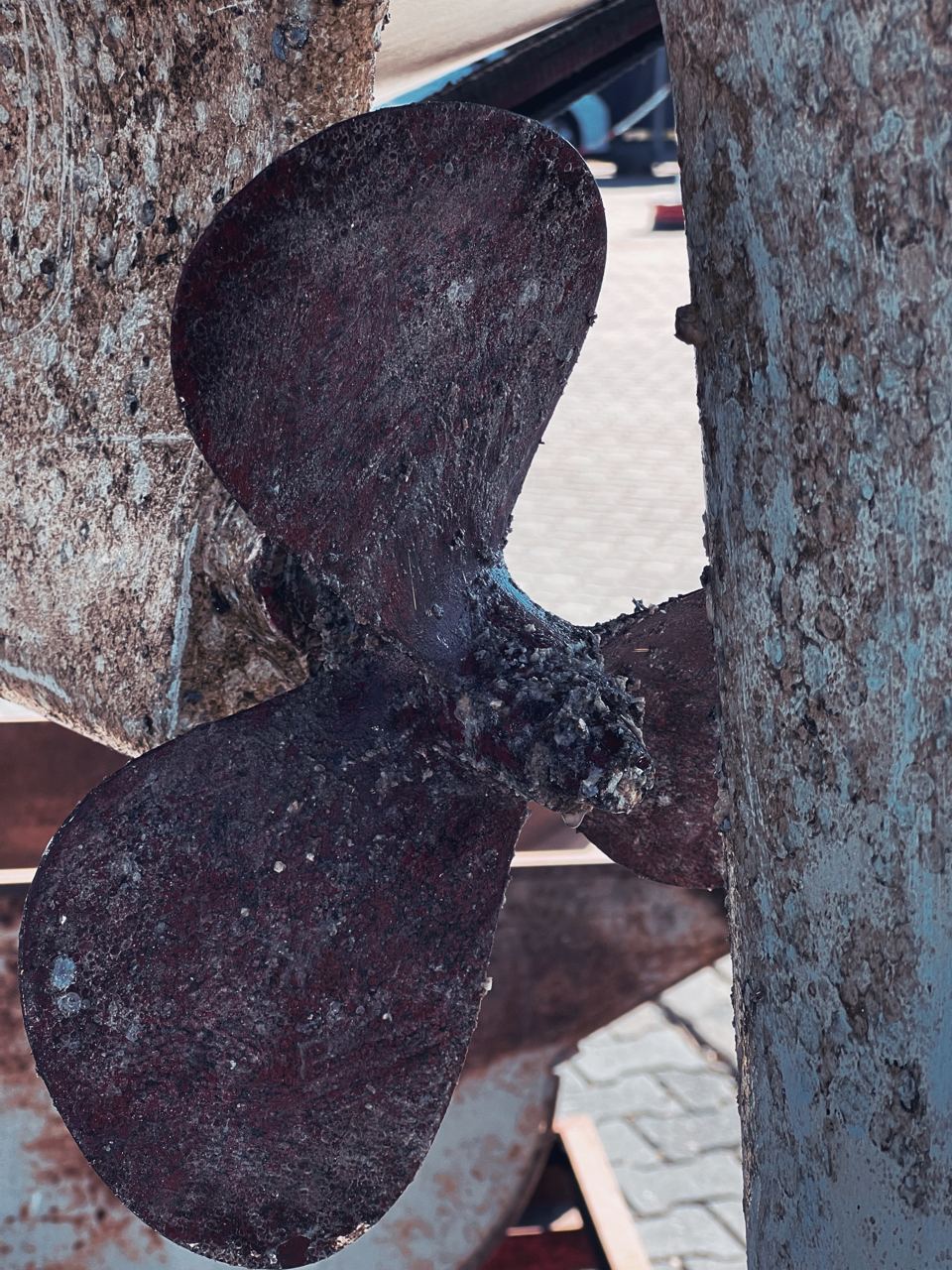
A couple of years ago, I nearly lost the season: my propeller fouled so heavily it resembled a mace, moving the yacht at 1.5 knots instead of five. Only an urgent lift-out and clean saved the situation. I decided never to leave it unprotected again.
On a visit to the show in Düsseldorf, I could try different non-slip finishes. Epifanes sold polypropylene beads separately to mix with paint, or ready-mixed paint.
• 125 × €0.22: 125mm hook-and-loop P320 ceramic-alumina sanding discs • 25 × €0.22: 125mm hook-and-loop P240 ceramic-alumina sanding discs • 1 × €0.50: 400-grit abrasive pad • 1 × €0.50: 180-grit abrasive pad • 1 × €35: Epifanes Fibreglass Prep Cleaner • 1 × €18: Epifanes Paint Thinner, one litre • 2 × €31: white Epifanes Multi Marine one-component primer, 0.75 litres • 5 × €39: yellow Epifanes Mono-urethane, 0.75 litres • 5 × €39: white Epifanes Mono-urethane, 0.75 litres • 1 × €18: black Epifanes one-component high-gloss waterline paint, 0.25 litres • 6 × €2.25: paint trays • 2 × €1.10: roller handles • 10 × €0.80: foam rollers Total: €625 The result Painting protects the fibreglass and simplifies upkeep as well as improving appearance.
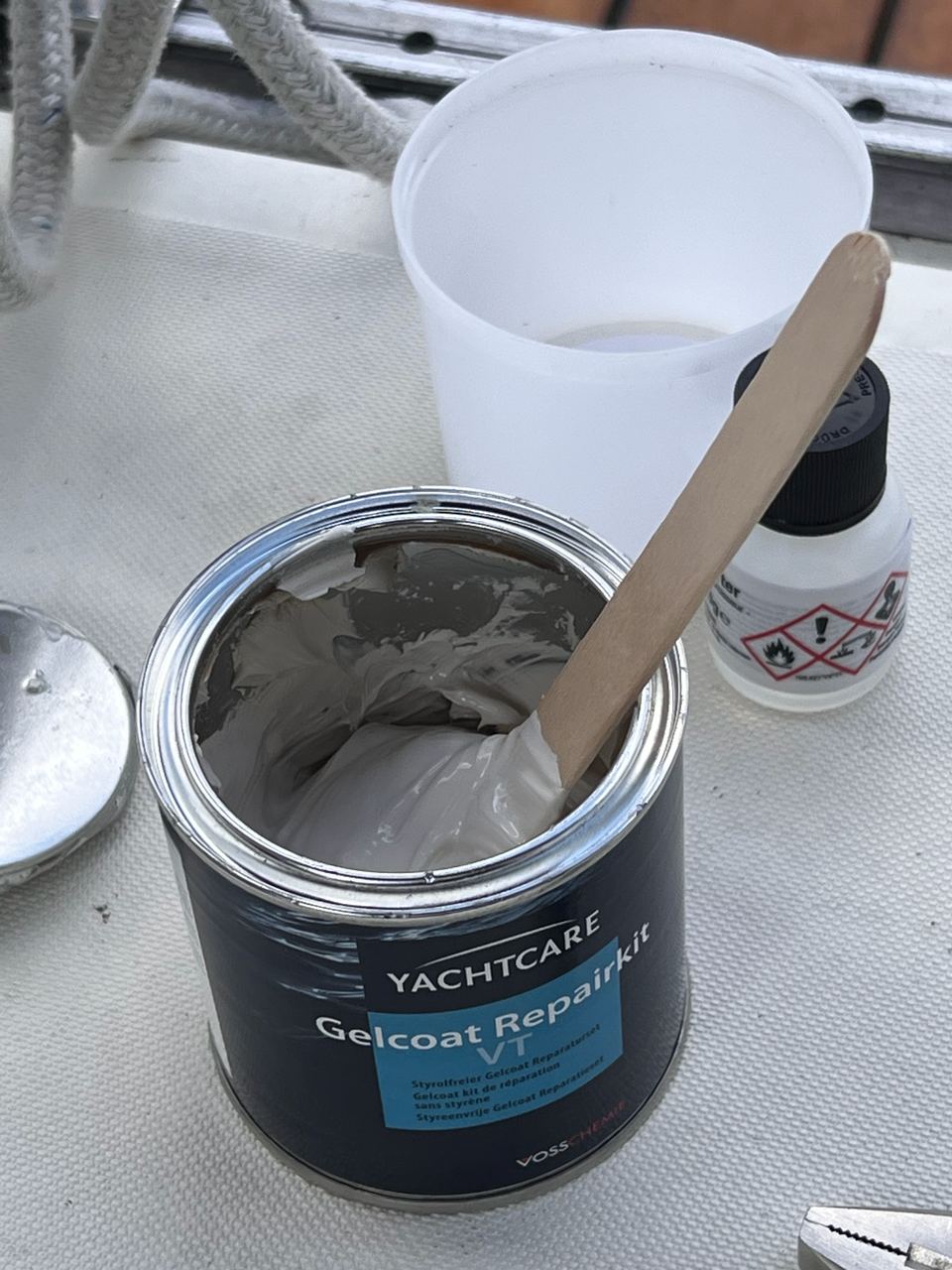
My yacht still had her original 1975 gelcoat, oxidised and aged, with a collection of chips and scratches exposing the fibreglass. Some were my own doing. I wanted to freshen her up and, above all, fulfil an old dream: a yellow yacht!
Getting aboard means bringing the boat against land or another boat. Called ‘berthing’, it often becomes a little adventure. If lucky, just a fright; if not, deep scratches in both memory and hull.
A neighbouring owner recently said, ‘Every hour of summer sailing costs an hour of winter boat repairs.’ Spending another weekend in the shed, I can’t disagree. I’ve taken on the hardest jobs and left smaller ones to the marina team.
December is for looking ahead as well as back. This was my second year as a boat owner. Looking back, I see how much I’ve done and how much remains. On the eve of Western Christmas, here’s my list for 2025. Hull: • In spring, the yacht suffered an impact at the stem.
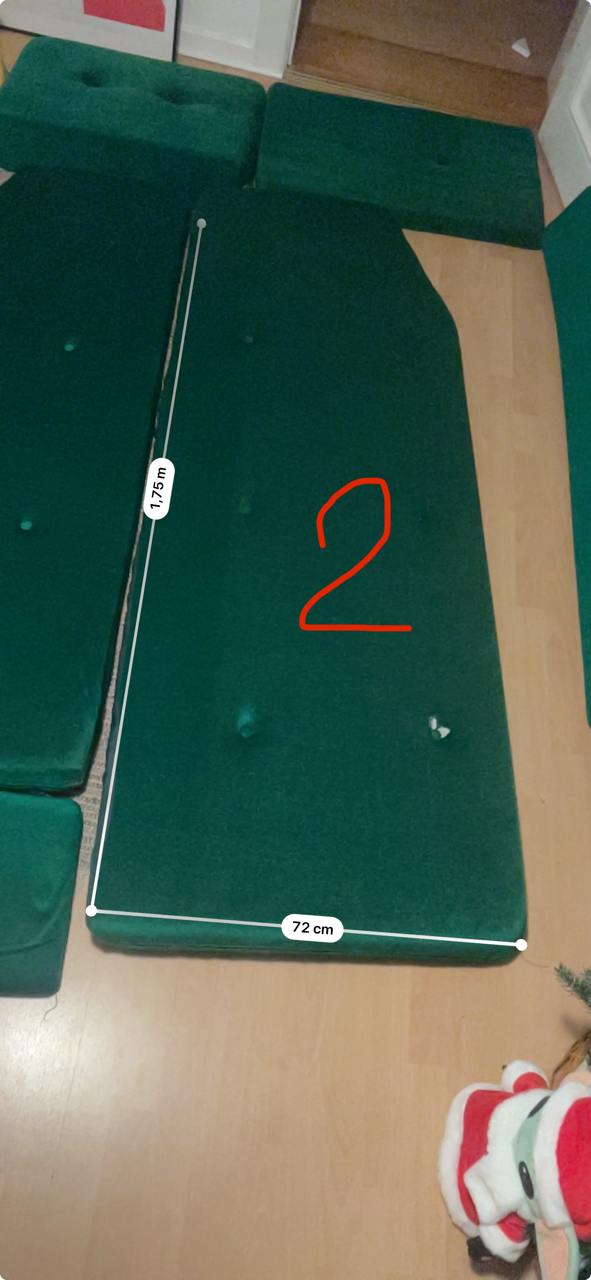
Mattresses are essential aboard, but sometimes bring more trouble than comfort. I have five, plus a dozen cushions, and they regularly give me a headache. First, they’re so soft your fingers almost meet when you squeeze them, yet so bulky that transport becomes an epic.
Unfortunately, unstepping the mast and lifting out aren’t enough for winter at our latitude. 1. Remove what you can Anything that absorbs moisture — sails, mattresses, cushions, blankets, towels, clothes — is better taken home. Otherwise, hang it or stand it upright.
Video 22 November 2024. I woke to a cold that gripped everything. Frost on the sprayhood, thin ice on the lockers, breath like a dragon’s. Hot tea and chemical warmers, then off to the marina. The harbourmaster told me I was fourth to lift. Time to prepare mentally.
18 November 2024. Time to unstep the mast, a necessary part of winter preparations in Germany. A cool day, rain easing and returning as drizzle. Running rigging first: neatly coiled and hung in the saloon to dry faster.
Friday, 8 November 2024. The icy wind cut to the bone. Almost impossible to warm up aboard. I abandoned the planned final trip to Neustadt with an overnight stay. Unbearable cold, fingers barely bending. Time to prepare for winter, starting with the sails.
Video Giving up on the old compass, I looked for a replacement, ideally without enlarging or reducing the hole in the hull. The original Silva 100P was my first choice.
Video On my first night outing this season, I noticed the compass behaving strangely. No illumination, and the card spun wildly at the slightest movement. Without visual references, I wanted something to help hold a course.
Video What separates discomfort from pain? A sheet slipping round the winch so you need the handle to grind it in: discomfort. Coming off altogether: a nuisance. Coming off every ten minutes: pain. My 10mm sheets barely hold in the cleats.
One joy of a yacht is being able to find sand or mud, drop the anchor and catch your breath. There are many types of anchor for different seabeds. Common ones are shaped like hooks with flat tips.
While the gelcoat cured, I turned to the stern-tube seal. It keeps water out where the propeller shaft enters the hull. The usual maintenance involves applying grease to the shaft and pushing it under the seal with a special rounded attachment.
After the post about falling overboard, Leonid commented. We moved to private messages and discussed the hull damage. Fibreglass was exposed at the stem, and I didn’t want to wait for moisture to cause delamination.
Video 31 May 2024. In the morning, I brewed coffee in a cezve and read the forecast. North-easterly: nine knots, force 3, gusting sixteen, force 4, during the day. Easing to six knots, force 2, gusting twelve, force 3, in the evening. A good sailing day.
Sometimes it feels as though the boat jobs will never end. But I seem to have finished almost everything I’d planned. First, I tried adjusting the Windex and finding where rain entered the mast.
For the third weekend running, Lübeck has been at the centre of a high-pressure system. No wind. But there’s always something to do aboard. First, new foam seals for the hatch and lockers. Cleaned and degreased with alcohol, then laid strips along the old marks.
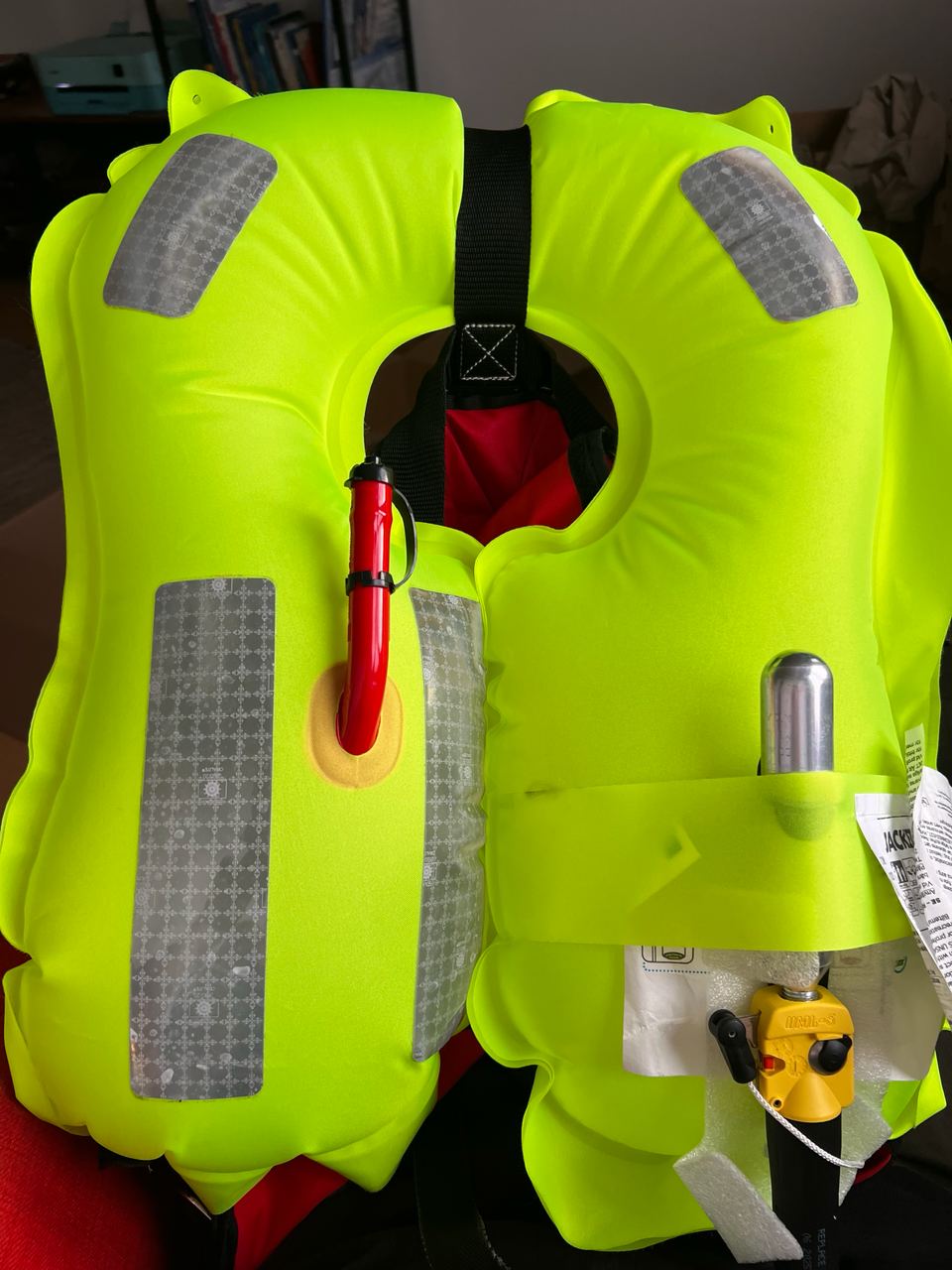
After going overboard I needed to service the automatic lifejacket. It works with a gas cylinder and a firing cartridge: a water sensor triggers the piercing pin. First, I deflated it by pressing the valve in the oral inflation tube with my finger.
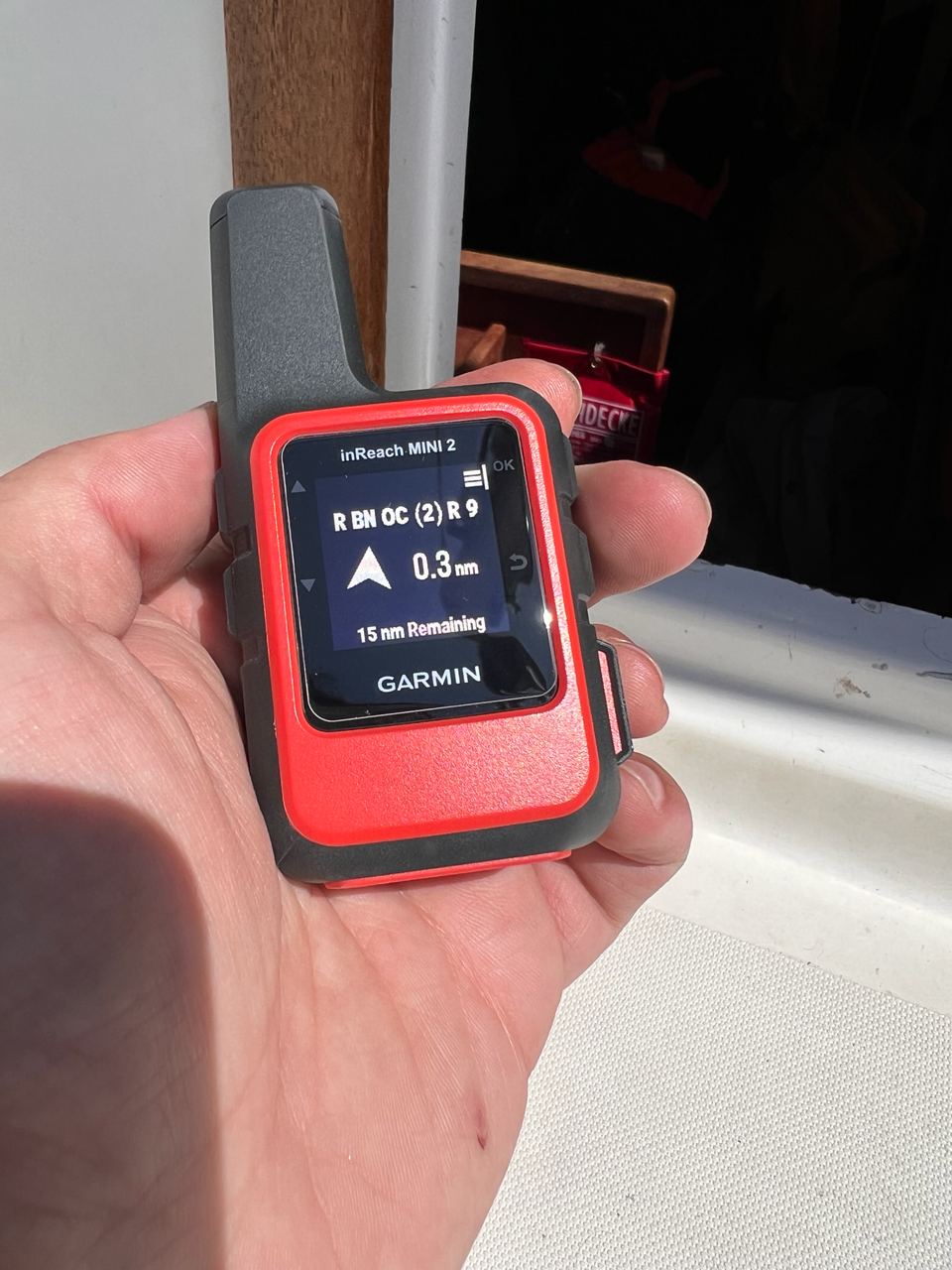
Video 18 May 2024. First passage. The engine held its revs. AIS warned of approaching vessels. On the Garmin inReach the waypoints were named after buoy characteristics. Handy. Its compass also showed course error, letting me adjust the autopilot to within a degree. Speed: 5.5 knots.
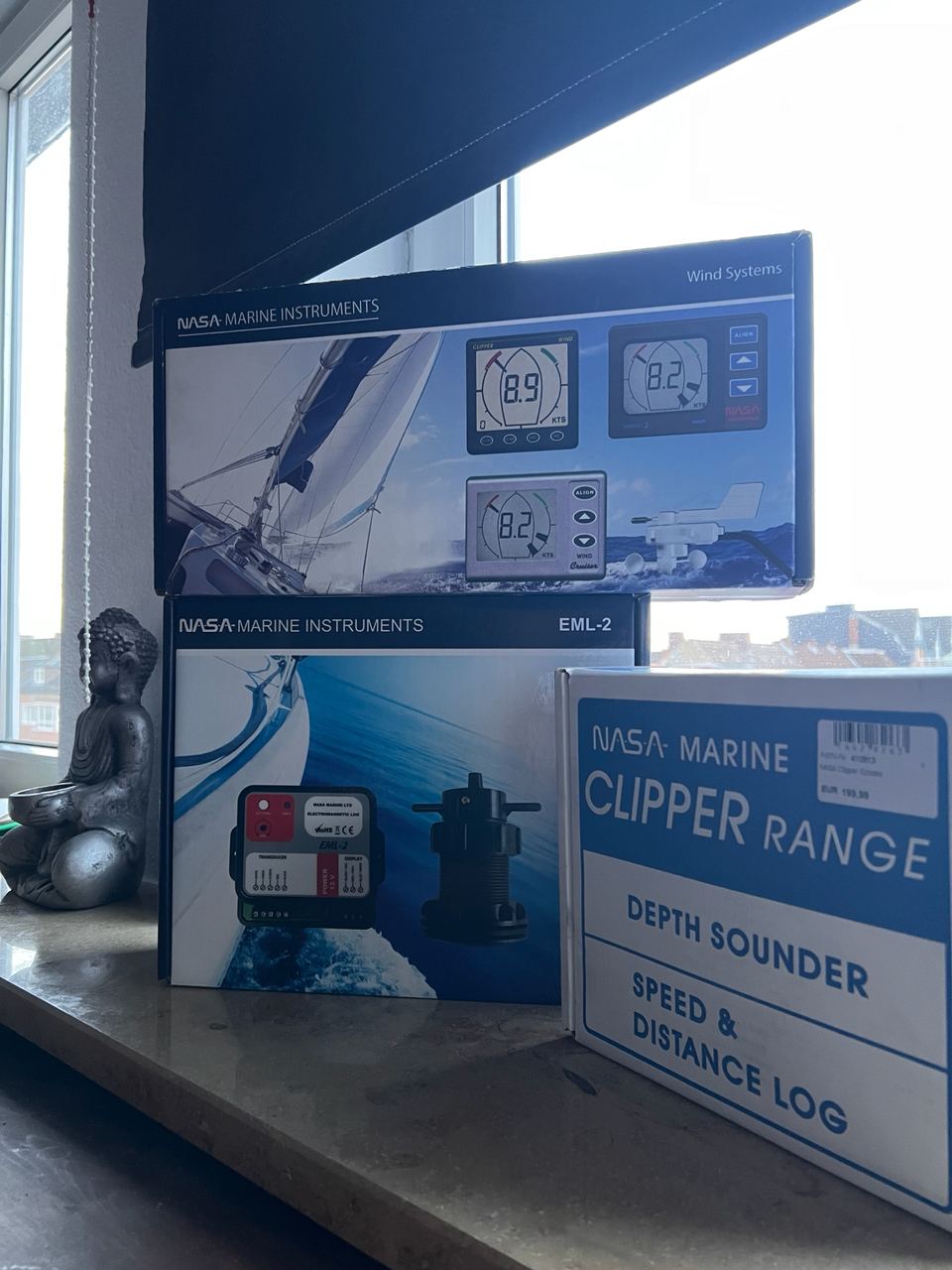
Video The yacht lacks the usual instruments for wind, depth and speed. Sailing with only Windy and Navionics isn’t very comfortable. In January, Grigory from Meerbär offered me his new NASA Marine Clipper instruments.
Video Along with the Garmin inReach Mini 2, came an em-trak B954: a 5W SOTDMA Class B AIS transponder with built-in active splitter, Wi-Fi and NMEA 0183/2000 support, for €1,050.
The technical work was done. Route planned. Another couple of hours went on putting away tools, fitting mattresses and checking the Victron Orion-Tr. The engine had warmed for twenty minutes. I cast off, but it stalled as we left the berth.
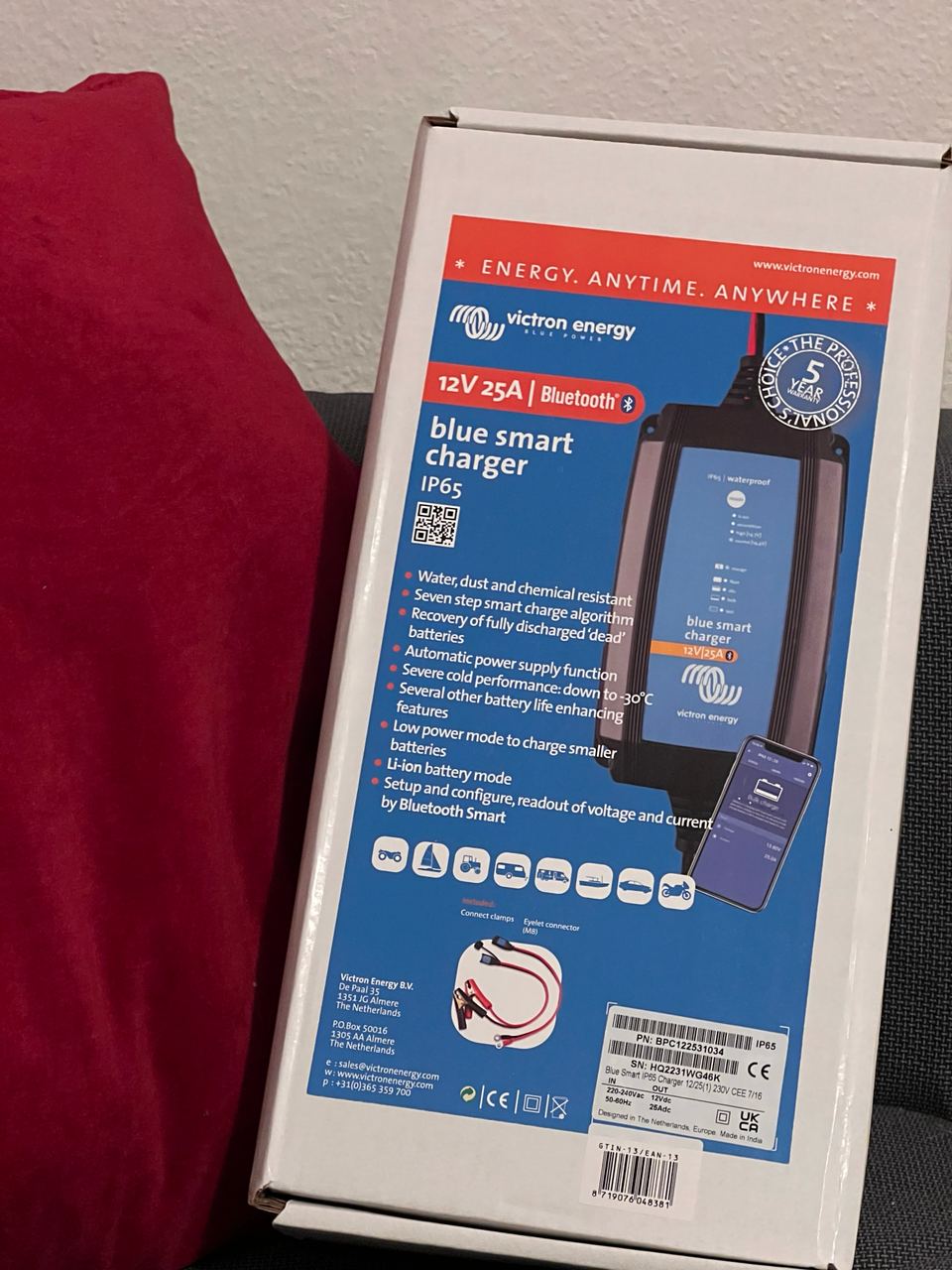
Electrics again. First, the starter battery could only be charged using clips. Second, the 7A CTEK Zafir 100 clearly wasn’t designed for a 220Ah bank. Third, charging domestic AGM batteries directly from the alternator is undesirable: the voltage is unstable and too low.
Video In autumn, I bought a small Kärcher K2 pressure washer for €70. No miracles: the previous owner’s paint splashes remained. No disasters either: the chips didn’t get bigger. On the plus side, it removed dirt.
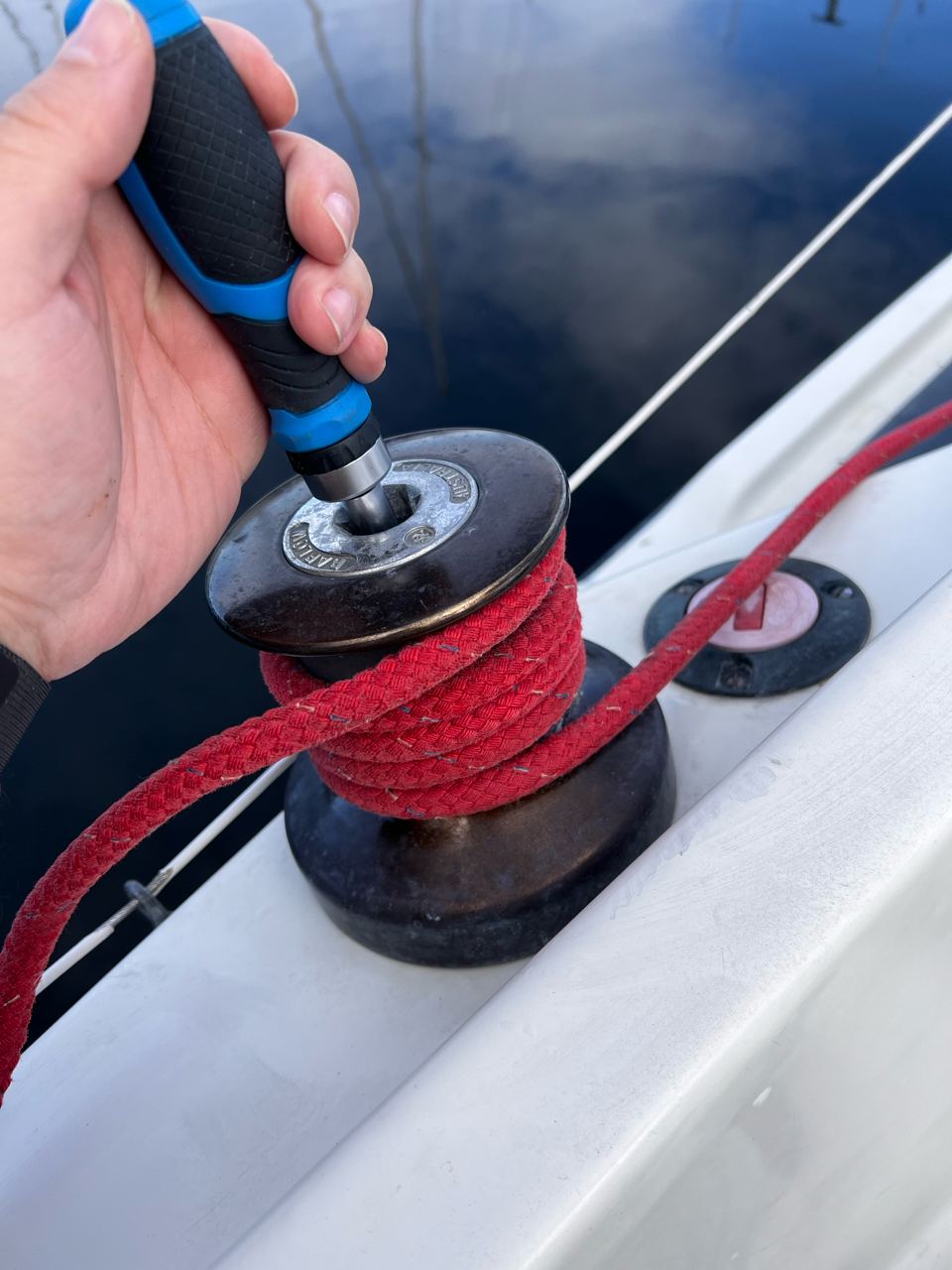
Video The wind can put over a tonne of load on a sail, and that load needs controlling. Hence the two jib-sheet winches in the cockpit. They should turn easily with a satisfying click from the mechanism.
Video The Davidswerft team offered to step the mast that same day, 12 April 2024. I berthed at the mast crane. They brought the mast on a two-wheeled support, pinned on the spreaders and shrouds, and passed the slings beneath them.
Video I arrived in the morning. Time for a few jobs while the harbourmaster managed the queue according to a system known only to him. Eventually, someone waved and said they’d get to me in about forty minutes. I asked which side would face the pier. Starboard.
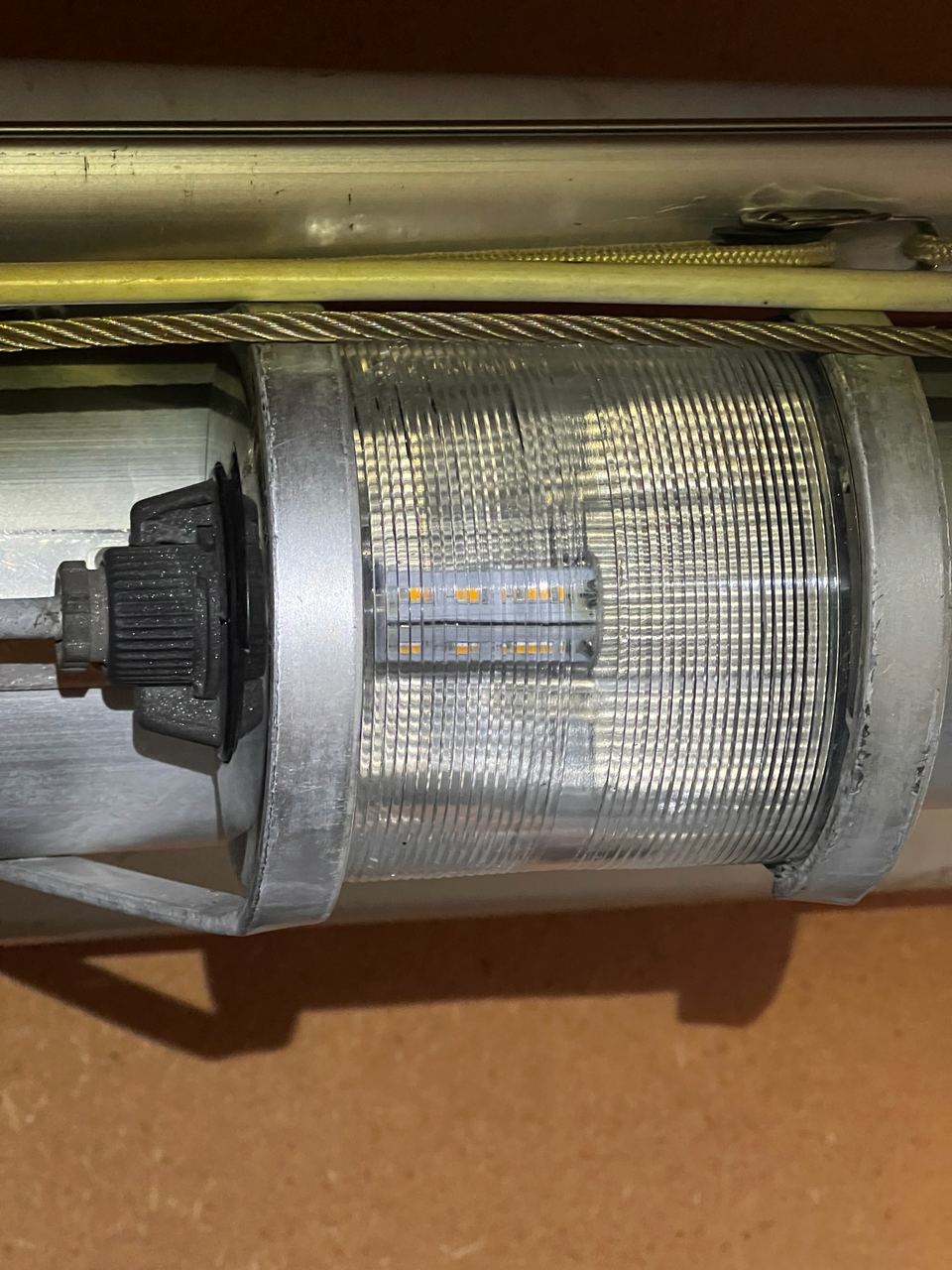
Video I replaced the incandescent navigation bulbs — made in 1975, consuming 105W altogether — with LEDs at €10 each. Four bulbs: stern, two sidelights and steaming light. Consumption dropped to 15W.
The propeller needs attention too. You can simply polish it. Apparently, if it contains enough copper and has a mirror finish, barnacles can’t attach. Another option is propeller antifouling, available as brush-on paint or aerosol.
Video Antifouling goes over the primer. It contains toxic biocides to prevent barnacles. Last summer, I had so many that the boat lost half her speed and the propeller turned into a mace. I wrote about it here, here, here, here and here.
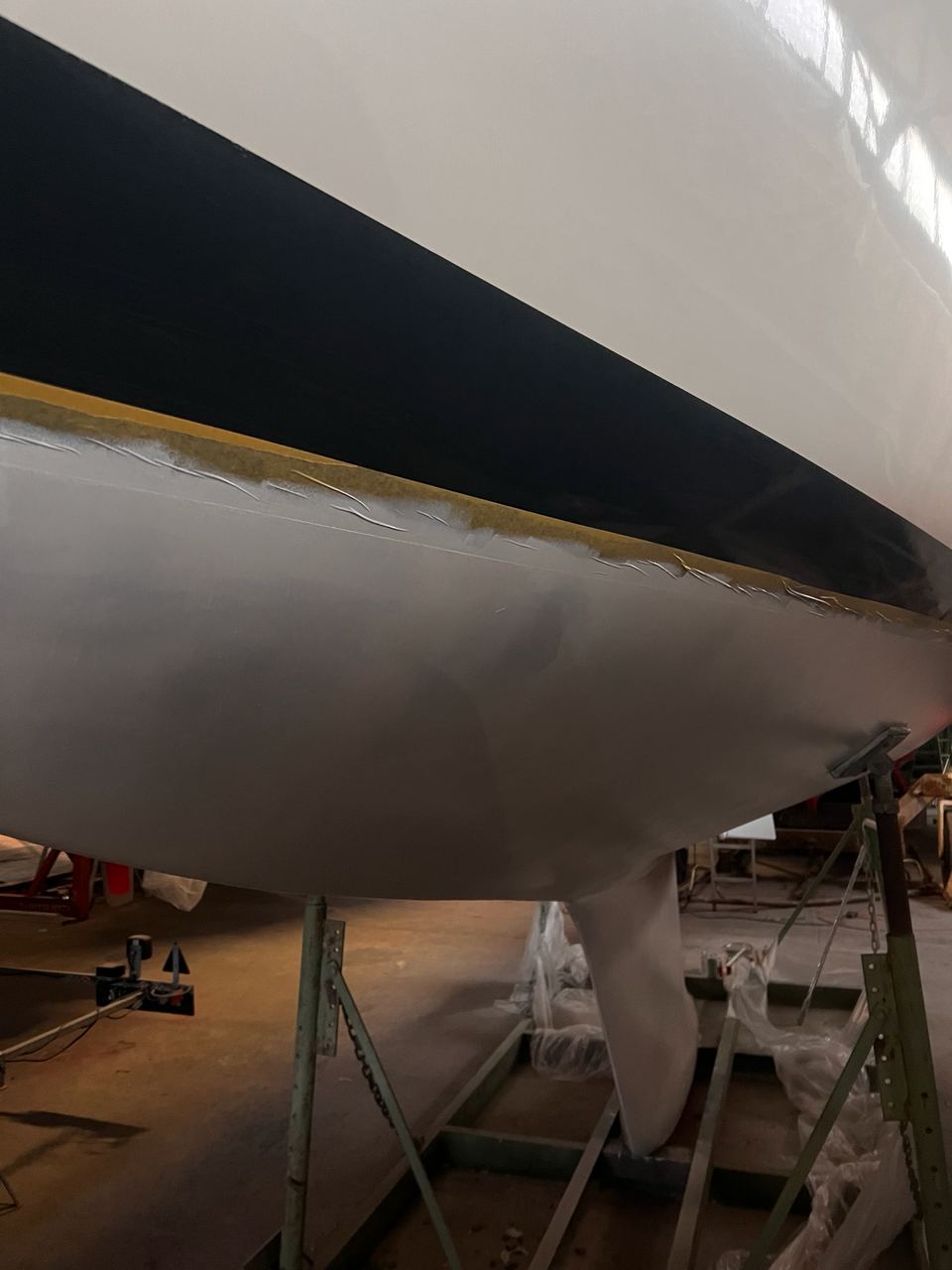
Video On 23 March 2024, I returned to the underwater hull. A visual inspection showed no damage, so I planned no fibreglass or filler work. Broadly, two coatings go on the hull: primer and antifouling.
Video Straight after sanding I turned to the topsides. They need protection from both the marine environment and UV.
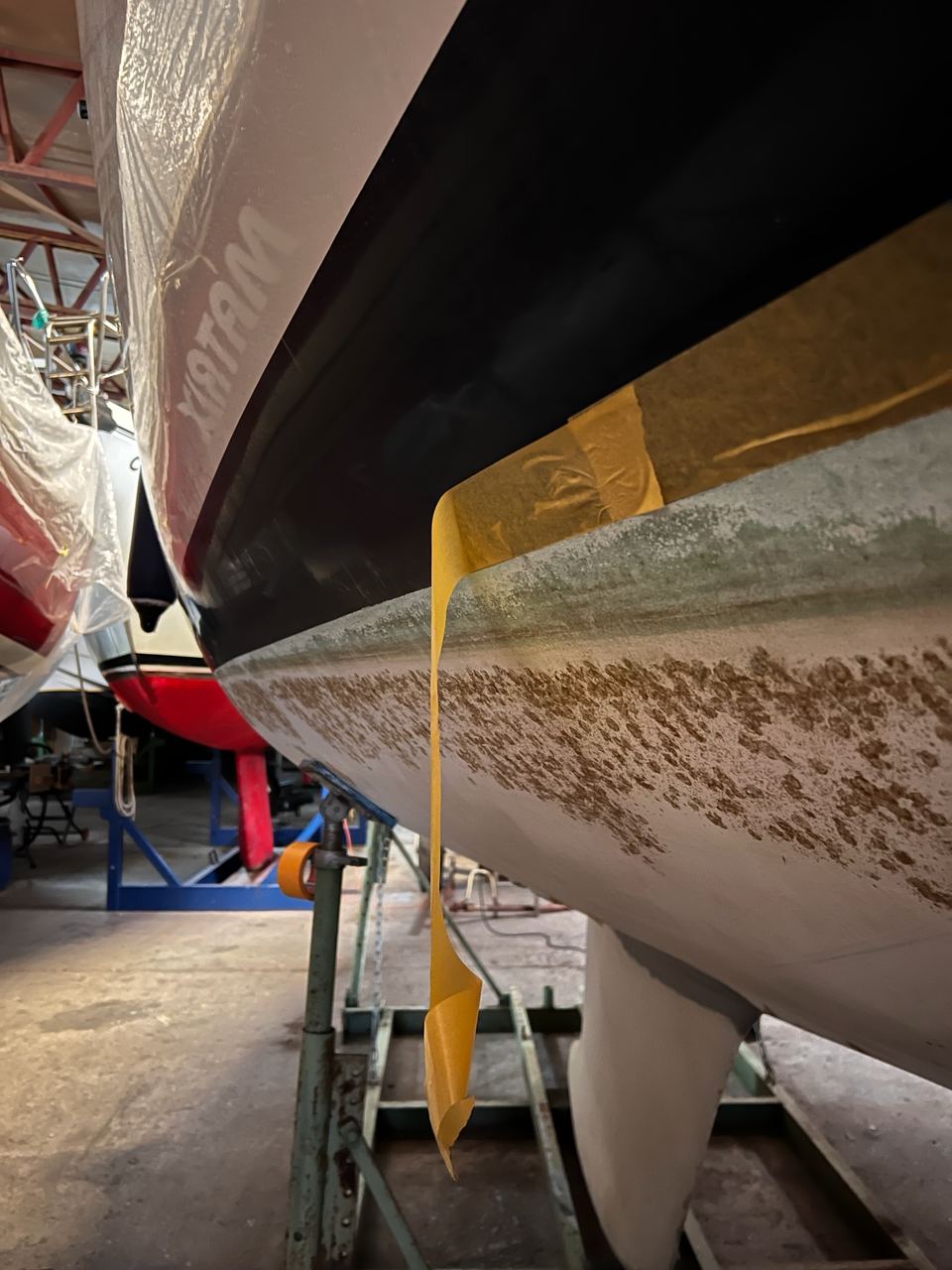
Video The first job for the new season was sanding below the waterline. I bought: — a budget Bosch sander for €50 and 25 discs of 80-grit paper — masking tape — plastic sheeting — a headtorch — protective suit, mask, goggles and gloves First, I masked the waterline.
After lifting out for winter, I had to think about caring for the sails and sprayhood. The recommendation is to rinse them with fresh water, dry them and store them somewhere warm. In October, I’d begun by removing them from the yacht and taking them home.
Video For the last two weeks, I’ve been looking for ways to solve the problem with the dipstick. Following @Kirill_Yuzhakov ’s advice, I attached a mooring line with an eye splice. I tried hanging and bouncing on it, then leading it to a winch and winding until it slipped.
Video At the yacht, I couldn’t remove the oil dipstick from my 2005 Nanni Diesel N2.14. It comes out about four centimetres, then jams. It won’t rotate either. I called several marine service companies; only one agreed to help.
The marina wrote at the start of February. They reported that they’d finished the keel work and sent the winter-service invoice. About the keel: they visually inspected the bolts and judged them sound. Nuts, washers and sealant were renewed.
On Tuesday, 14 November 2023, an email arrived from DavidWerft with a photo of mould aboard. They’d found it during the work and recommended taking the sails somewhere warm. Only two weeks had passed since the lift-out. The moisture absorbers were still at home.
Video When I lifted the boat for cleaning in September, I saw rust at the keel-to-hull joint. My heart sank: that couldn’t be good. Thoughts raced through my head, including selling this yacht I’d spent more time fixing than sailing.
After lifting out, the yacht needs winterising. Here’s the jobs list: 1. Fill the diesel tank to the brim, leaving no air space for condensation. Add a biocide. Some people advise the opposite: empty the tank completely and drain off the water in spring. 2.
Video Two days later, on Friday 3 November 2023, I was back aboard Rassvet. This time for the winter lift-out. There wasn’t a strict order, at least on paper. Boats were lifted one after another, and the harbourmaster gave owners about half an hour’s notice.
On Wednesday, 1 November 2023, the day after my 34th birthday, I’d arranged for the DAVIDSWERFT team to help unstep the mast at ten. €79 an hour. The full procedure went like this: 1. Remove the sails and boom. Done beforehand. 2. Berth beside the crane. 3.
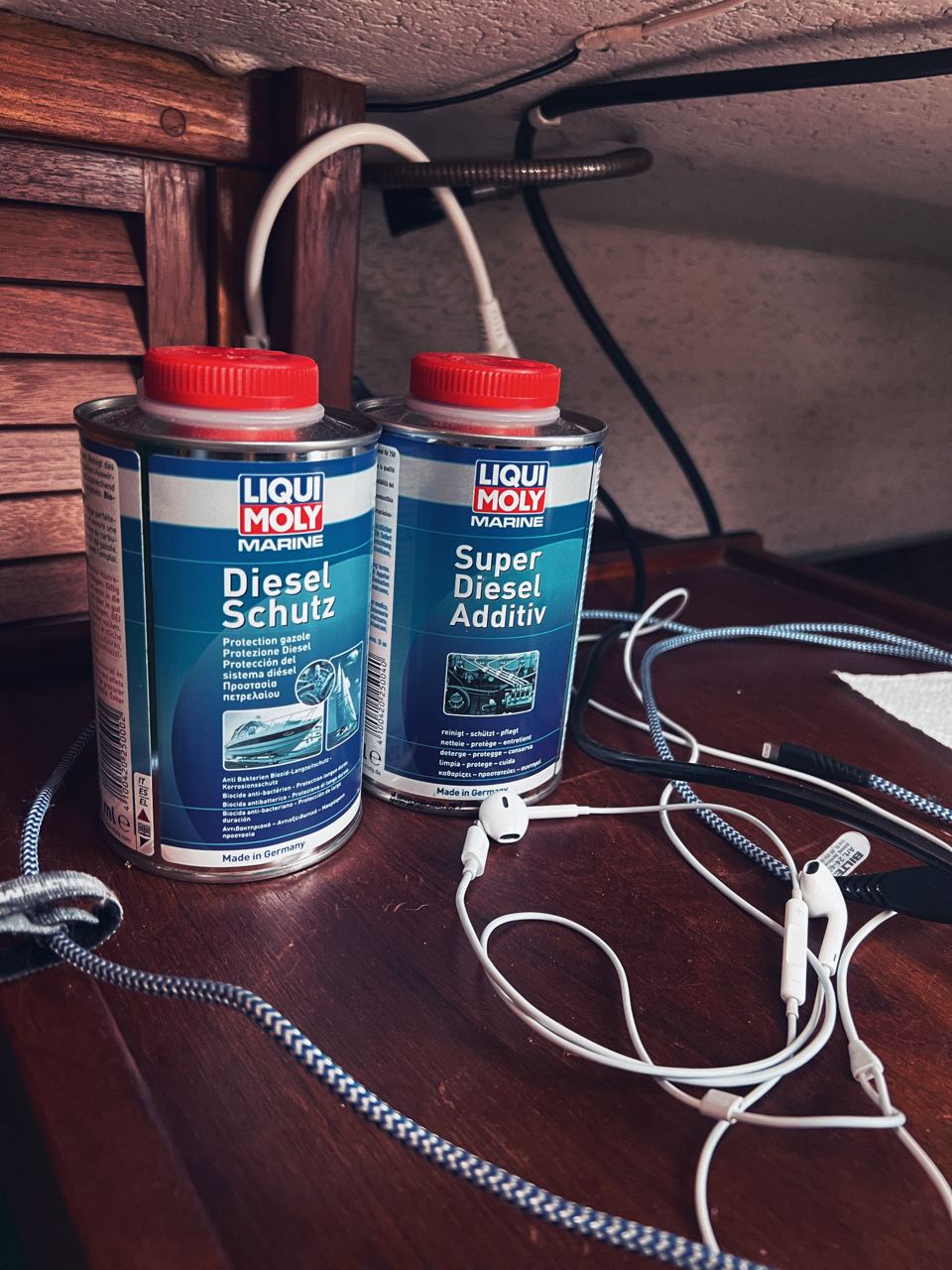
28 October was a day of winter preparations. In the morning, I connected shore power to charge the starter and domestic batteries, then filled the diesel tank to the brim from cans, adding Liqui Moly Diesel Schutz and Super Diesel Additiv against bacterial growth.
Video I decided to replace the battery. The 30-day return period hadn’t expired yet. In the morning, I took a trolley to the yacht, disconnected the suspect battery and packed it. I measured both: 13.1V on this one, 13.4V on the good one.
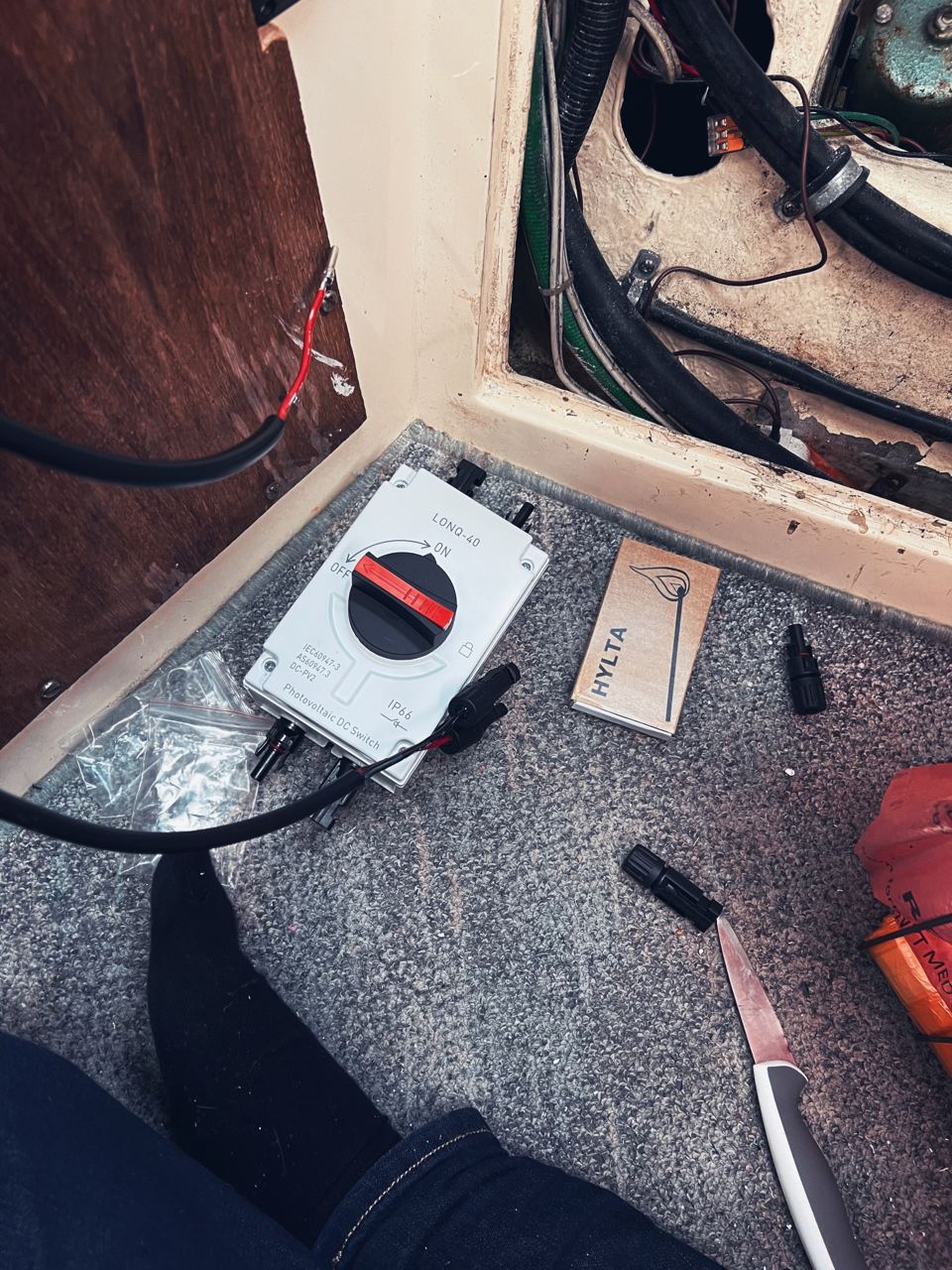
Video Replacing the solar panel was the finishing touch to the electrical work.
Every single day, I read articles about lead-acid, gel, AGM and LiFePO4 batteries: their differences, characteristics, and how to connect and charge them correctly.
Video At some point, every night aboard had started to leave me with a morning headache. Also, when I returned from Sweden, Masha met me. I put some things in a shoulder bag and handed it to her.
Video Alongside the engine saga, I began working on the yacht’s electrics. On day five of the passage from Sweden to Germany, the bilge pump failed and nearly took the batteries with it. Most likely, something had knocked its switch in the motion, leaving it pumping air for hours.
Video @AlexMemfis and a couple of authorised service centres suggested lifting the yacht to clean off the growth. Fouling might have become so bad that the propeller was working like a mixer, churning the water in circles. I wasn’t convinced.
Video Trying to get to the bottom of the engine problem, I wrote in Telegram sailing chats, consulted @AlexMemfis, asked marina neighbours, found every authorised Nannidiesel service centre in Germany and emailed them all. Even Evgenia Lyubimova got in touch (@Liubimova_E).
Video Unexpectedly @AlexMemfis suggested looking into the cooling system. He asked me to film the entire water route, from the inlet seacock to the outlet. Once I’d done it, he thought for about 15 minutes, then called with his observations.
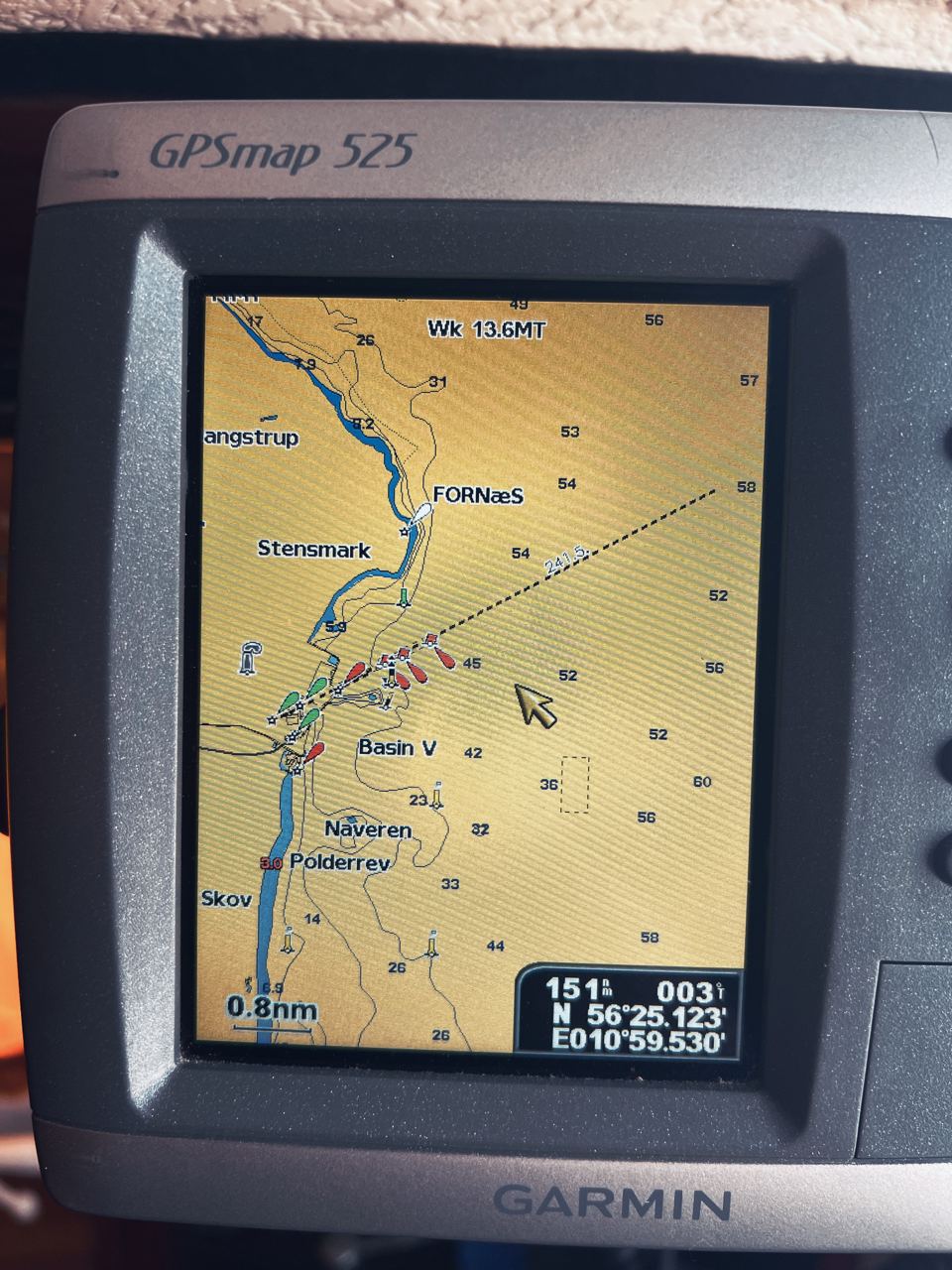
My boat has a Garmin GPSMap 525 chartplotter. Its microSD card holds BlueChart g2 Vision VEU468S, Södertälje–Trelleborg, for Sweden’s east coast. Two serious drawbacks. First, deep water is yellow, just like land, so I had to peer carefully at the screen every time.
Video On 18 June, I returned to the yacht for the first time since the May passage. Sunshine greeted me, along with a thick layer of cobwebs everywhere imaginable. A day for small jobs. First, the renaming. Montezuma would now proudly bear the name Rassvet.
Video Between looking for a yacht and getting qualified, a colleague asked me to help launch his boat and step the mast. Bursting with curiosity, I gladly agreed. 12 April 2023. Saturday. Ten in the morning. A Hanse 312 stood on supports near Kiel’s Olympic sailing centre.
Try a different part name or select a node above.