In this publication9 photos · 1 video
A leak offshore
An ideal forecast, an unusual opportunity
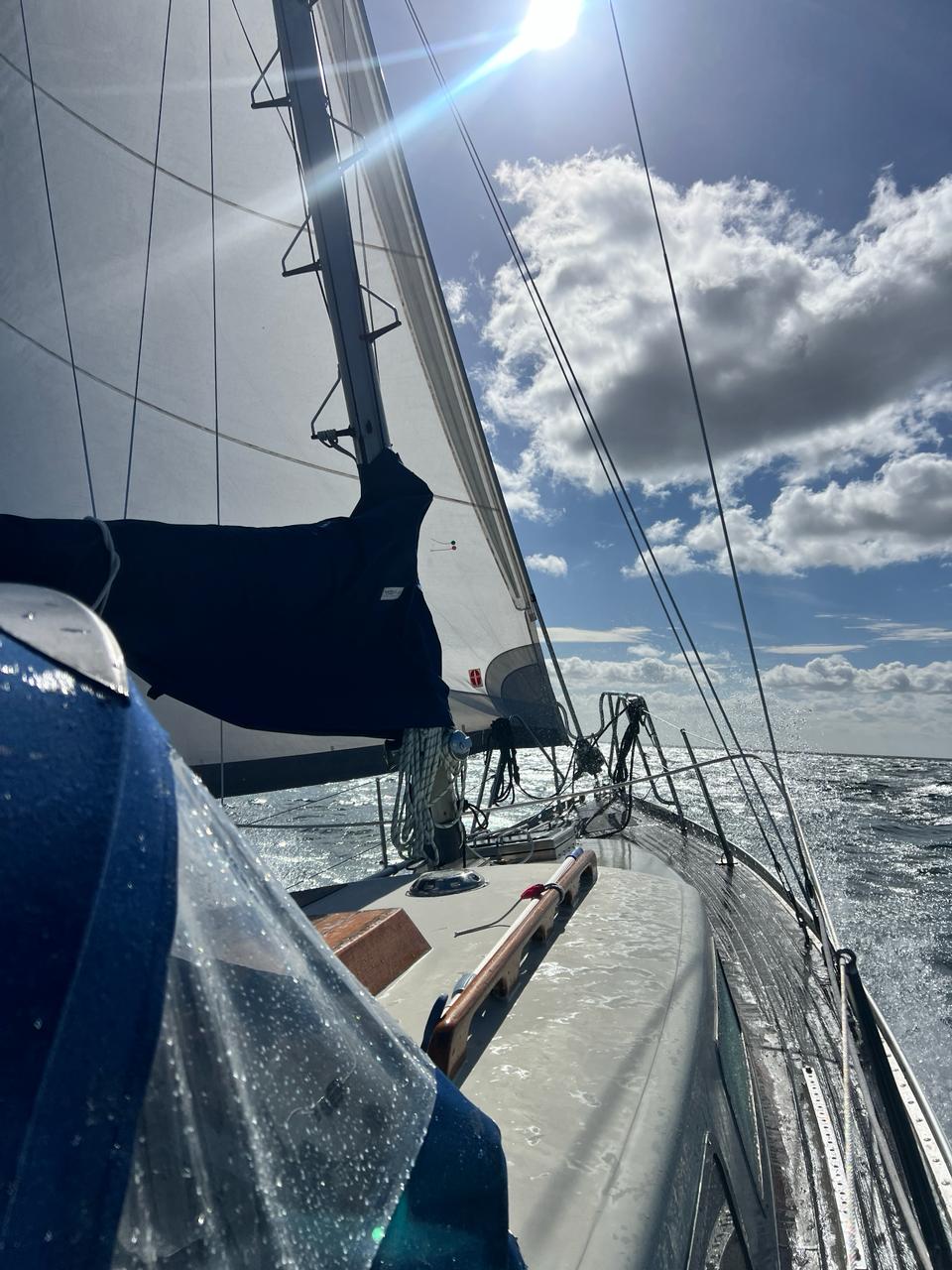
11 July 2025. A rare Baltic combination: north-westerly Friday, easterly Sunday. East to Fehmarn, then home with following wind.
Military areas and a shortcut
Between Kiel and Fehmarn, the exercise areas Todendorf and Putlos. Closed when active. To avoid a detour, check the schedules:
– website of BSH,
– yacht club Lippe,
– navigation warnings on Boat View from NV Charts.
NV Charts makes German charts. On our way for provisions, we met a colleague. He opened their app: no exercises. Ten miles saved.
Unexpected wind
Crew aboard by lunchtime, evening departure. Forecast twelve to eighteen knots. No reefs. In open water, headed east; soon the wind became easterly too. Windy still promised north. Engine on.
Then the log suddenly read 99 knots. We discussed causes: weed, fouling, small debris.
Water below
The saloon carpet was floating. Offshore, five miles from land. Murky brown water, starboard heel. Under the berth: water everywhere. Decision: turn back. Changing course changed the heel, sending water pouring from beneath the starboard berth into the saloon.
Too much water to find the leak. Priority: transfer it to the pump beneath the engine. Bucket and cloth? Clearly hopeless. Remembered the drill-driven pump, fetched it, started. The water stopped rising. Just as I hoped we had control, the drill battery died.
Taste test
Remembered the spare pump beneath the fifth berth. Nika and I cleared everything away to reach it. She asked: ‘Are you sure it’s seawater?’
Confident ‘yes’, then doubt. Finger in: fresh. Several fingers: same. A palmful in my mouth, spit. Freshwater-tank water.
Source found
I connected the electric pump to the fridge supply and led its hose beneath the engine. Why was the mattress wet, half a metre above the cabin sole? The galley tap was turned sideways, pouring over the worktop. Same in the heads. A short circuit had kept the pump running, emptying the whole eighty-litre tank below.
Conclusions ashore
Water pumped out, I asked whether we should continue. Everyone said no. As if on cue, the autopilot stopped responding, just like last time on the Fehmarn route.
Hand-steered back to Kiel. In the marina, the pump was still running. Disconnected its second supply from the heads. Carpet out to dry, then rest.
What I learnt
1. Taste the water first.
2. Fresh water means a limited amount, so some relief.
3. The freshwater pump needs a manual isolation switch.
4. Bucket, cloth, drill pump and hunting for wires under piles of gear aren’t a solution. A powerful, accessible pump with a proper connection is needed.
5. With a real leak, heading inshore to run aground is an option.
6. The ST1000 autopilot needs serious investigation. I dismantled it but found no cause.
I hope it’s coincidence rather than a curse on the Fehmarn route. Suspicions are growing.
Has anyone faced something similar? How did you handle it? Have I missed anything important?
#passage
Original and discussionOpen post in Telegram ↗