Ohlson 29 / 1975 / Hull no. 170
Rassvet
My chapter: 2023–2026
My first yacht: the passage from Sweden to Lübeck, my first independent passages, indoor winter work and several seasons of life with the boat. In August 2026, Rassvet passed to Janne and Rabea. This is the story of hull no. 170 and of my part of her life.
Photos31 photos
One hull / different chapters
The boat's history
- 1975–2021
FULLSTAR
First owner
Gothenburg, Sweden - 2021–2023
MONTEZUMA
Second owner
Kalmar, Sweden - Since August 2026
RASSVET
Janne & Rabea
Fehmarn, Germany
Ohlson 29
Specifications
- Builder
- Artekno
- Designer
- Einar Ohlson
- Hull length
- 8.85 m
- Waterline length
- 6.70 m
- Beam
- 2.70 m
- Draught
- 1.60 m
- Displacement
- 3.1 t
- Ballast
- 1.25 t
- Original sail area
- 25.2 m²
- Mast above waterline
- 11.60 m
- Hull and deck
- Solid GRP
- Rig
- Masthead sloop
- Berths
- 5
Dimensions come from the Ohlson 29 technical sheet kept with the boat. Engine and tank details describe Rassvet herself as handed over to her new owners.
As handed over in August 2026
Equipment
Engine and fuel
- Nanni Diesel N2.14, installed in 2005
- Diesel tank — 40 L
- Fuel pre-filter and raw-water strainer
Power aboard
- Two 105 Ah AGM batteries
- Solar panels: 2 × 100 W
- Victron 15 A MPPT controller and 230 V / 30 A shore-power charger
Instruments and navigation
- Silva 100 compass and Windex
- NASA Marine Clipper wind, depth and log instruments
- Radar reflectors and LED lighting
Water and sanitation
- Freshwater tank — 80 L
- Holding tank — 40 L
- Bilge pump, mixer tap and hand-held bidet spray
Sails and deck
- Cap shrouds, backstay and turnbuckles renewed in 2026
- Main halyard and genoa sheets replaced in 2025
- Barton Winchers, bow platform and propeller-shaft access through the cockpit sole
Maintenance and changes
Maintenance history
Completed work, previous owners' records and plans retain their dates and sources. Links lead to the full stories where a publication is available.
2026
- Completed Andrei IatsukNavigation
Before the handover, the em-trak B954 AIS transponder and the Nexus NX2500 VHF radio were removed; they move to Aurora.
- Completed Andrei IatsukRigging
New cap shrouds and backstay with turnbuckles, shroud retainers at the spreader tips and turnbuckle covers.
- Completed Andrei IatsukEngine
Raw-water pump impeller and shaft seal replaced. Full engine service by Davids Werft.
- Completed Andrei IatsukElectrical
Two new 100 W solar panels and a 12 V socket in the forecabin.
- Completed Andrei IatsukThe deck Inside Tree
New chain pipe for the anchor rode into the forepeak, a marine-plywood box and a bow platform.
- Completed Andrei IatsukThe deck Steering Tree
Exterior woodwork reinforced with epoxy and finished with three coats of Epifanes varnish; the tiller received five coats.
- Completed Andrei IatsukHull Engine Inside
Five coats of epoxy primer over the new waterline and the cleaned keel, two fresh coats of Hempel Mille NCT on the underwater hull, Hempel Silic One on the propeller and a new cabin mirror.
- Completed Andrei IatsukHull The deck Tree Fiberglass
The rack torn out on Bornholm received temporary fastening. A year later, a repeated breakdown opened the wet mortgages and turned into a rebuild of the side.
2025
- Completed Andrei IatsukThe deck Engine
Removable cockpit sole section for propeller-shaft access and new stainless-steel hatch hinges.
- Completed Andrei IatsukRigging
New main halyard with a dedicated mast block, and new genoa sheets.
- Completed Andrei IatsukHull The deck
Hull repainted yellow and deck white with Epifanes Mono-Urethane. KiwiGrip applied to the working areas.
- Completed Andrei IatsukEngine Water and bilge systems
Full engine service by Davids Werft, a new mixer tap and hand-held bidet spray.
- Completed Andrei IatsukHull Engine Season
Indoor winter storage. Two coats of Hempel Mille NCT on the underwater hull and Hempel Silic One on the propeller.
2024
- Completed Andrei IatsukEngine
Full engine service by Davids Werft; fuel pre-filter and raw-water strainer installed.
- Completed Andrei IatsukNavigation
New Silva 100 compass, Windex, and NASA Marine Clipper Wind, Depth and Log instruments.
- Completed Andrei IatsukNavigation
Installed an em-trak B954 Class B AIS transponder with a built-in antenna splitter.
- Completed Andrei IatsukNavigation Electrical
New radar reflectors and LED lighting inside and outside.
- Completed Andrei IatsukRigging The deck
Winches stripped, serviced and lubricated; Barton Winchers and a rail-mounted anchor holder fitted.
- Completed Andrei IatsukRigging The deck
Genoa seams, sprayhood window and seams, and hatch and locker seals renewed.
- Completed Andrei IatsukHull
Keel bolts and the keel-to-hull joint serviced by Davids Werft.
- Completed Andrei IatsukHull Engine Season
Indoor winter storage and Hempel Silic One coating on the propeller.
- Completed Andrei IatsukEngine
The Nanni N2.14 dipstick was twisted by the crankshaft. After an unsuccessful visit by mechanics and a search for options, Grigory helped pull it out without lifting the engine.
2023
- Completed Andrei IatsukElectrical
Victron 15 A MPPT controller, Victron 230 V / 30 A shore-power charger and 16 A circuit breakers installed.
- Completed Andrei IatsukElectrical Water and bilge systems
Two new 105 Ah AGM batteries and a new bilge pump.
- Completed Second ownerHull
The previous owner renewed the hull's epoxy barrier coating before the purchase.
- Completed Andrei IatsukEngine
The search for the cause of the low speed went through the cooling system, fuel and consultations with services. The junction was under water.
The annual history comes from the Rassvet archive. Work dates may differ from the dates of posts describing it.
From symptom to result
Stories from the workshop
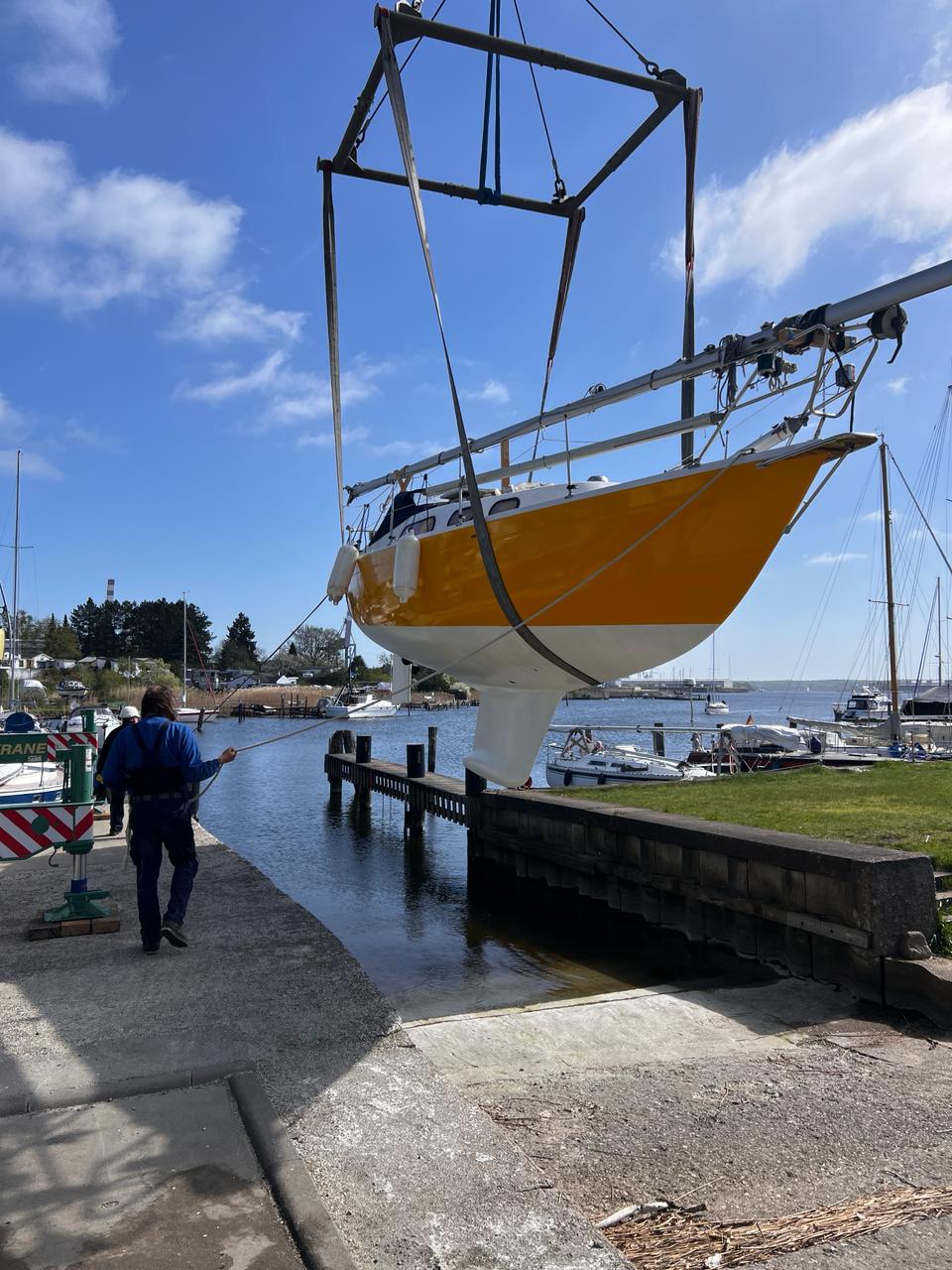
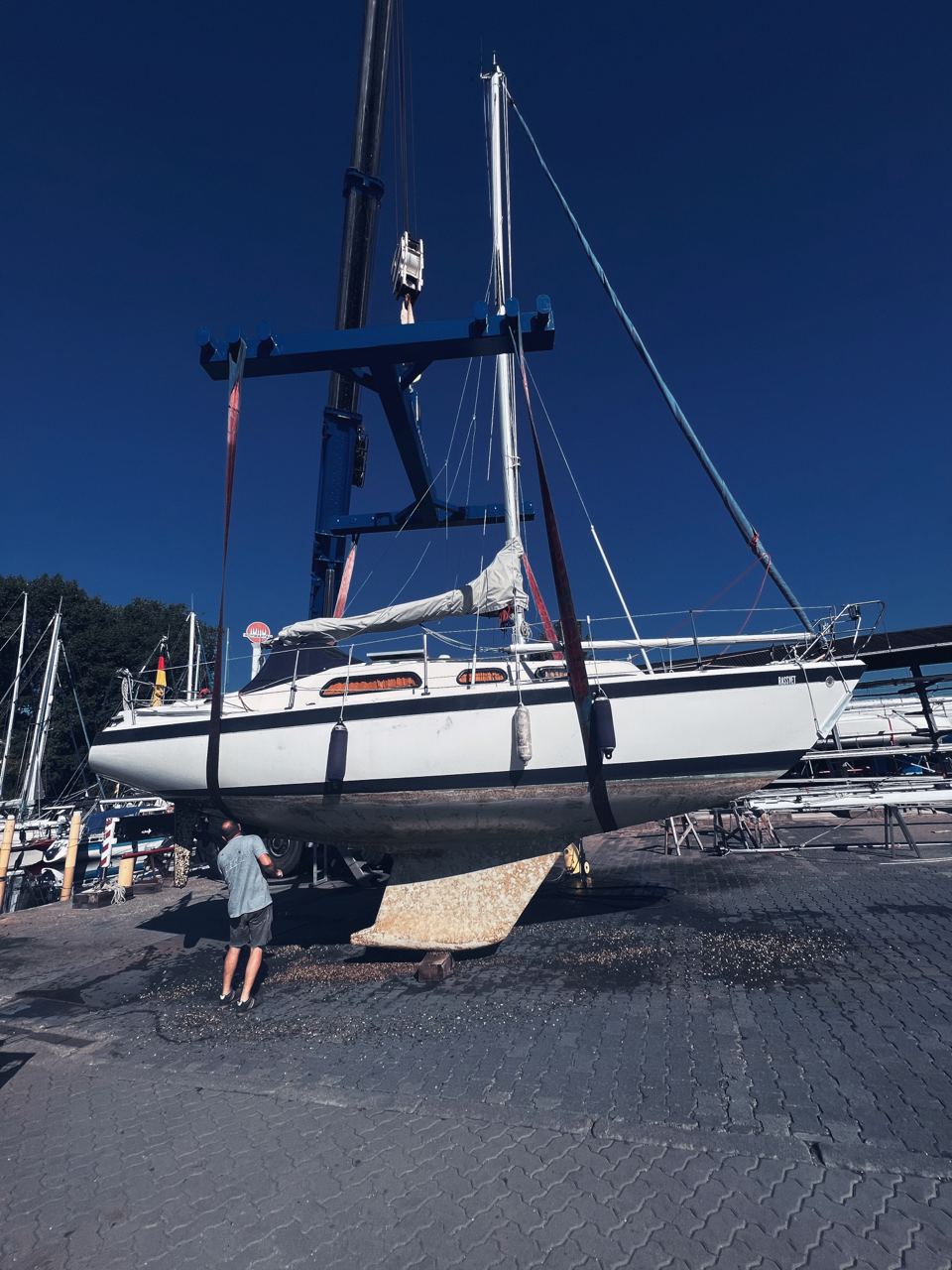
Launch the boat after winter
Over the winter the yard in my marina was to service the engine, replace the shaft seal and the shrouds, and fit a bow platform and a chain hawse. The spring plan was simple: launch in the morning, step the mast by lunchtime and leave for Kiel straight away.
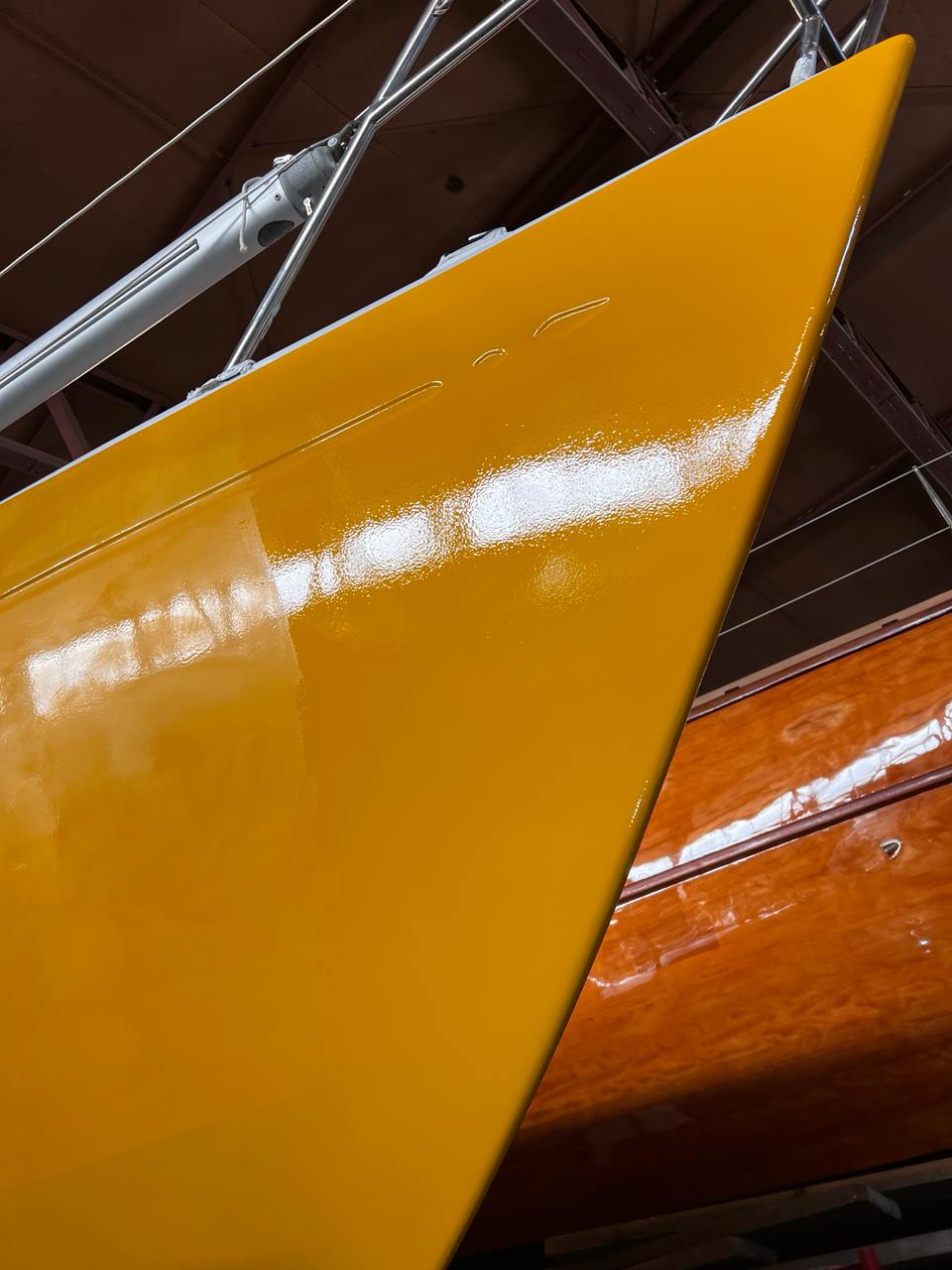
Repaint the whole hull
From old gelcoat and scratches to yellow sides, white deck and new non-slip surface. Two months of work in the hangar - with mistakes, shopping lists and joy from the result.
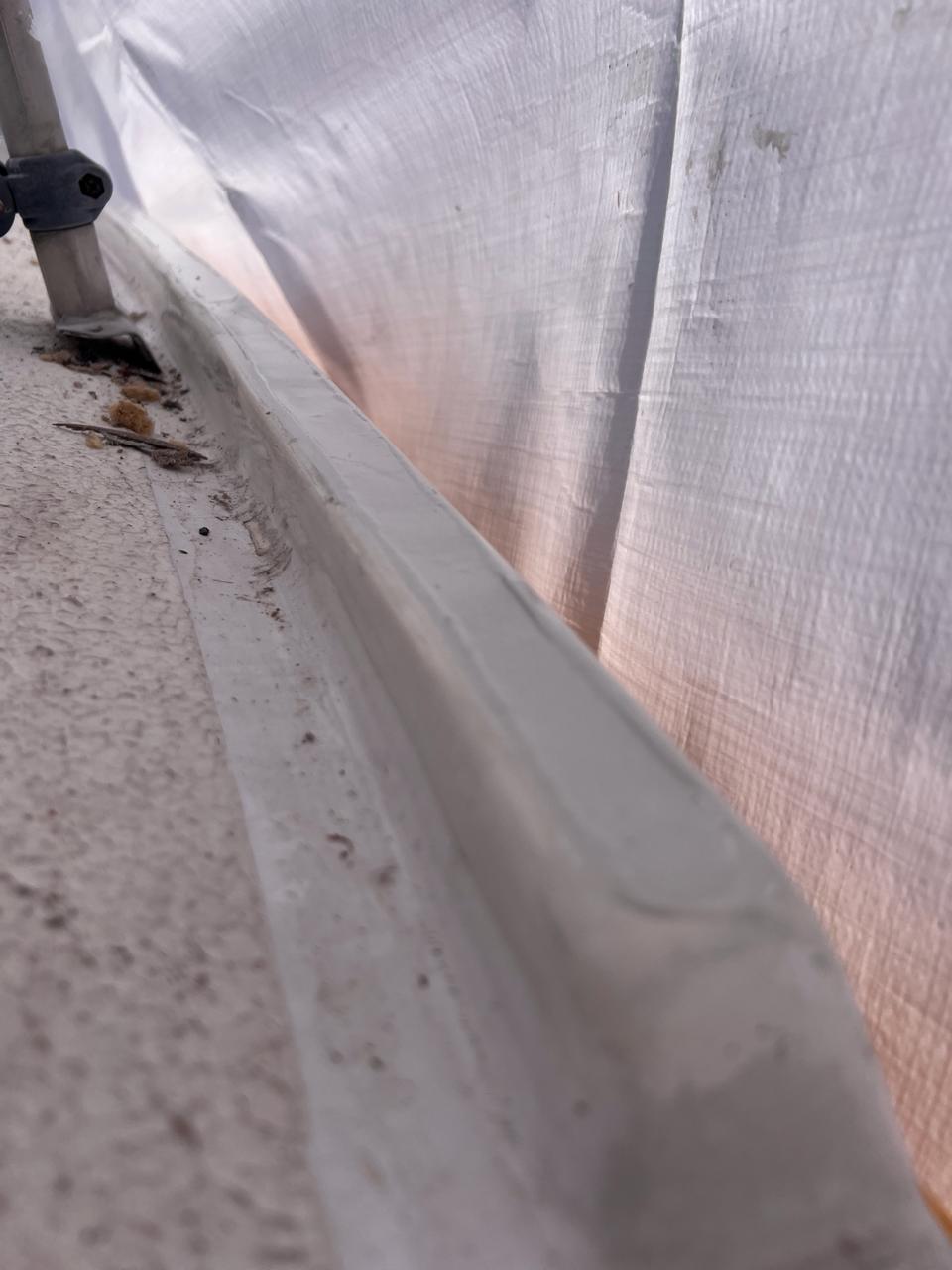
Rebuild the stanchion base
The rack torn out on Bornholm received temporary fastening. A year later, a repeated breakdown opened the wet mortgages and turned into a rebuild of the side.
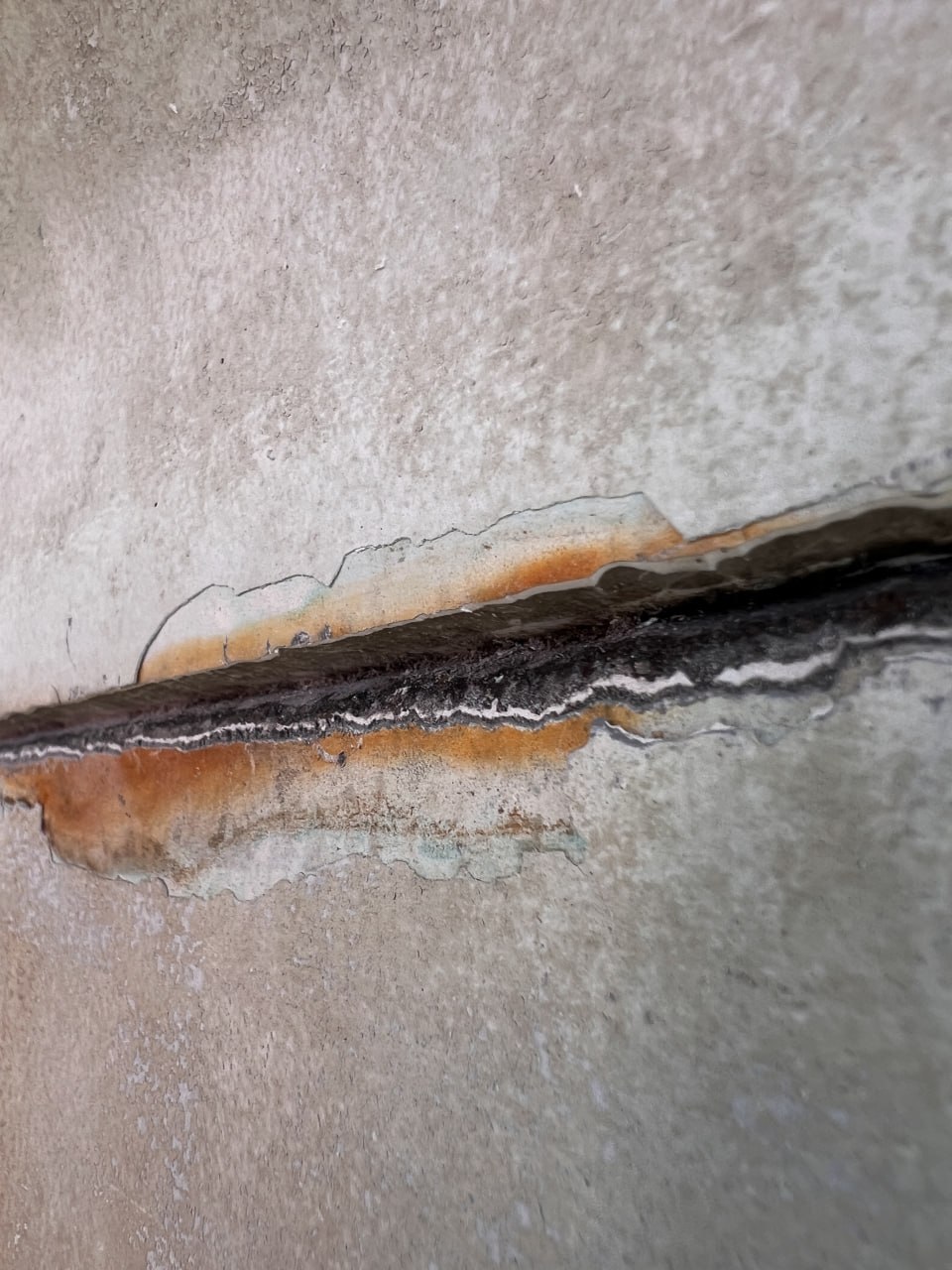
Sort out the keel joint
Rusty leaks at the junction of the keel and the hull led first to repairs at the shipyard, and then to independent maintenance of the seam.
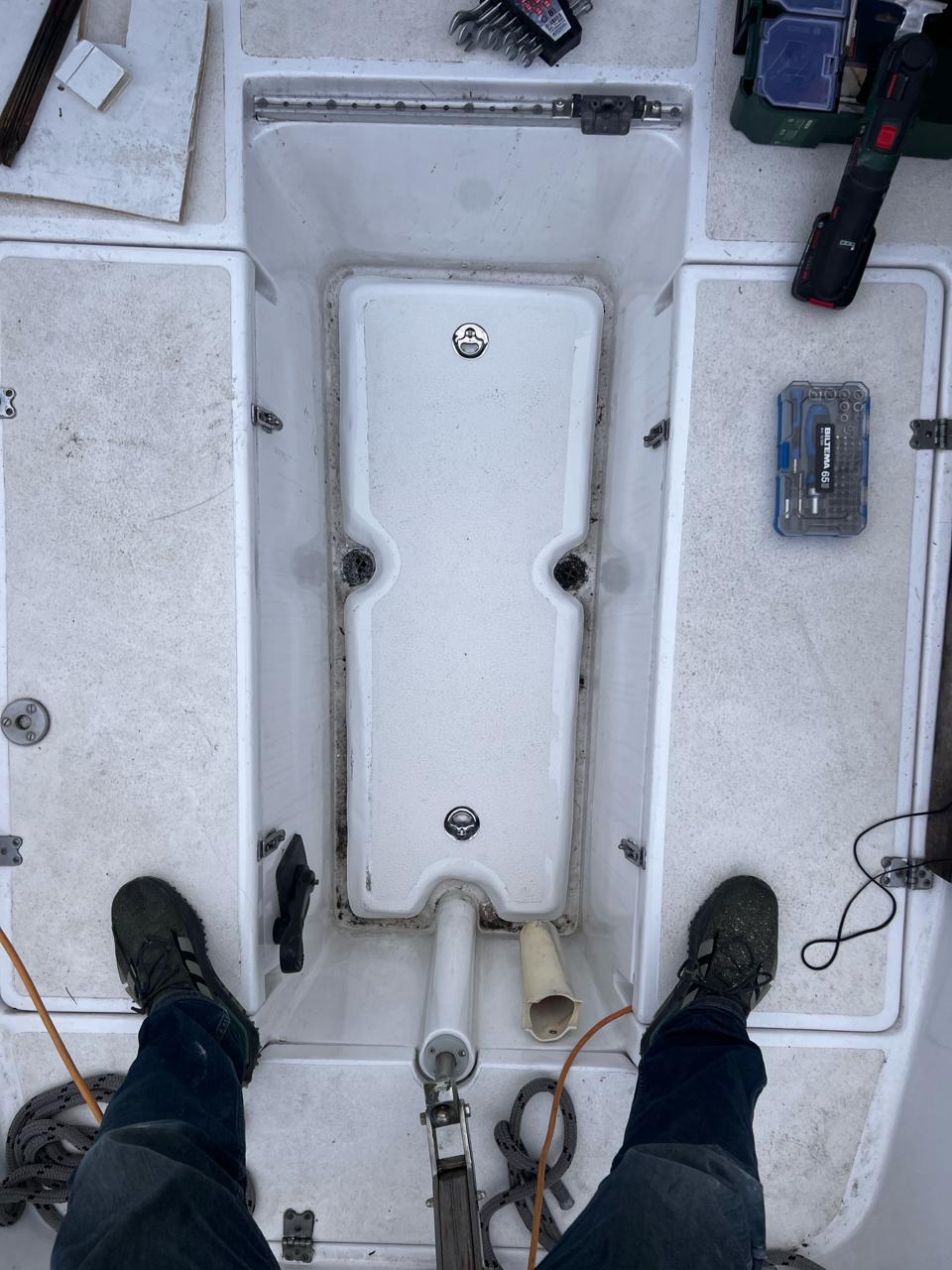
Open up access to the propeller shaft
A stern tube seal leak led to the fabrication of a new removable cockpit cover. Matrix, plywood, fiberglass, painting and fittings - in two consecutive entries.
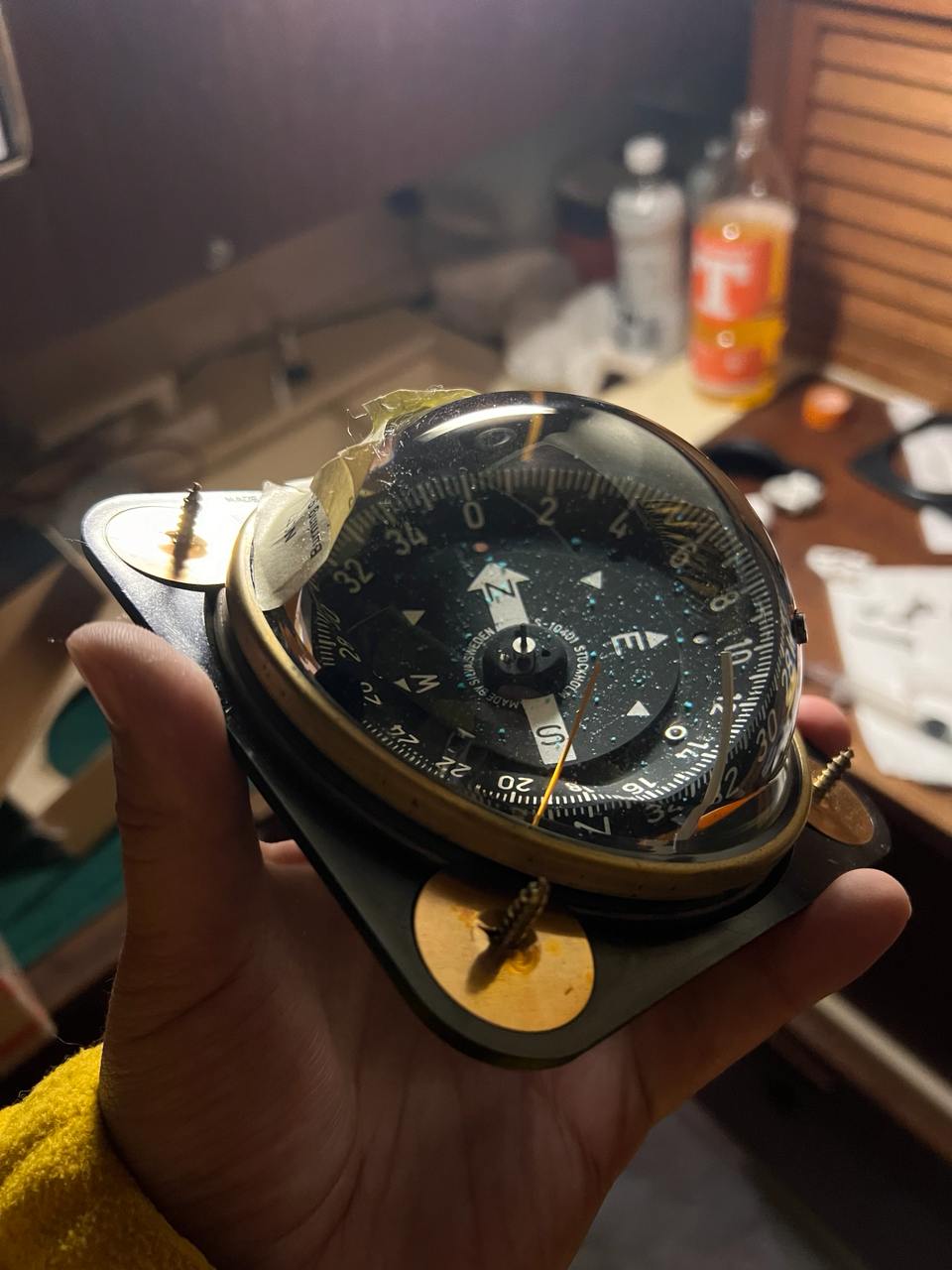
Get a compass back on board
The old compass lost its backlight and leaked liquid. Attempts to restore the case ended with the search for a replacement of the same model.
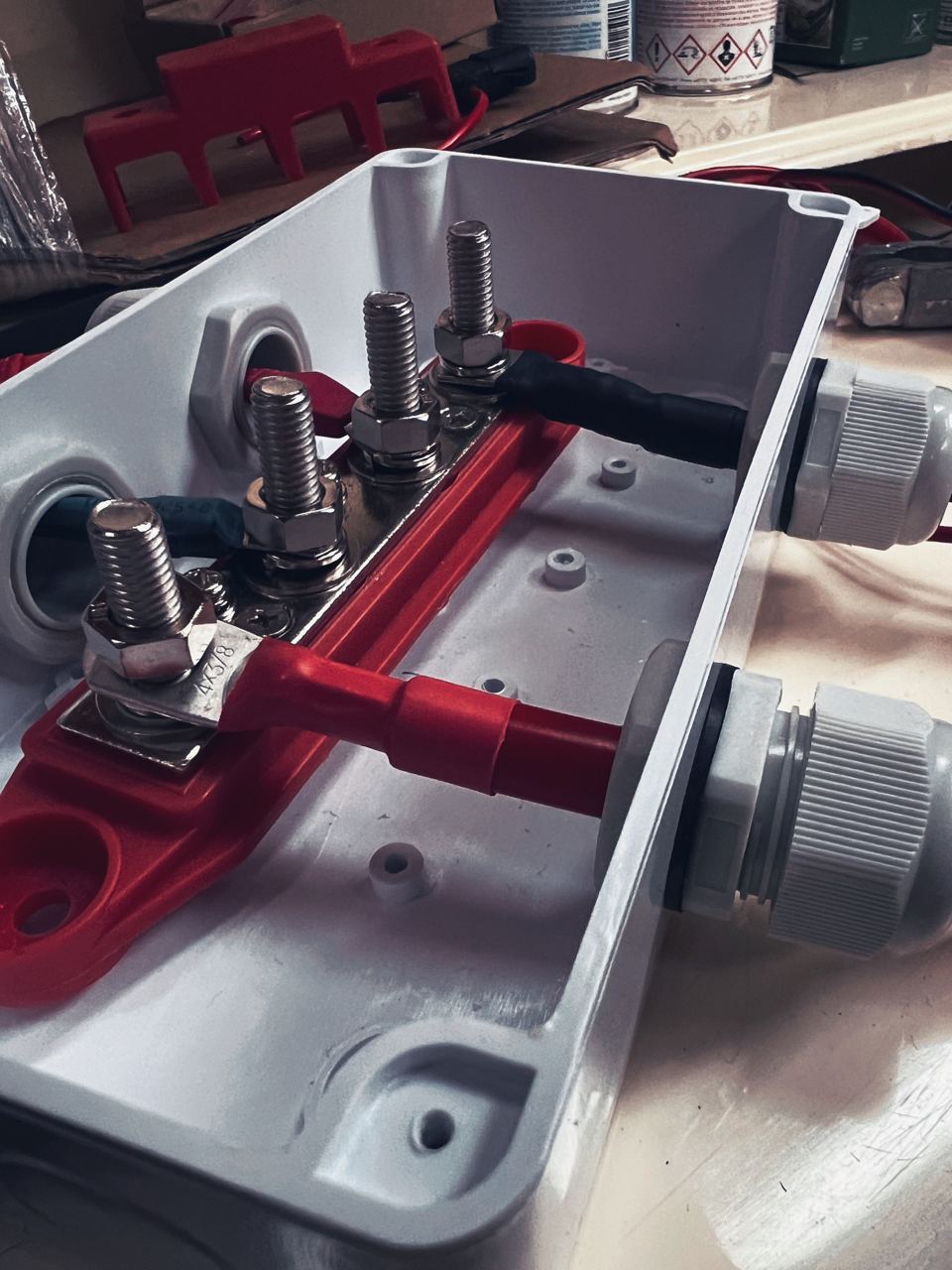
Rewire the electrics
After the passage, leaks of battery acid and problems with attaching the batteries were discovered. Thus began the reworking of the service and starting circuits, charging and solar panels.
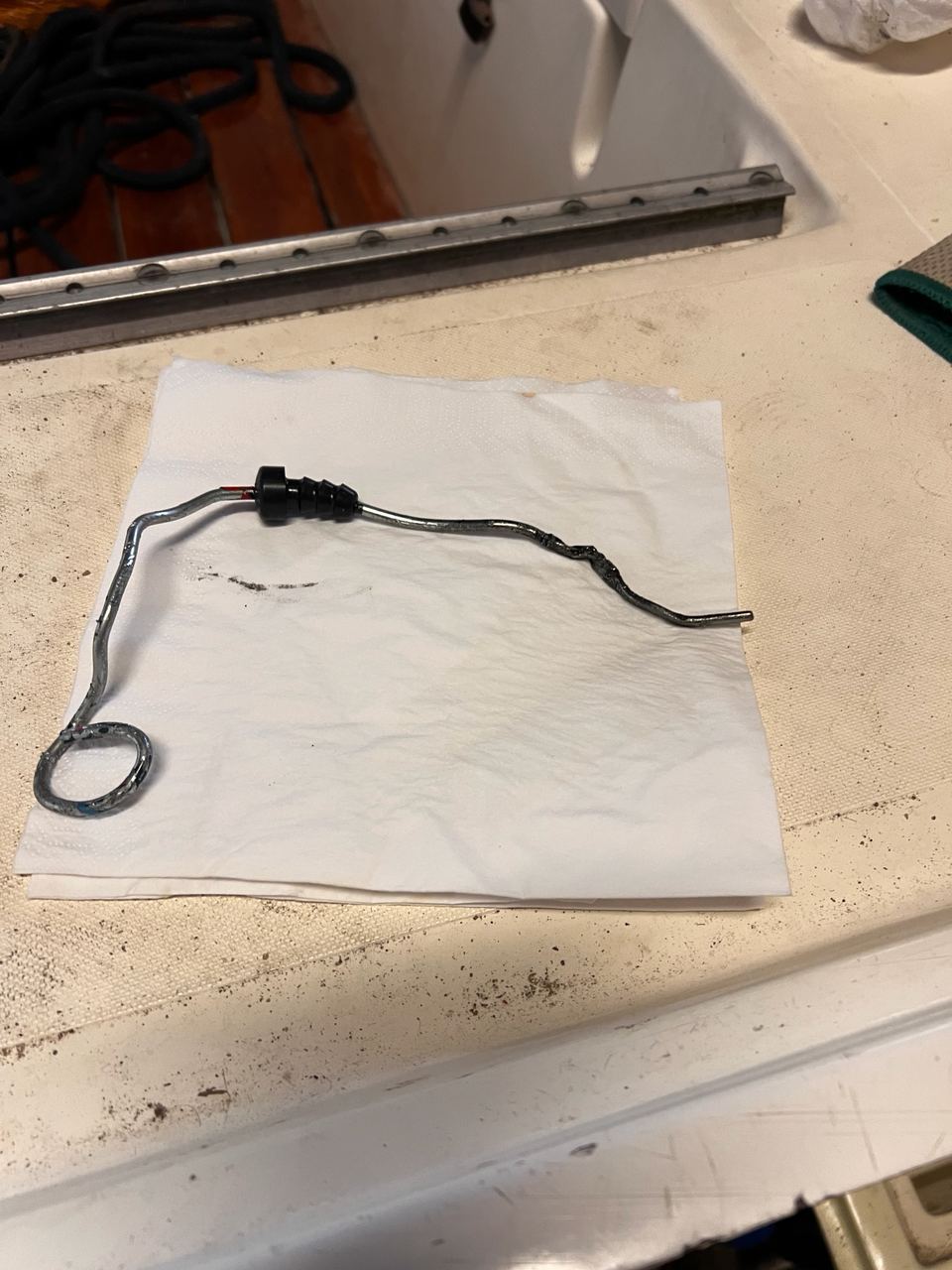
Retrieve the stuck dipstick
The Nanni N2.14 dipstick was twisted by the crankshaft. After an unsuccessful visit by mechanics and a search for options, Grigory helped pull it out without lifting the engine.
Find the lost knots
The search for the cause of the low speed went through the cooling system, fuel and consultations with services. The junction was under water.
My chapter on the water
Voyages on Rassvet
- nautical miles
- 3,109
- days on the water
- 92
- night hours
- 104
- kn average
- 4.4
These figures cover my recorded passages. Other owners' sailing is not included.
 DeelstuffFrom the logbook
Rassvet · Ohlson 29
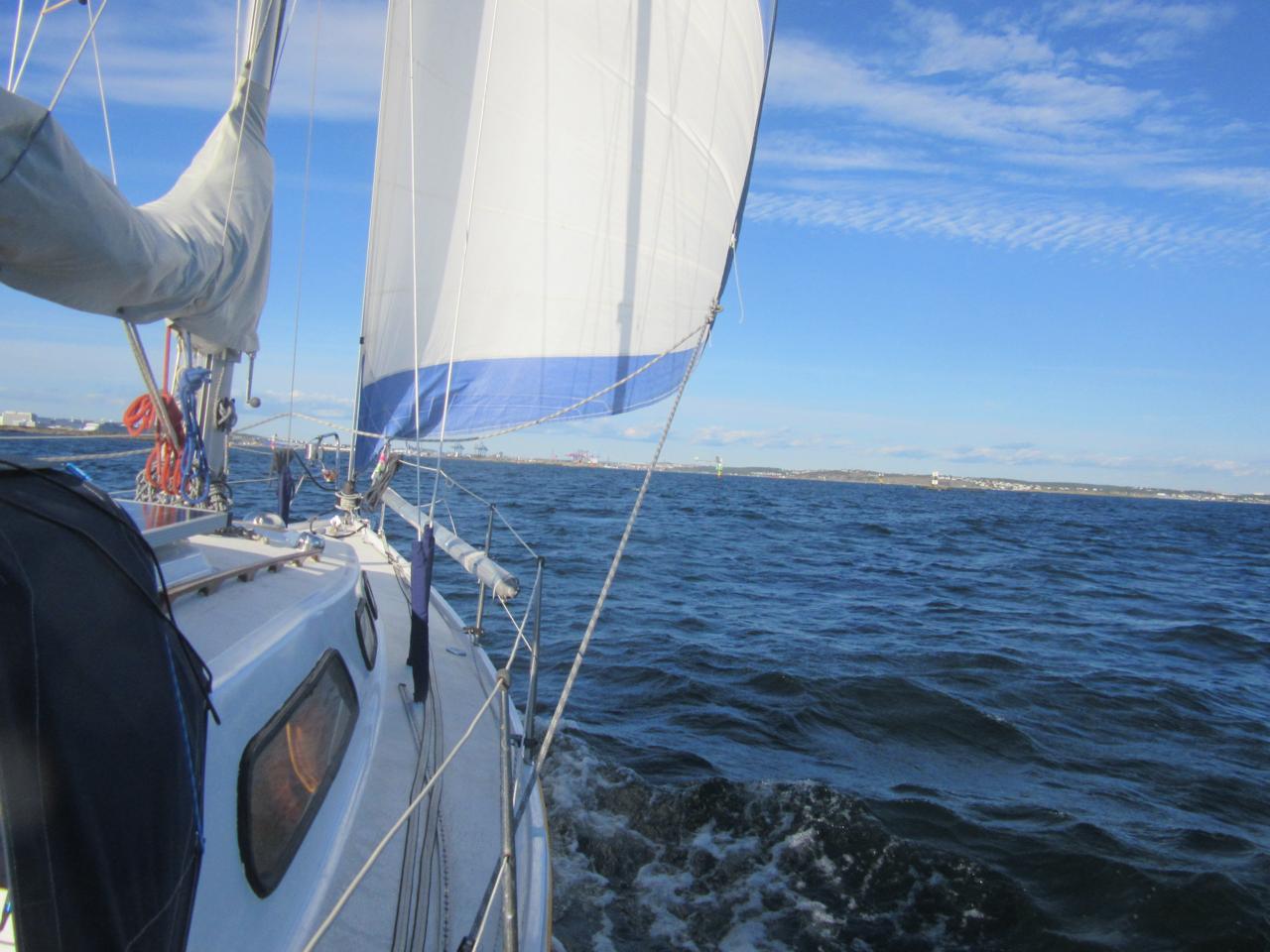
Across the Skagerrak to Oslo and back
Plans for the North Sea have changed along with the forecast. Instead of Helgoland - Grön, Swedish skerries, Oslofjord and the long road home through Denmark. Passages, storm anchorages and work from on board.
 DeelstuffFrom the logbook
Rassvet · Ohlson 29
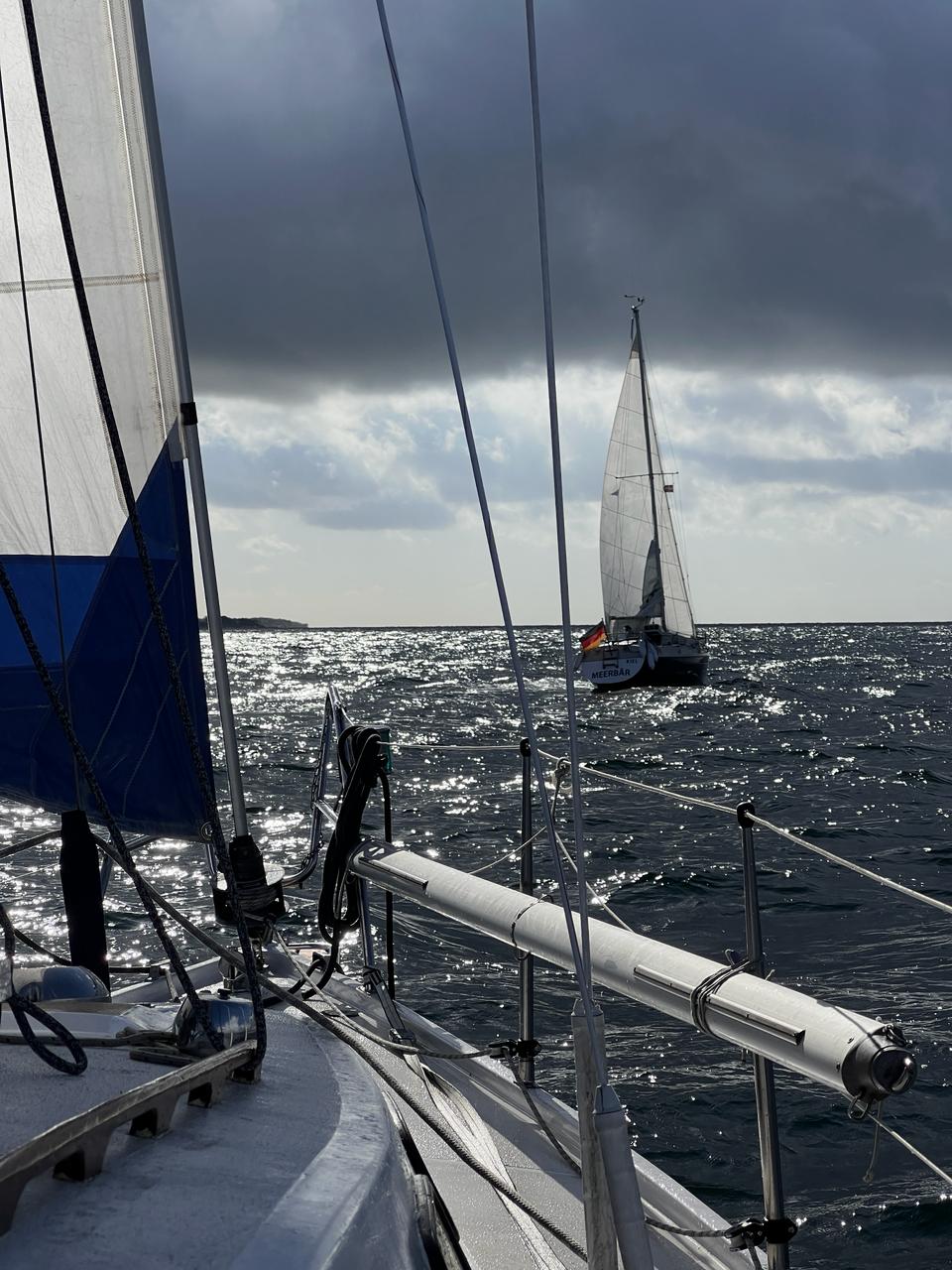
Gastroflotilla around Denmark
Several boats, Danish harbors and food on board. Entering Sønderborg, Marstal and the Maritime Museum - a small exit with enough space for both passages and friends.
 DeelstuffFrom the logbook
Rassvet · Ohlson 29
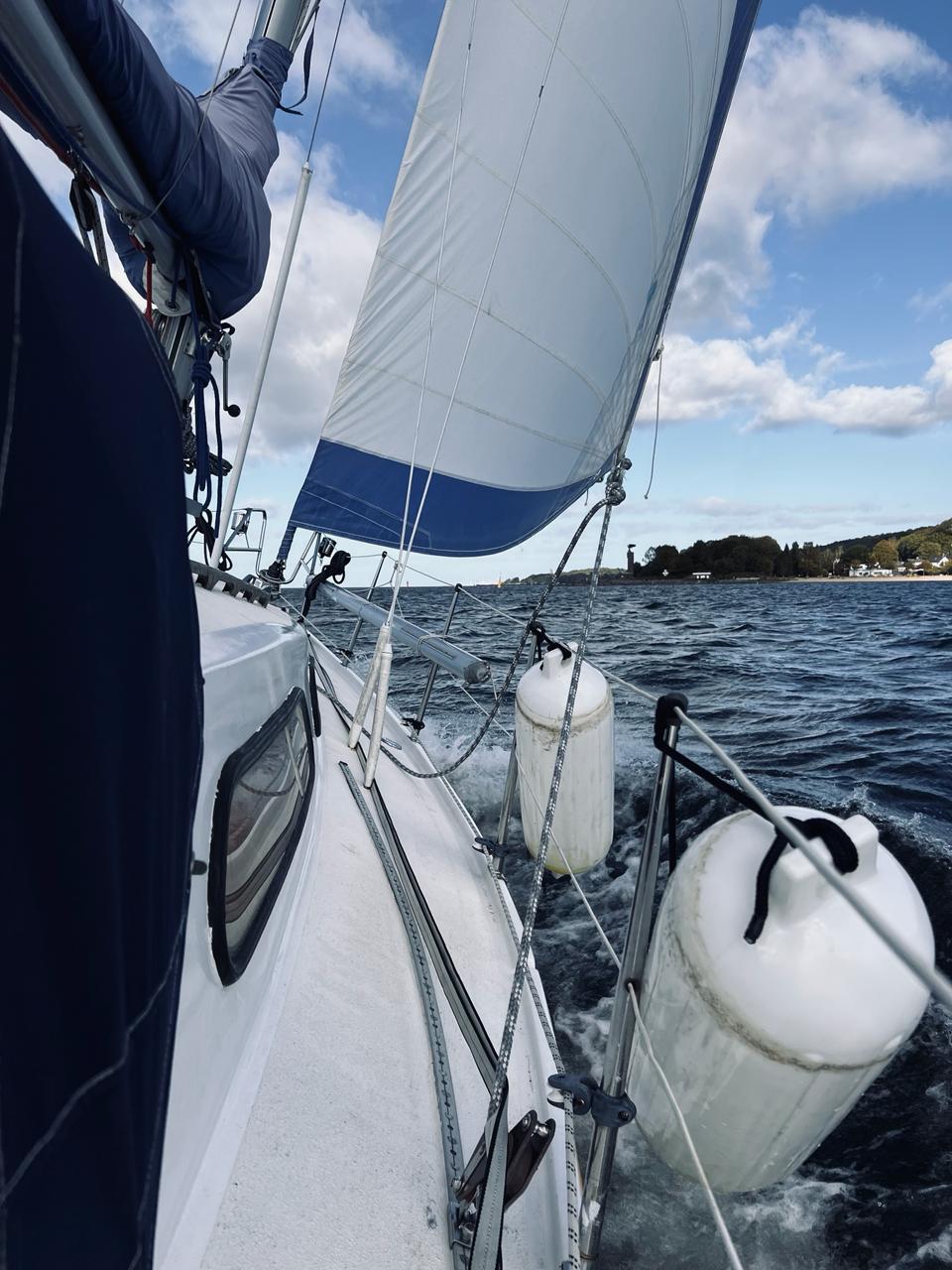
Return to Lubeck
Home haul from Kiel via Heiligenhafen and Grömitz. Two chapters about the road to the winter camp.
 DeelstuffFrom the logbook
Rassvet · Ohlson 29
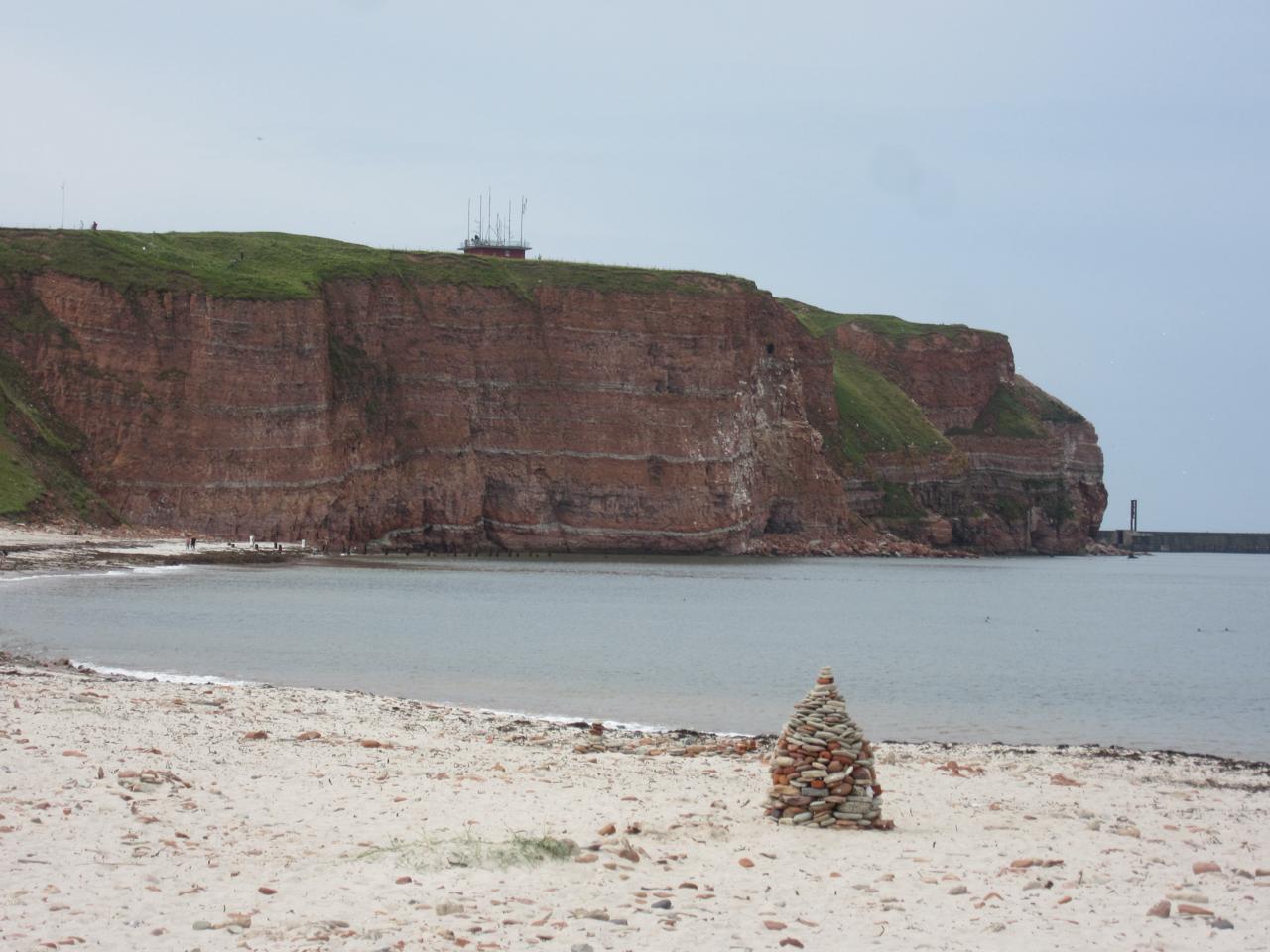
Across the Wadden Sea
The tides set the schedule, the boats remain dry, and the sea route continues through the Dutch canals. From the Kiel Canal to the Wadden Sea Islands - and back.
 DeelstuffFrom the logbook
Rassvet · Ohlson 29
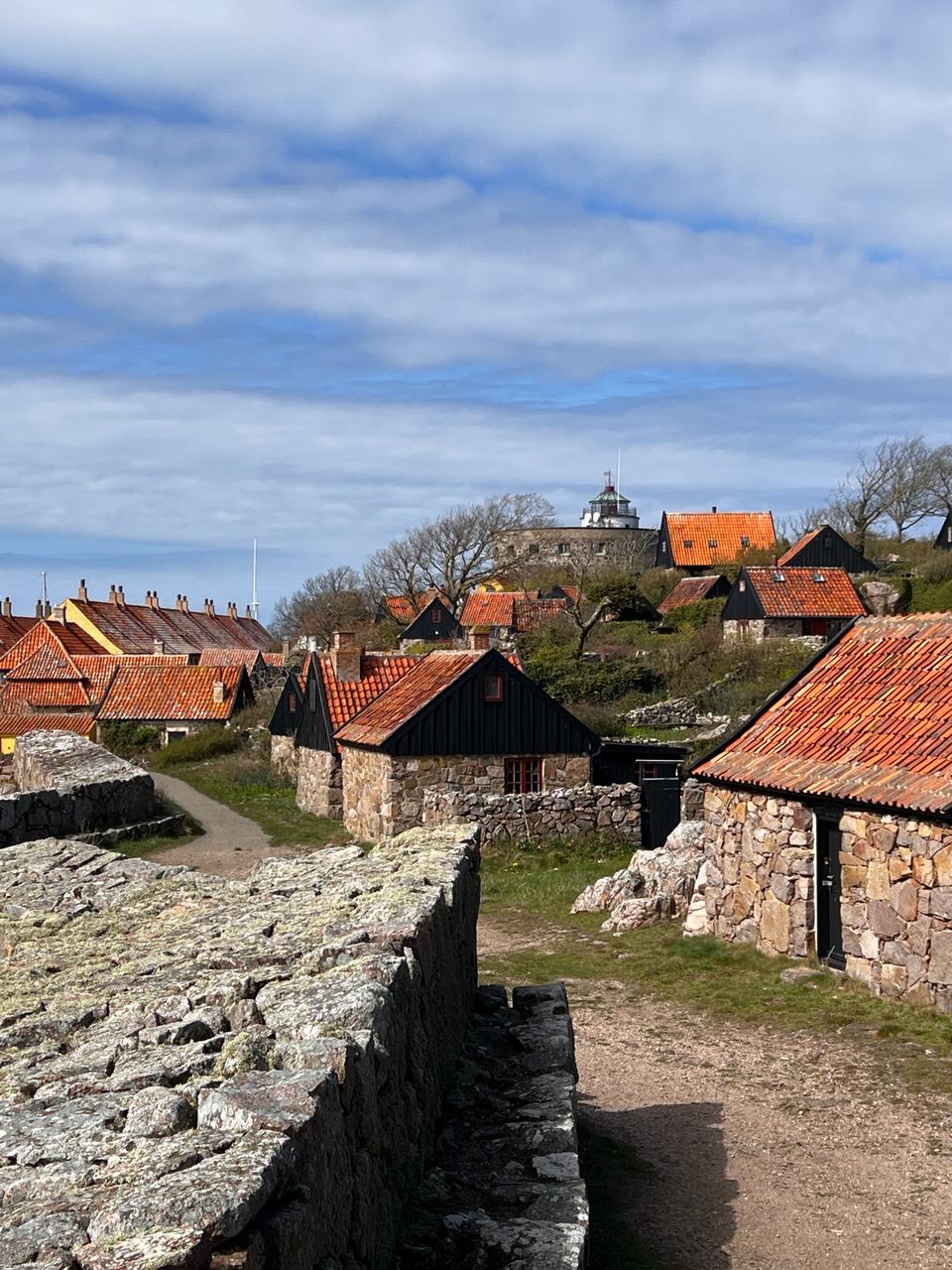
To Bornholm and Kristiansø
Spring departure from Lübeck: Barhöft, Bornholm and little Christiansø. Fog, long passages, walks around the islands and return to Kiel.
 DeelstuffFrom the logbook
Rassvet · Ohlson 29
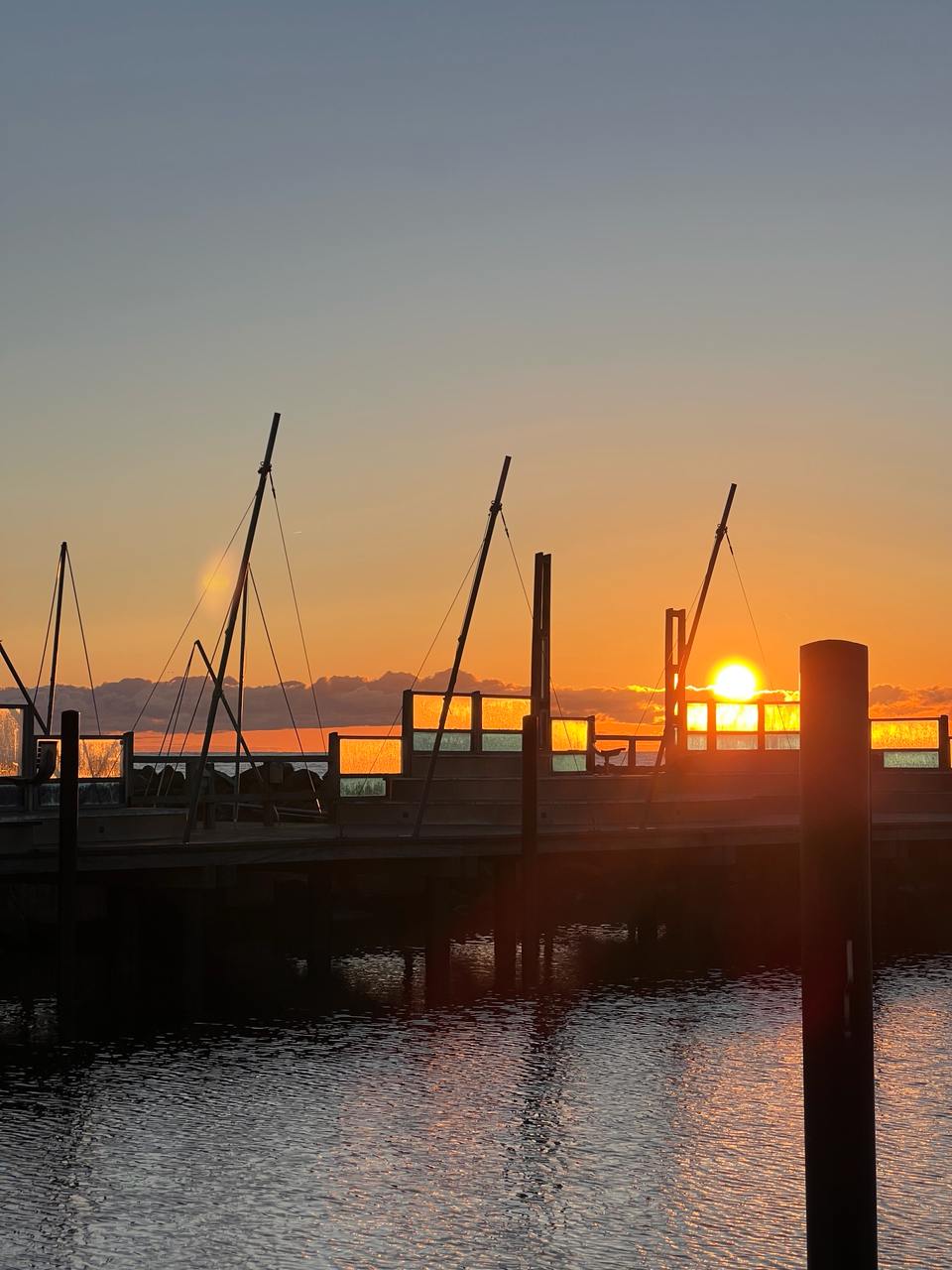
Weekend in Mecklenburg Bay
Four days from Lubeck to Wismar and back. Autumn Baltic, familiar harbors and a stop at the island of Poel.
 DeelstuffFrom the logbook
Rassvet · Ohlson 29
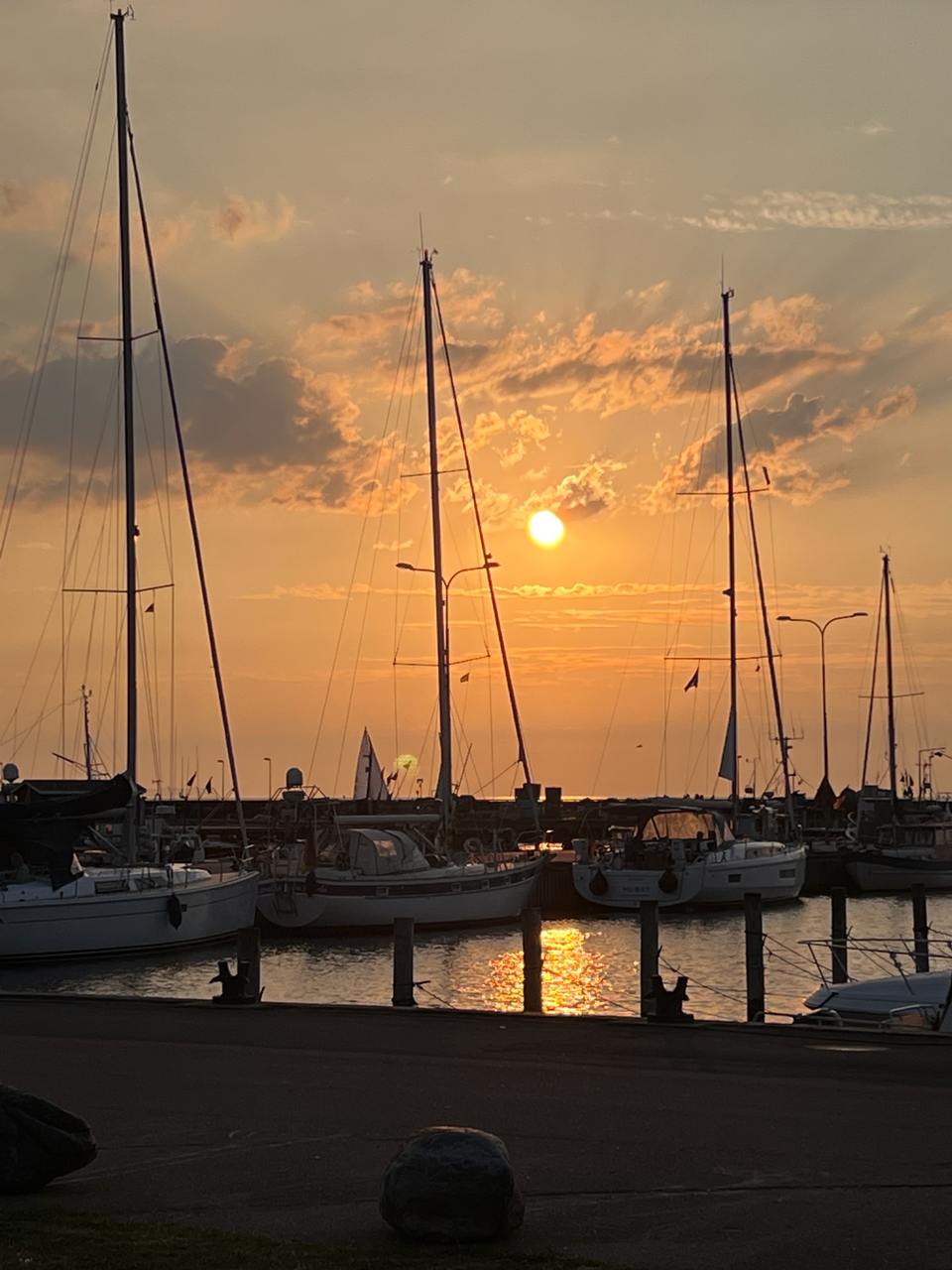
Around the islands of Southern Denmark
Sønderborg, Faaborg, Ørøskøbing and Bagenkop: a short trip between the Danish islands. Street walks give way to sails, and the last miles lead home to Lübeck.
 DeelstuffFrom the logbook
Rassvet · Ohlson 29
First miles of “Rassvet”
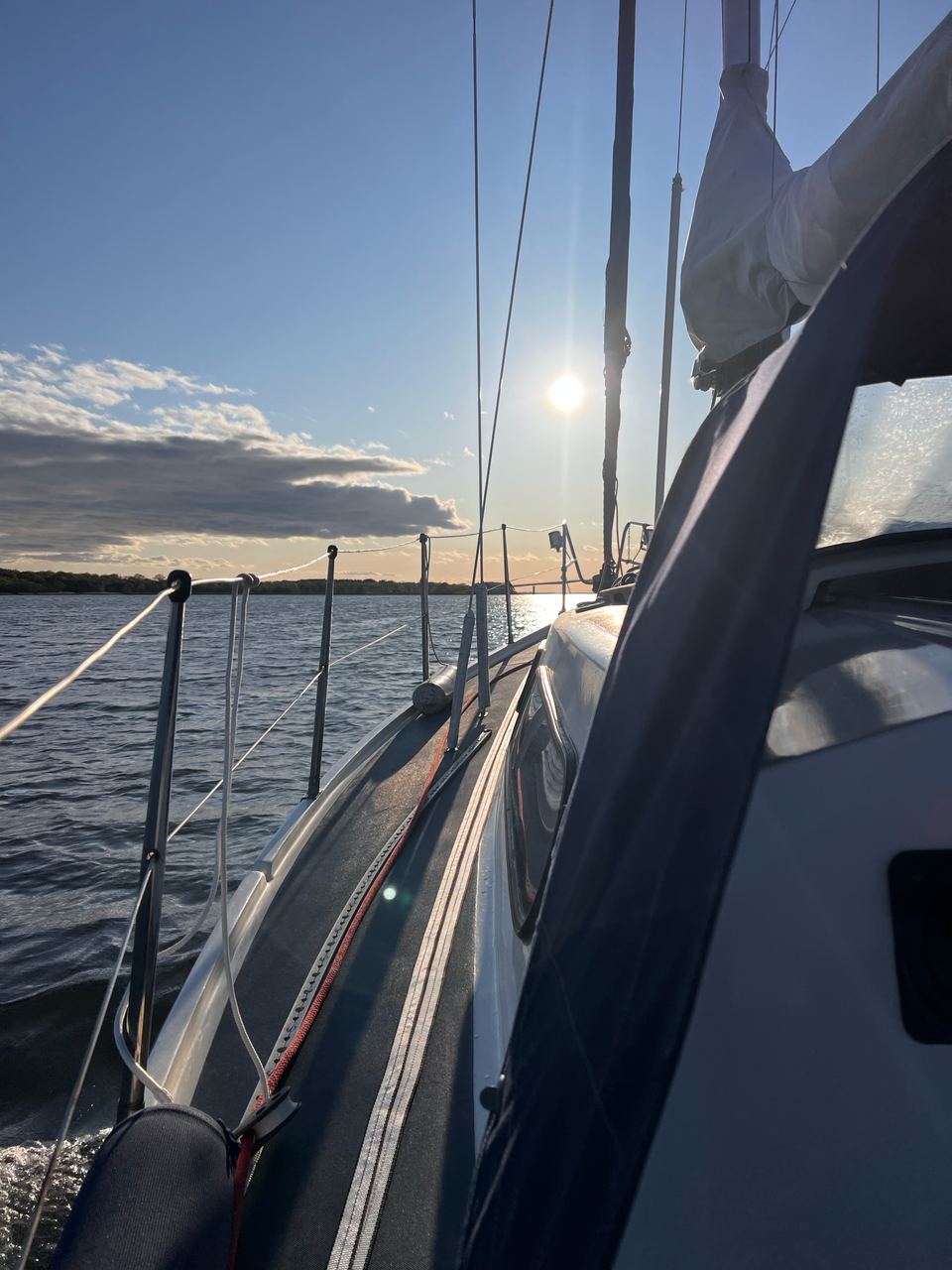
The first big haul of our own yacht. Kalmar, the southern coast of Sweden, Gedser and Lübeck: seven passages during which an unfamiliar boat gradually becomes its own.
A closer look
Aboard
Under sail
6
Photos6 photos
Exterior
4
Photos4 photos
Deck and cockpit
3
Photos3 photos
Interior
7
Photos7 photos
Engine and systems
4
Photos4 photos
Underwater hull
7
Photos7 photos
More in the journal
Latest journal entries
Design and origins
The Ohlson 29 design
What kind of boat is the Ohlson 29?
The Ohlson 29 belongs to a very specific Scandinavian moment: the early 1970s, when a family cruising yacht was still expected to sail well enough to race. It was designed by Einar Ohlson as a compact GRP cruiser-racer, rather than as either a pure racing boat or a floating holiday home.
From Orust to Olympic sailing
Einar Ohlson (1918–2004) and his brother Carl-Eric (1920–2015) came from Hälleviksstrand on Orust, an island with a deep boatbuilding tradition. They founded Ingenjörsfirman Bröderna Ohlson in Gothenburg in 1951.
Their international reputation was built in the 5.5 Metre class. Hojwa won Olympic bronze in Helsinki in 1952, and an Ohlson-designed 5.5 Metre won a medal at every Olympic Games from 1952 through 1968. Carl-Eric left the company in 1957; the Ohlson 29 was therefore Einar’s design.
Racing knowledge, used for ordinary sailors
Einar was trained as a naval architect and worked at Götaverken and the Swedish State Ship Trial Institute. The design office moved freely between race boats, one-offs and serial-production family yachts.
The surviving Ohlson archive shows O-29 drawings beginning in 1969 and continuing through the 1970s, including alternative keel and rudder arrangements and a racing version. The boat was not a single frozen sketch: it was an engineered design that continued to evolve.
From Ohlson 29 to Winga 29
The Ohlson 29 was initially produced by Artekno in Finland. Swedish production followed at Winga Marin, and the design later evolved into the Winga 29 with changes to the rig, propulsion arrangement, appearance and interior.
Swedish reference material reports that more than 400 boats of the Ohlson/Winga family had been built by the end of production in the early 1980s. Rassvet, hull 170 from 1975, belongs to the earlier Ohlson 29 generation.
Where it sits among Swedish boats of its era
The Ohlson 29 is not really a Folkboat enlarged to 29 feet, and it is not an extreme Half Ton racer either. In design terms it sits between those two Swedish traditions.
| Boat | Approx. size | Design character |
|---|---|---|
| International Folkboat | 7.85 × 2.25 m · 1967 | Long keel, fractional rig and very narrow hull. The more traditional branch of Scandinavian small-yacht design. |
| Albin Vega | 8.25 × 2.46 m · 1965 | Lighter and smaller, conceived as an affordable mass-production family cruiser. A close cultural contemporary, but more conservative in size and accommodation. |
| Ohlson 29 | 8.85 × 2.70 m · c. 1970 | Narrow masthead cruiser-racer with a fin keel, separate rudder and a practical five-berth cruising interior. |
| Ballad 30 | 9.14 × 2.96 m · 1971 | A very close contemporary in mission and size, but with stronger Half Ton racing ancestry and more sail-carrying power. |
| Scampi 30 | 9.07 × 3.00 m · 1970 | Peter Norlin’s overtly race-led Half Ton design. Faster and more competition-focused, but part of the same new generation of GRP Swedish cruiser-racers. |
| Comfort 30 | 9.09 × 3.03 m · 1972 | Similar displacement and mission, but noticeably beamier: a step toward the greater interior volume that became normal later in the decade. |
The closest peers are therefore Ballad 30, Scampi 30 and Comfort 30. Vega and the International Folkboat belong to the same Scandinavian culture, but represent an earlier and more conservative solution.
The same question, answered differently today
A modern production cruiser of roughly the same role is much wider and carries its waterline and interior volume farther into the bow and stern. The Ohlson 29 is 8.85 m long and only 2.70 m wide; a current Hanse 315 is 9.62 × 3.35 m. Modern Swedish performance cruisers with a similar sailing-first philosophy have effectively moved into the 34-foot class.
Arcona and Linjett still describe their boats in terms familiar to the Ohlson idea: responsive sailing, balance, family cruising and the ability to sail shorthanded. The engineering is completely different — vacuum-infused sandwich hulls, bulb keels, fractional rigs, self-tacking jibs and controls led aft — but the underlying compromise is recognisable.
This does not make the Ohlson 29 better or worse than a modern yacht. It explains why it feels different: less interior volume for its length, a narrower hull, longer overhangs, a masthead rig and a tiller, with more of the boat’s identity concentrated on sailing rather than accommodation.
| Boat | Approx. size | Design character |
|---|---|---|
| Hanse 315 | 9.62 × 3.35 m | Modern 31-foot production cruiser; far more beam and interior volume. |
| Arcona 345 | 10.40 × 3.45 m | Current Swedish performance cruiser, explicitly intended for both cruising and racing. |
| Linjett 34 | 10.66 × 3.45 m | Swedish archipelago cruiser combining slender lines, performance and shorthanded handling. |
This summary is based on The Ohlson Project’s family archive and O-29 drawing register, Swedish Sailguide material, period-comparison data and current manufacturer specifications. Published sources disagree on some production dates and dimensions, so uncertain figures are deliberately described as approximate. Rassvet’s particulars above on this page come from the period technical sheet supplied with this particular yacht.