In this publication8 photos · 1 video
The yacht lacks the usual instruments for wind, depth and speed. Sailing with only Windy and Navionics isn’t very comfortable.
In January, Grigory from Meerbär offered me his new NASA Marine Clipper instruments. I gladly bought them:
• EML-2 electromagnetic log — no paddlewheel to worry about painting over — €150
• Wind: anemometer and wind vane, unfortunately apparent wind only, €290
• Depth sounder, €185
I asked the yard to install them. Painful prices: €800 for the transducers, €1,100 for the displays. Looking back, I could probably have fitted the displays myself. At least I got useful advice: fit a fuse ahead of the batteries, sized for the cable’s current capacity.
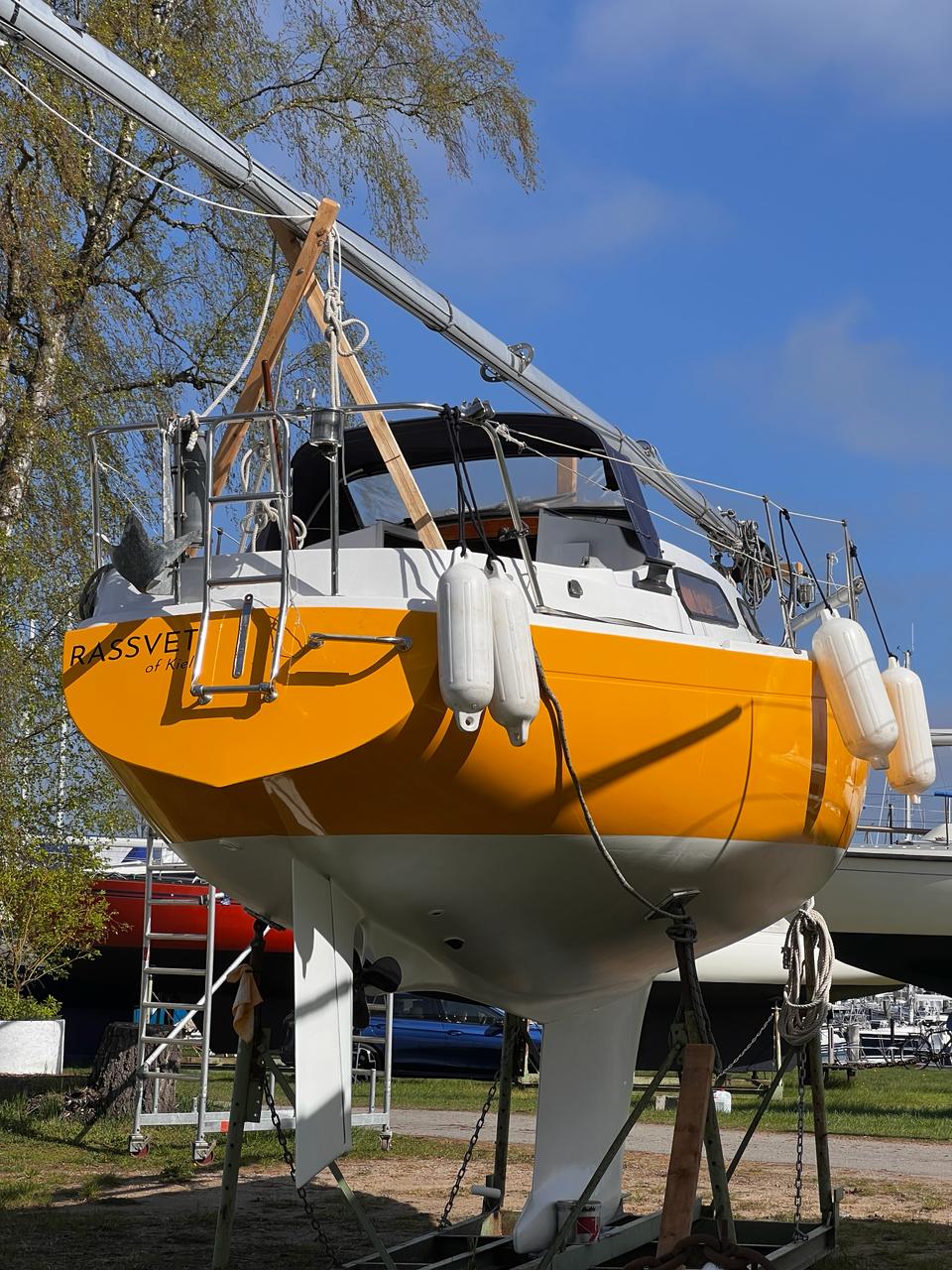
The wind sensor is riveted to the mast. They drilled through the hull for the log. I was fascinated by how thick the laminate was, with a mixture that looked like granite particles. There are two ways to install the depth transducer vertically:
1. Make a recess, without going through the hull, and mount the sensor in an oil-filled bath. Only possible with solid GRP like mine, without a wood-cored sandwich.
2. Drill through and bond on an external fairing block to align the transducer vertically.
No suitable fairing block was available for my NASA Marine Clipper Depth, leaving the oil-bath option.
The wind sensor points to port, so I currently have to rotate the displayed direction 90 degrees clockwise. The log underreads by 0.4–0.5 knots. The sounder shows 3.2–3.3m. I lowered the anchor chain to the bottom, counted the submerged links and multiplied by their length: 4.15m below the waterline, or 2.55m beneath the keel. Time to read the calibration instructions. One useful feature: upper and lower depth alarms, handy for following depth contours.
#maintenance
Original and discussionOpen post in Telegram ↗