In this publication10 photos
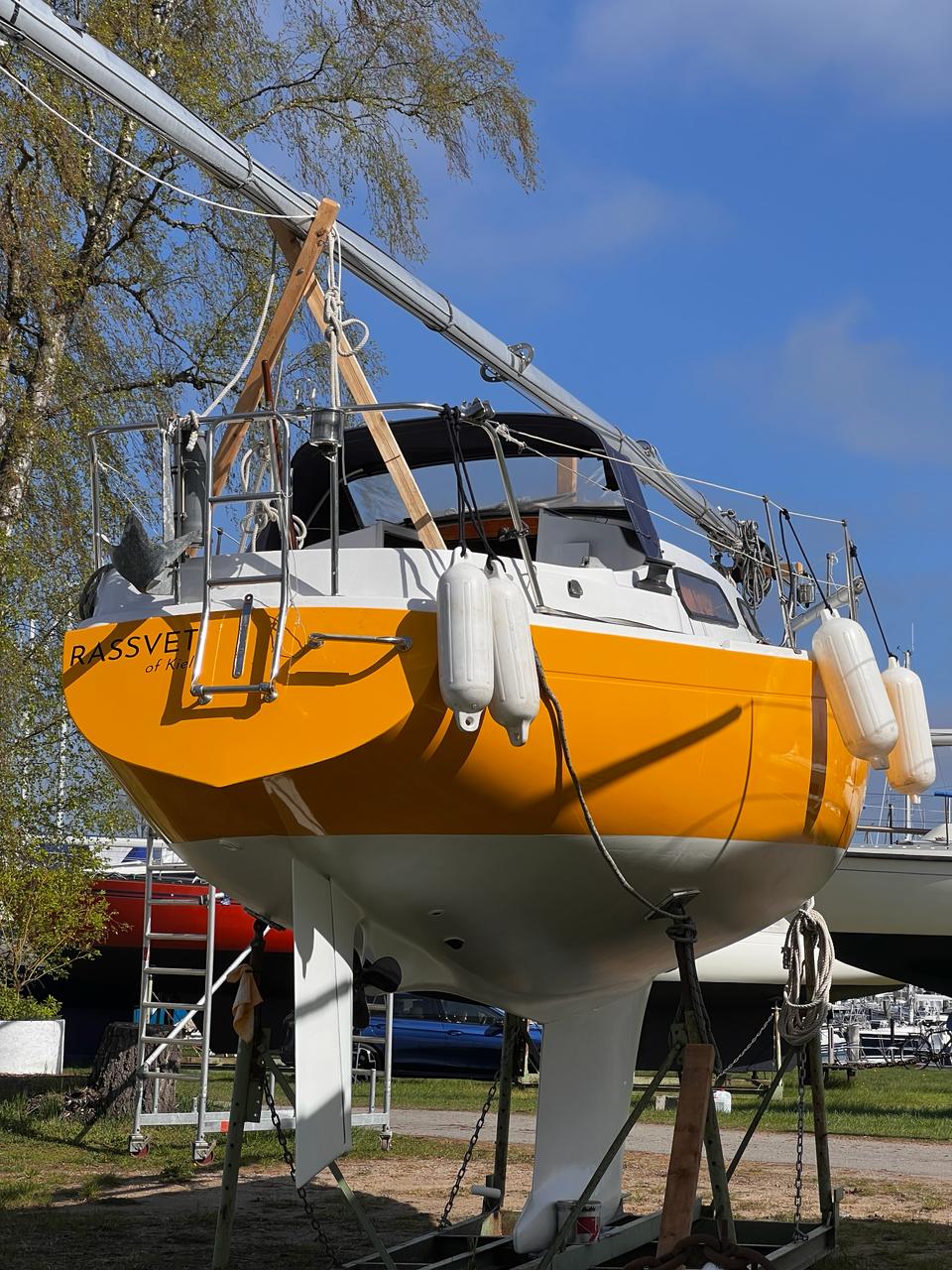
After the post about falling overboard, Leonid commented. We moved to private messages and discussed the hull damage. Fibreglass was exposed at the stem, and I didn’t want to wait for moisture to cause delamination. He suggested masking the scratches, sanding, degreasing with acetone, and filling with colloidal silica and gelcoat. The yard suggested two-component varnish or a 3M plastic patch. Enough until autumn, with a proper repair over winter.
Any of those options would cost about €15. I wanted to try gelcoat, so bought a small tin containing:
– 200g of cream-coloured paste
– 20g of liquid hardener
– a small roll of tape
– a plastic sheet
– a spatula
– instructions
I started on 7 June 2024. First, I opened out the chips with a screwdriver. A small sander or rotary tool would have been the proper tool for neat, deep grooves. Then I masked the area and sanded the chips with coarse 80-grit paper. Repeated for every damaged patch. Two hundred grams of gelcoat was far more than enough.
Mixed the hardener and paste. It became a porous, sticky, runny cream that stained everything. I somehow applied it to the bow and shaped it with the plastic sheet, held on with tape. It kept trying to run under its own weight. Three attempts produced an acceptable result. Alcohol cleaned my hands. After twenty minutes, everything left in the tin had turned rubbery and was unusable.
Then I waited for it to cure fully. Twenty minutes, four hours, twelve hours: still tacky. It took about a day to harden completely. Far from perfect, even before considering the colour mismatch. I’ll think about it in autumn. It’ll do for the season.
#maintenance
Original and discussionOpen post in Telegram ↗