In this publication9 photos
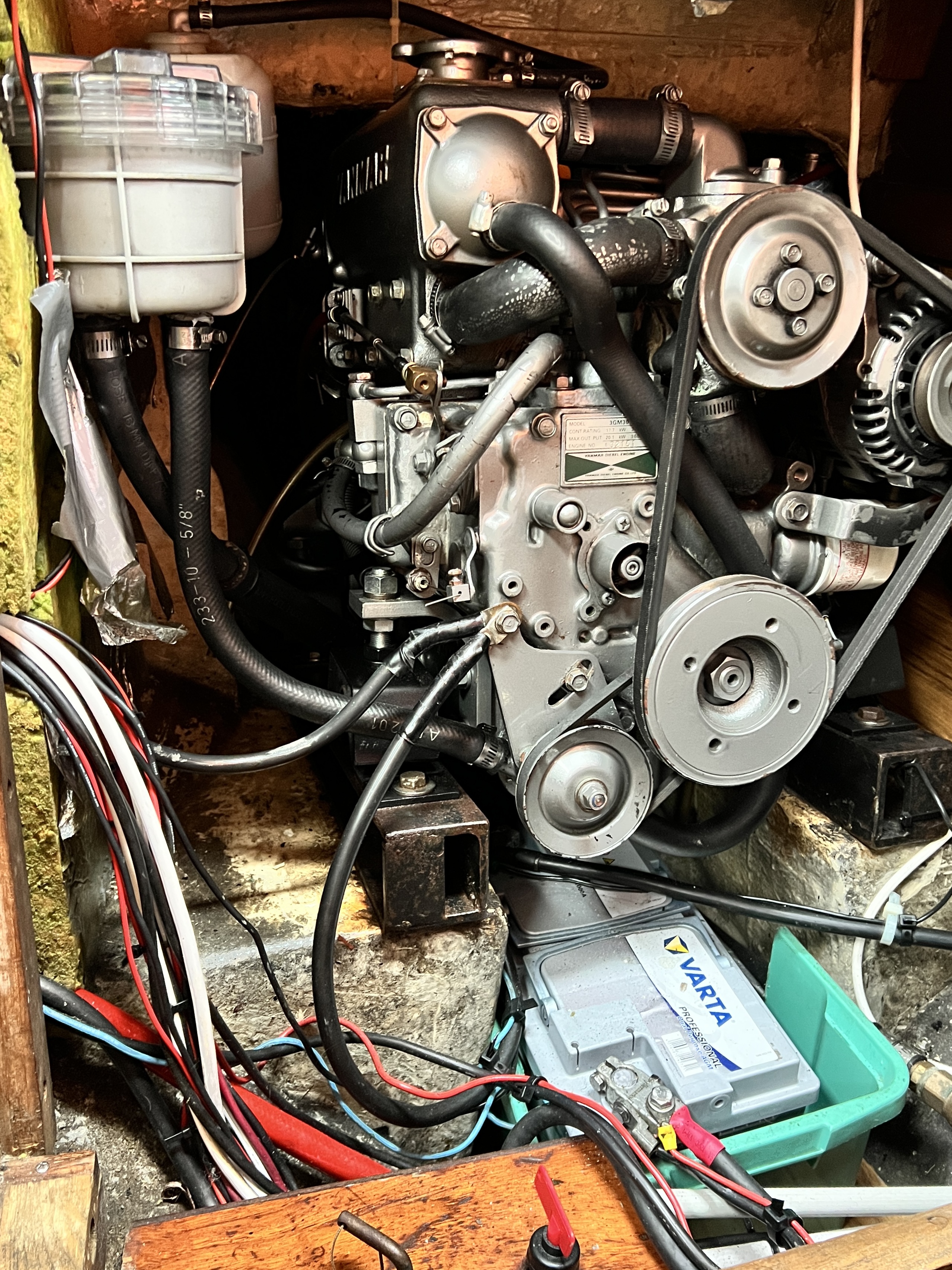
As usual, every voyage leaves something to repair. Water had begun to leak past the stern-tube seal, almost impossible to replace without removing the engine. The answer: a new cockpit panel with an access opening for the seal and gearbox.
Taking the cockpit shape
First, a mould. Masking tape over the sole, double-sided tape over that, then polyethylene film. A layer cake: protection below, easy release above.
Three pieces of glass cloth cut to cockpit size, wetted with epoxy and laid successively. A strong cast left for a day, transparent and perfectly following the sole’s shape.
The core
Next day, removed it carefully, trimmed excess with a multitool and levelled the edges.
A sheet of 12mm marine plywood, bonded with waterproof BFU 100 adhesive. Cut the blank, sanded both sides thoroughly.
The mould wasn’t perfect, so a sandwich: about 400ml epoxy thickened with cotton fibres, spread over both surfaces, plywood pressed against GRP. Batteries, dumbbells, toolboxes: anything heavy on top. Another day’s cure.
Weights off, edges bevelled forty-five degrees, sanded, then three glass-cloth layers over everything, sealing the plywood inside. Found bubbles where I hadn’t expelled all the air. Cut them open, released the air and patched with cotton-thickened epoxy.
Again, I’d choose 3D Core XPS instead of plywood: lighter, more accurate shape. But plywood added solidity; material costs were similar.
Protection
Glass cloth and epoxy need respirator, goggles, gloves and long sleeves.
I thought ‘only five minutes’ meant no gear needed. Then learnt how wrong that was.
After sanding, itching everywhere, burning skin, sand under the eyelids. Glass dust in my nose, sandpaper in my throat. Days of coughing, weakness and dizziness. Baths, litres of water, sleep as after a storm.
Now I know: unprotected composite work guarantees suffering. Don’t repeat my mistake.
Finishing
Once cured, finishing work.
Trimmed, sanded, drilled two handle holes, degreased with alcohol and applied two-part Epifanes primer. In spring, I’d painted with a one-part system and disliked its abrasion resistance. Time to try two-part.
A coat every day, three in all, no intermediate sanding. Turned over and repeated underneath. 750ml only just enough.
Glossy, strong, almost factory-finished.
Original and discussionOpen post in Telegram ↗