In this publication7 photos · 1 video
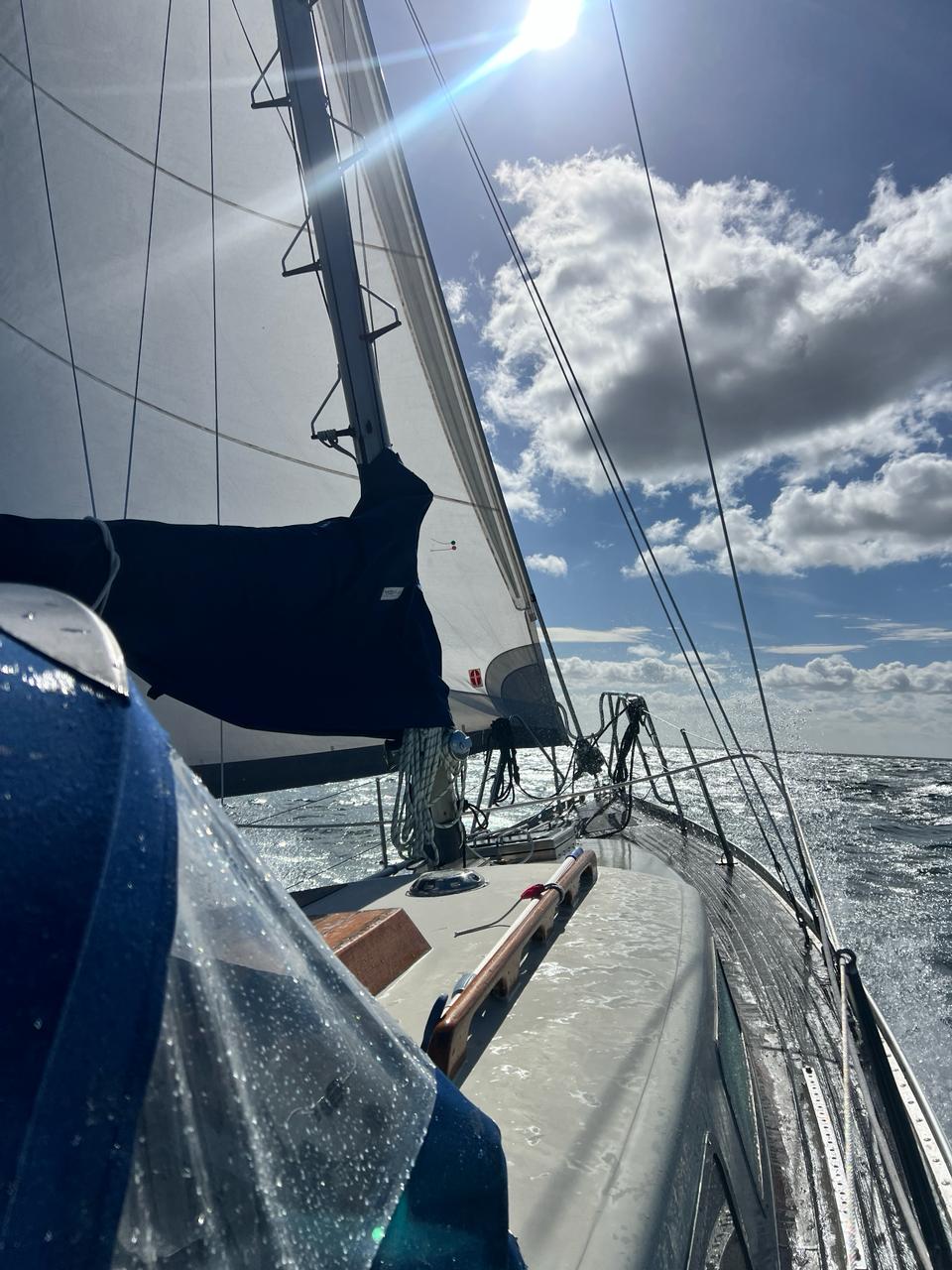
18 May 2024. First passage. The engine held its revs. AIS warned of approaching vessels. On the Garmin inReach the waypoints were named after buoy characteristics. Handy. Its compass also showed course error, letting me adjust the autopilot to within a degree. Speed: 5.5 knots. The antifouling was working. Only my windbreaker wasn’t enough for the sixteen knots on the anemometer .
Off the fuel berth in Travemünde, I decided to refill the diesel cans. The wind meant a second approach. I secured the stern line with the RYA OXO method and threw it to the person waiting, then went forward with the bow line and boat hook. The bow began blowing off. I reached towards the shore cleat with the hook…
In a second, everything turned emerald-black. A brief crack and hiss: the automatic lifejacket inflated. My glasses went to the bottom. I had other concerns. Boat hook in one hand, coil of rope in the other.
The yacht was drifting away. I had a couple of seconds to hook on, but the hook kept slipping. The stern line had come undone. Away she went. I searched for a ladder to climb ashore, about ten metres’ swim away. People had apparently gathered, and the water was 10°C, but I noticed neither.
Luckily, the wind blew towards the shore. Fifty metres away, the yacht hit a steel ferry and kept scraping against its sharp platform in the waves. I reattached the mooring lines and pulled her towards the fuel pumps.
Time to change shoes, trousers and lifejacket. Twenty-nine litres of diesel cost €67. The owner said it was pure petroleum diesel, safe from bacteria. I’d had enough adventure for one day.
My mistakes:
• I ended up in the water without my inReach. It should have been clipped on
• I forgot three points of contact
• I didn’t use a safety harness and tether
• A solo skipper should prepare mooring lines before departure, leading the bow lines back to the cockpit
• Fenders should be along the sides, rather than tied aft
• Carry a complete change of clothes and a spare lifejacket
Track here
#passage
Original and discussionOpen post in Telegram ↗