In this publication6 photos · 4 videos
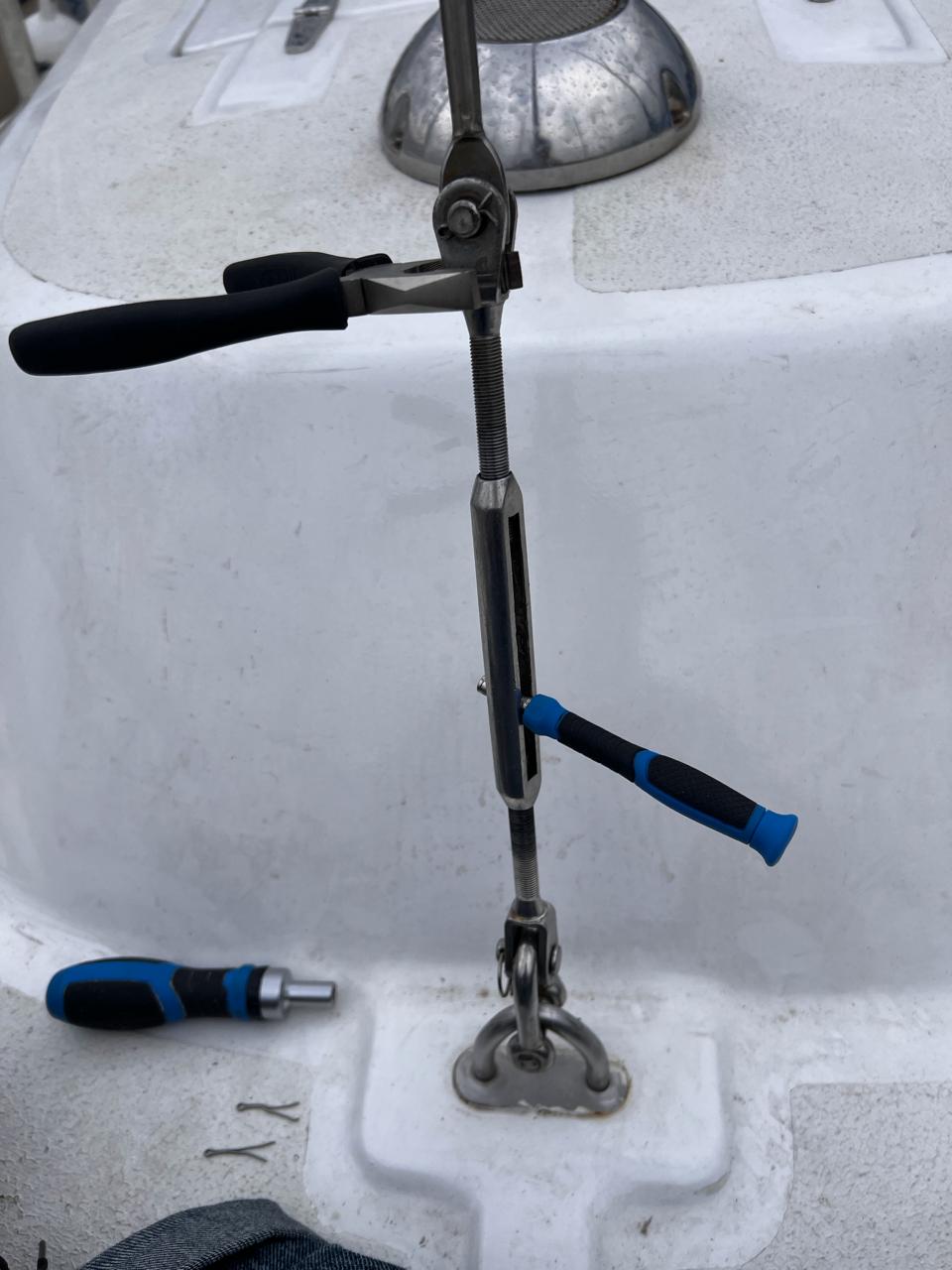
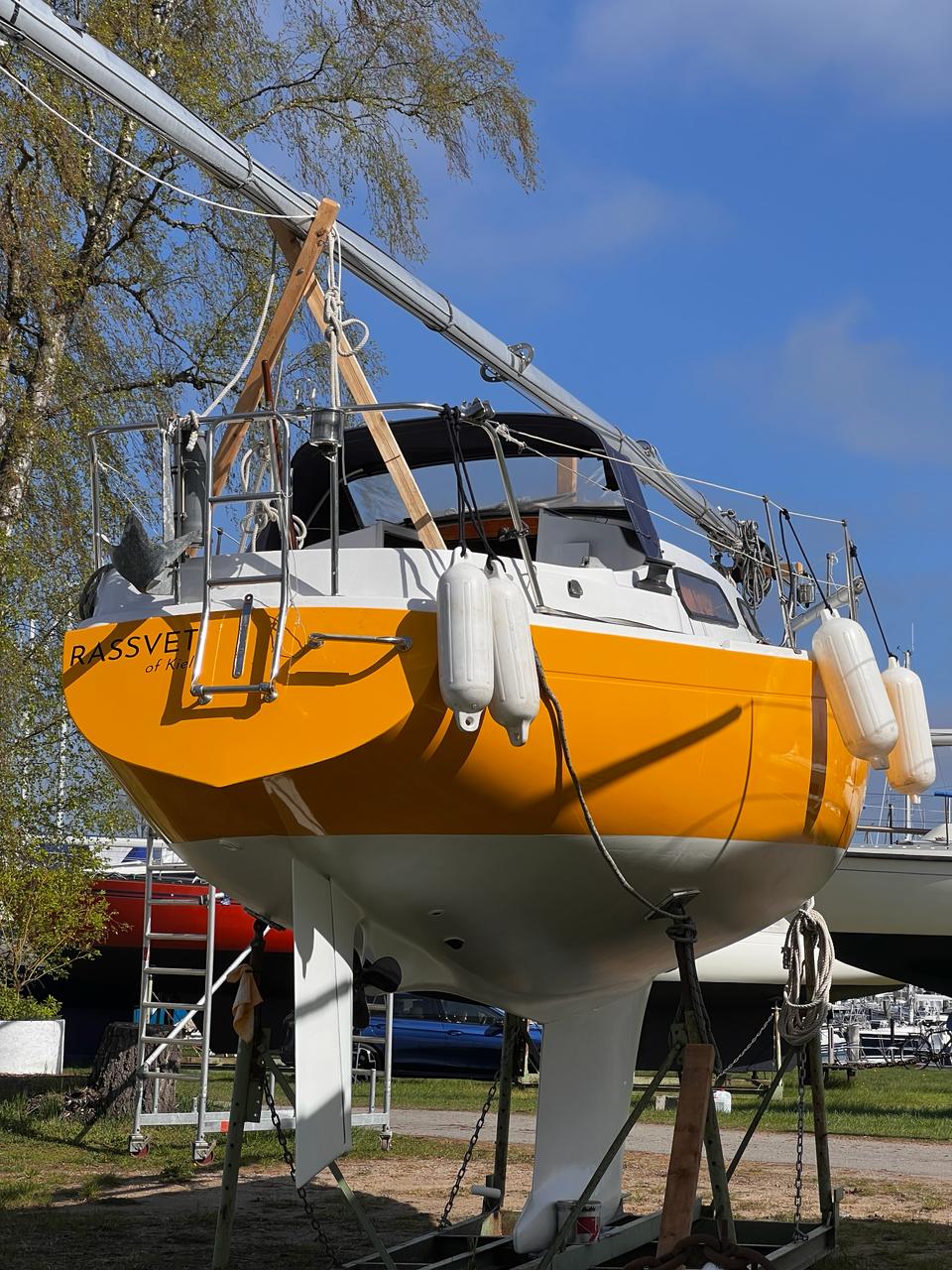
I berthed at the mast crane. They brought the mast on a two-wheeled support, pinned on the spreaders and shrouds, and passed the slings beneath them. They lifted it and carefully lowered it through the deck opening into the step in the saloon. The opening was wide, so I packed the gaps with rubber strips. We stood on the opposite side to keep the mast from leaning against the crane. Tightened the shrouds and backstay at the turnbuckles, adjusting the tension to align the mast. Removed the slings.
Two days later, I returned to fit the sails.
First, the boom: up on the topping lift, kicker fitted, mainsheet secured, lazyjacks tensioned to catch the sail on the boom.
I slid the mainsail’s foot into the boom groove, secured the tack to the gooseneck horns, and tensioned the clew to the boom end with a trucker’s hitch. The mast has a groove too. I released its stop and began hoisting on the halyard, feeding in the luff slides. The wind made it difficult: blowing from astern, with whitecaps visible outside. The forecast showed force 8, 70km/h. I waited for lulls and hauled half a metre at a time. With the stop secured beneath the final slide, I eased the main down to rig the first and second reefs. Then lowered, folded and covered it.
A neighbour helped with the jib. I fed the luff into the furler’s groove and secured tack and head with shackles, tying the sheets with bowlines. While my neighbour held the sail, I hoisted on the halyard, then used the furling line to roll it round the forestay.
#maintenance
Original and discussionOpen post in Telegram ↗