In this publication7 photos
Every single day, I read articles about lead-acid, gel, AGM and LiFePO4 batteries: their differences, characteristics, and how to connect and charge them correctly. I read the entire Victron Energy catalogue, started electrical discussions in sailing chats, and trawled Amazon reviews and comments. Three whole evenings went into draw.io to draw the wiring diagram I wanted.
Eventually, I bought a €45 multimeter; two 110Ah marine AGM batteries at €145 each; two battery boxes at €25; two terminal adapter sets at €19; busbars for €31; two junction boxes at €15; three pairs of 50cm, 25mm² cables at €17; terminals for €14; two 1–2–Both–Off switches at €17; heat-shrink tubing for €14; connectors for €10; insulating tape for €8; liquid insulation for €12; three screw sets at €15; 50 metres of webbing for €35; two PVC boards for €10; and a yoga block for €6. About €750 if you know what to buy. I didn’t, so another €150 went on top.
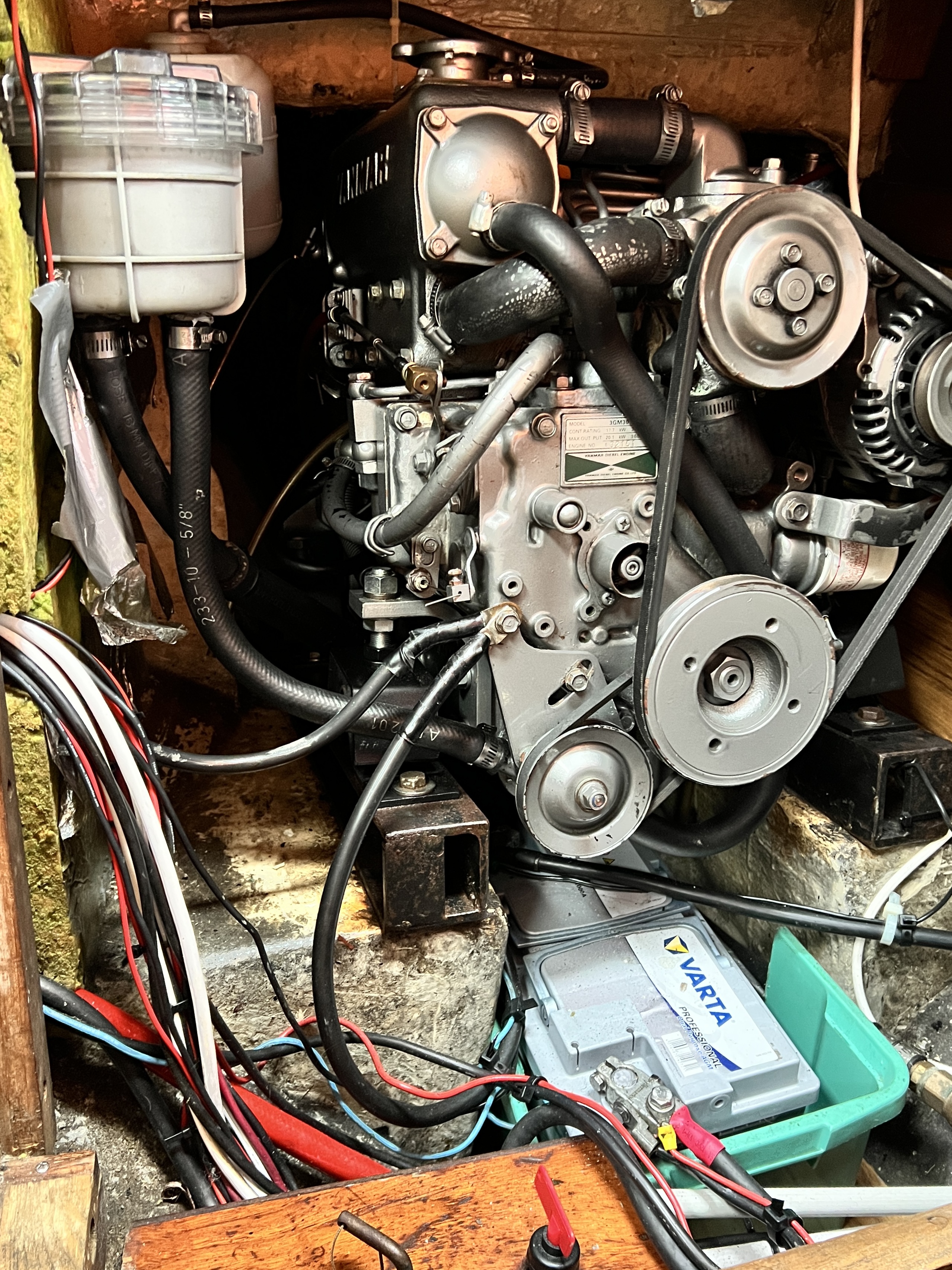
The design has two circuits that can be combined: instruments and engine. The switches allow either battery to be connected or isolated. All the wiring is enclosed, with no exposed conductors. PVC boards reinforce the walls where the batteries are secured, wide webbing holds them firmly in three axes, and a cut-up yoga block acts as a levelling support and cushion. The alternator can connect directly to AGM batteries. Not ideal, as its voltage will charge them to only about 80%, but better than nothing.
The whole installation took four full days. On one of them, Dasha, who lives in Hamburg and loves sailing, joined me. She and her dog Lucky were a great help with the yoga block, straps and cable connectors. One thing worried me: the batteries arrived at different voltages, 12.6V and 11.6V. For AGM, 11.6V is almost fully discharged.
Dasha and I had beef doner boxes with chips and sauce. My treat.
#maintenance
Original and discussionOpen post in Telegram ↗