In this publication10 photos
Aurora. Part 2. First sail: delight and panic
Ten centimetres short of departure
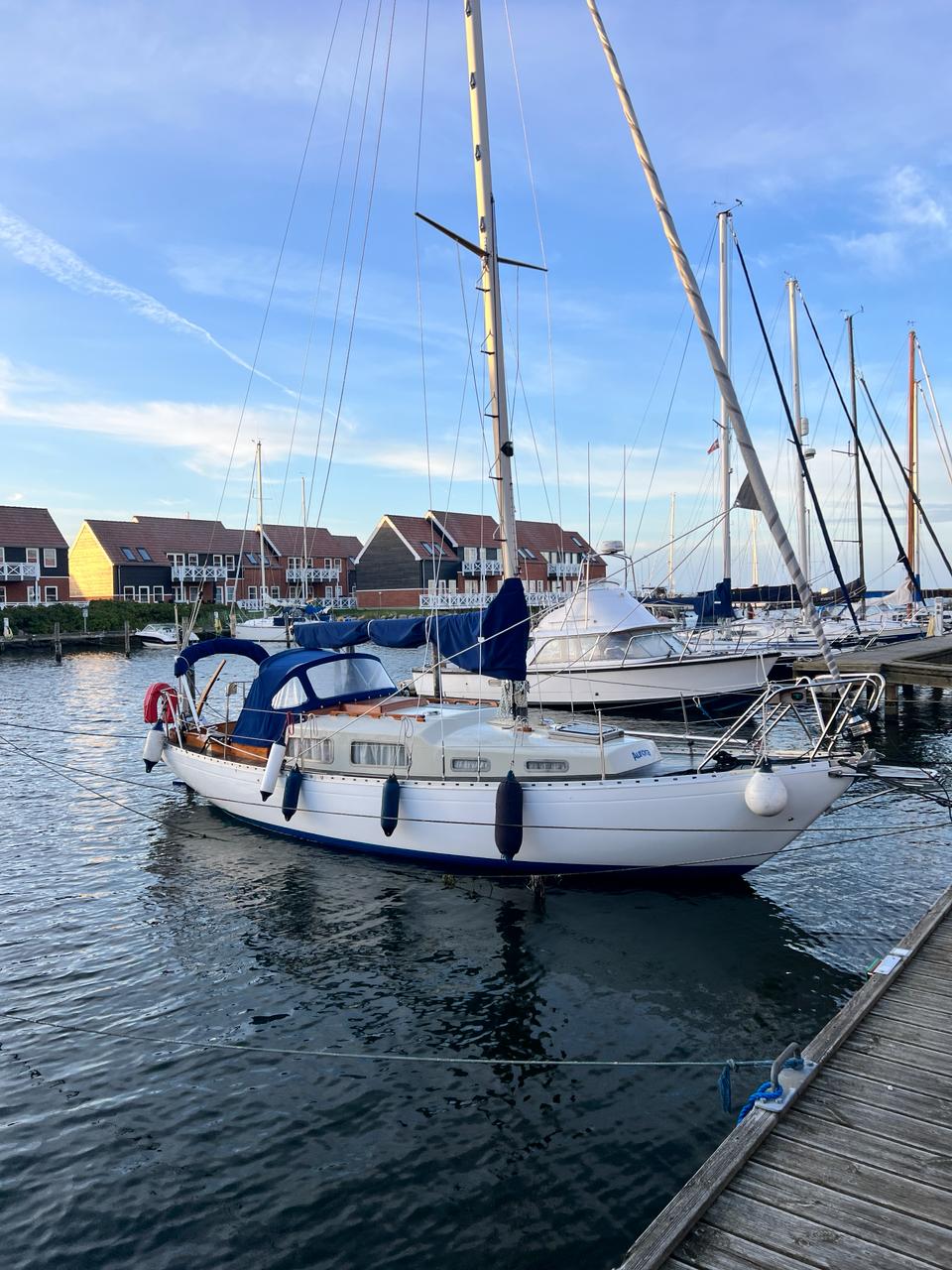
I arrived aboard Aurora on 29 August 2026, my first visit since buying her. The forecast left little choice: leave soon, or wait. I decided to get the boat ready first.
The next day went on unpacking, cleaning, buying provisions, replacing the GPSMAP 521s with an ECHOMAP Plus 72sv and fitting AIS. That last job was particularly important: AIS makes it easier for me to keep track of ships when crossing a traffic separation scheme.
On 31 August, I planned to leave overnight and cover the 80 miles to Gedser while I still had a day’s weather window. But at the last moment, I discovered that the tiller-pilot ram was about 10 cm too short. Using a folded napkin to gauge the distances, I worked out that it could hardly turn the boat to port at all. Departure cancelled.
Fortunately, I was in a big city. The next day, I found an extension. A ten-centimetre threaded stainless-steel tube cost me €50. Anything labelled ‘marine’ automatically becomes expensive. I fitted it and left immediately.
Narrower on paper, roomier in practice
On 1 September, I left at 15:15 and berthed in Klintholm at 23:45: 45 miles in eight and a half hours.
Leaving and berthing both felt quite manageable. I had expected the handling to be much worse.
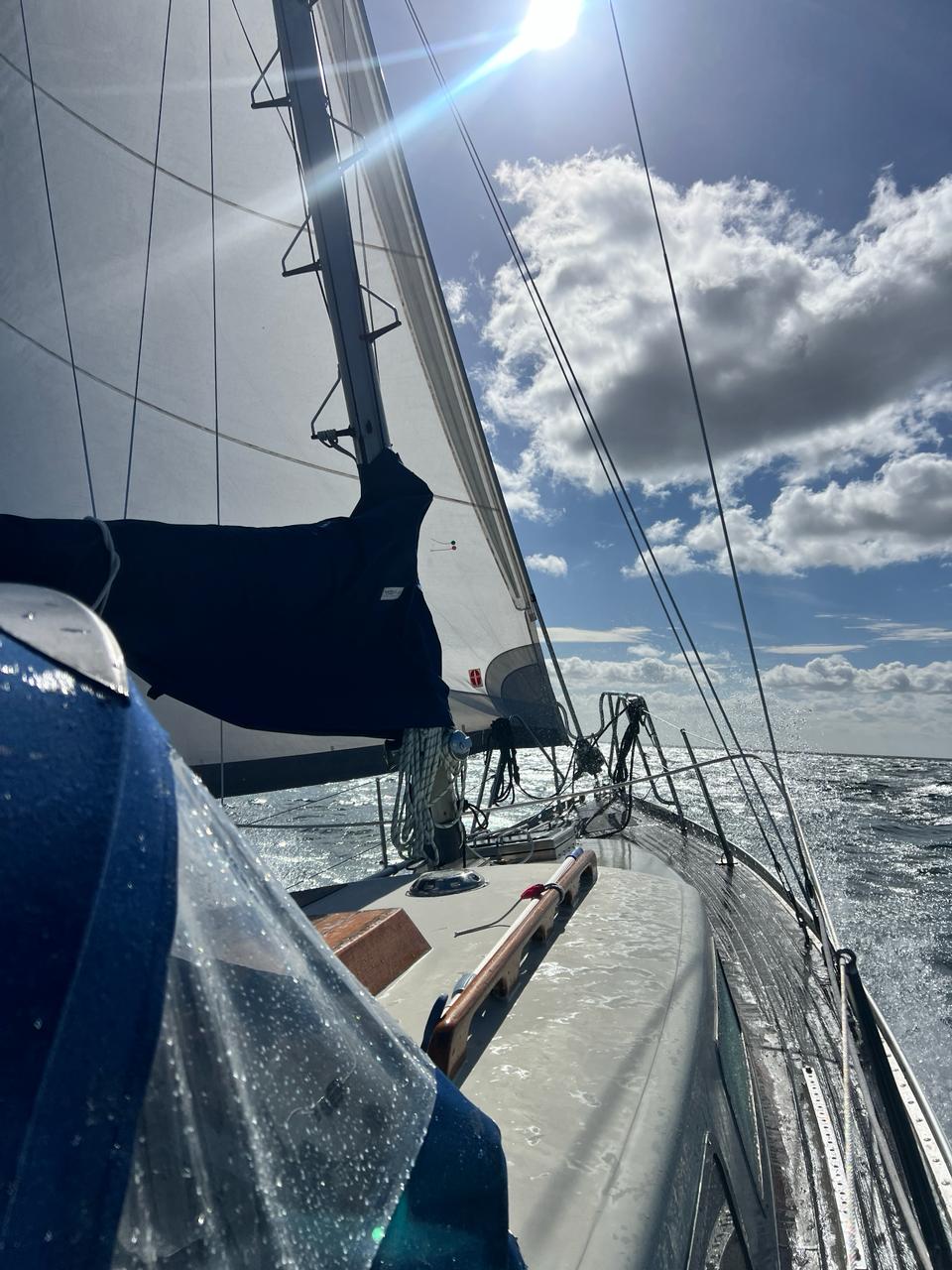
There were hardly any waves for most of the passage, so it was too early to judge what difference the long keel made. Still, I couldn’t shake the feeling that the boat was cutting through the water rather than bouncing over it. The motion was very gentle. Close-hauled, the apparent wind reached 24 knots. I had the full genoa set and no desire to reef.
To help the sail along, I started the Yanmar 3GM30 and kept it at about 2,200 rpm. My fear that the boat would be slow proved unfounded: we were making at least as much speed as on Rassvet.
There is so much room in the cockpit. I had never felt so free to move around. The boat is narrower, yet somehow feels wider. The cabin is extremely comfortable too. I set a repeating twenty-minute timer on my watch. When it went off, I had a look around, then went below to eat.
How much diesel is left?
There are T-pieces in the fuel supply and return lines, connected by a transparent hose. I was trying to judge the tank level from the fuel visible in it.
I didn’t yet know the consumption, so I checked the hose regularly. When the boat was heeled, the reading made little sense, but the diesel seemed to be disappearing much faster than I was used to. My first estimate was about 15 litres in eight hours: almost two litres an hour, compared with one on Rassvet. At that rate, even the full 40-litre tank wouldn’t last a day under engine.
A few miles short of Klintholm, there was only a 1–2 cm column of fuel left in the hose. To make matters worse, the wind headed us. I had to beat into metre-high waves in the dark.
I ran through the options in my head. If the engine stopped, I would have to enter under sail. But without enough speed, a wave could throw us onto the rocks. I might need help from the rescue service. The VHF wasn’t installed yet, so that would mean calling 112 on my phone.
While I was still thinking it through, I entered the marina and berthed alongside at the fuel station.
How do I stop this thing?
All that remained was to stop the engine. On Rassvet, turning the key had been enough. Here, the key switched off the instrument panel, but the engine kept running.
I started frantically looking for levers and buttons. I found a handle in the locker by the fuel tank and pulled it up. The engine stopped.
I put in 25 litres and worked out that the tank must still have been almost half full. I put the scare down to the hose reading while heeled. A memorable lesson.
For now, Aurora seems to be a boat with character. Or perhaps ‘quirks’ is the word. But I’m more delighted with her every day.
That was enough adventure for one day. I decided to stay at the diesel berth until six in the morning, hoping nobody would urgently need fuel in the middle of the night.
#passage
Original and discussionOpen post in Telegram ↗