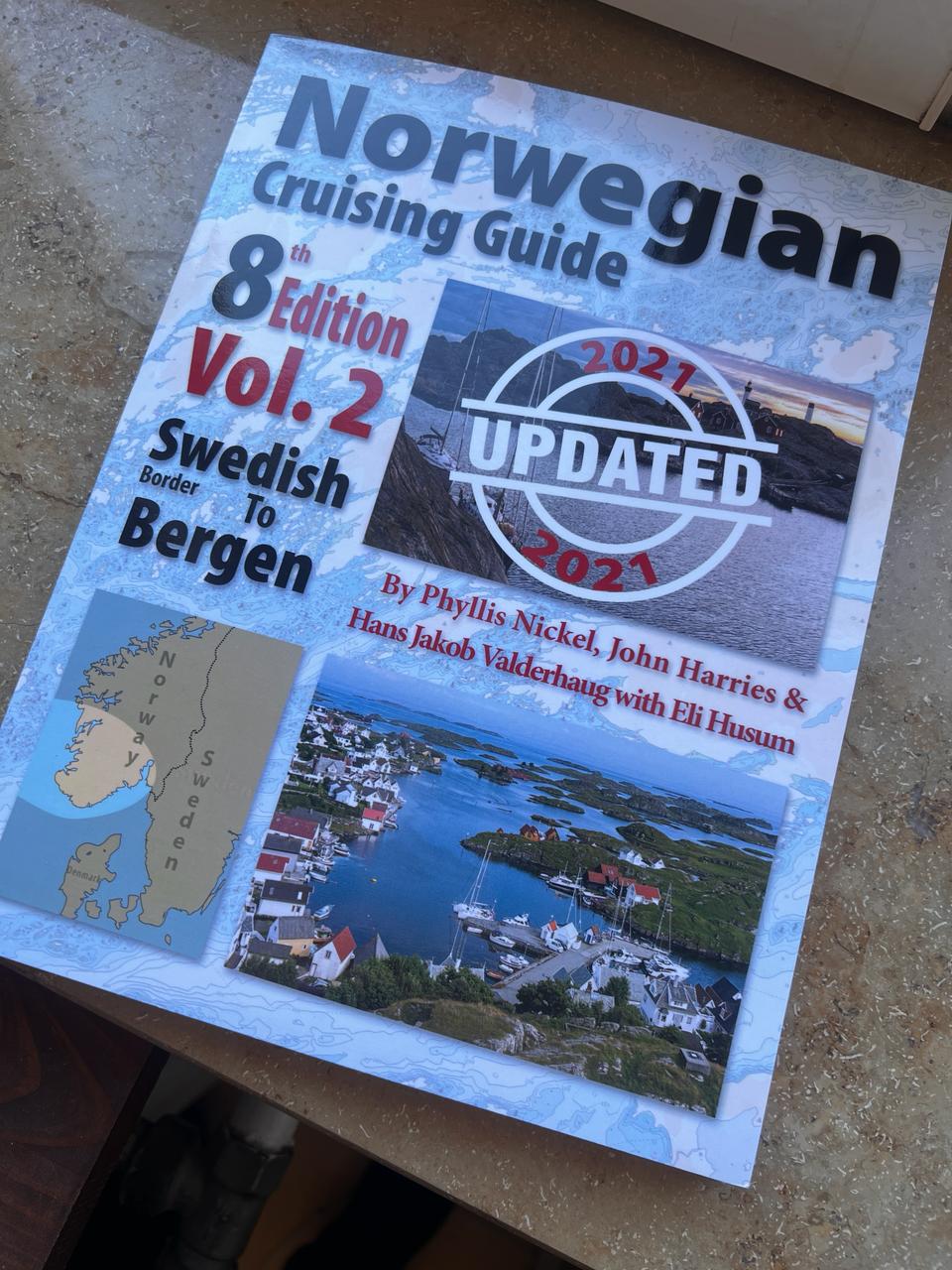
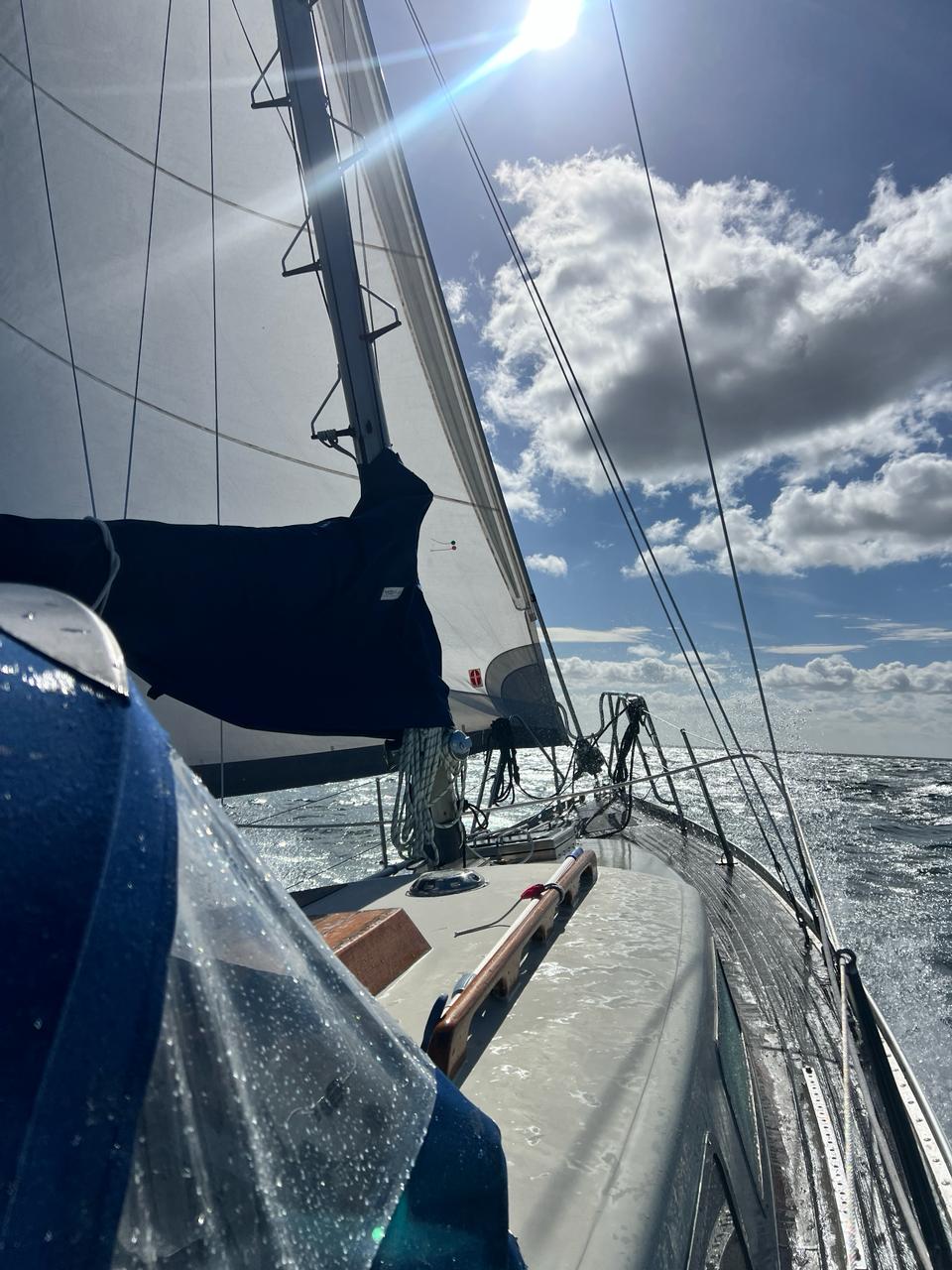
I left Kiel on 11 June and returned fifty days later.
In that time Rassvet covered 905 nautical miles. Twenty-five days were spent on passage. We visited Denmark, Norway and Sweden, crossed the Skagerrak, sailed at night, waited out storms, worked from the boat and, at one point, quite accidentally bought another yacht.
Here are the practical results: how working aboard went, what broke and what it all cost.
Remote work
The three weeks of remote work were the part I had most doubts about.
The arrangement looked questionable: sit at a laptop until four or five, then close it, cast off and cover another 10–25 miles.
But it worked.
Starlink let me attend ordinary meetings from almost anywhere, and when tiredness began to build, we simply skipped a passage. We used about 100 GB a week, so Roam Unlimited at €100 a month fully justified itself.
Long passages as a pair worked unexpectedly well too. On the day-long legs we shared watches, and several consecutive hours of sleep, rather than a series of twenty-minute naps, completely change your perception of distance.
What broke
In Oslo the genoa car fell apart. I couldn't find a direct replacement locally, so I bought another for €100, adapted it with a Dremel and added a Harken block for another €100. The same car cost €50 at SVB in Germany, with no filing or new block required.
In heavy seas the ST2000+ fuse blew because it was underrated, and the main battery switch also started losing contact: €35 for the switch and about €15 for an inline blade-fuse holder and fuse. On the final passage the autopilot overheated beneath its protective cover. The cure was taking the cover off, rather than a repair.
When the boat heeled, a mixture of water, oil and diesel found its way from beneath the engine straight to the tools under my berth. That cost a couple of rolls of toilet paper, half a bottle of Fairy, a rubbish bag and a couple of hours' sleep.
I'd renewed the window sealant in spring, but water still found a way in: another tin, €25. A leak appeared at the raw-water pump. First I replaced the impeller for €60, then bought an €80 overhaul kit and changed the shaft seal. I sealed the threads on the fuel pre-filter fittings with Plastic Padding Gasket.
There were less spectacular things too: constantly watching for fishing gear, twenty centimetres beneath the keel in Bogø, four litres of drinking water aboard before a day-long passage, and expensive Dockspot berths in Swedish marinas that turned out to have been empty for a reason.
None of these failures stopped the trip. Almost everything could be dealt with on the spot using tools, a spare part, a change of route or a couple of hours' tinkering. My conclusion: carry tools, spares, sealant and money for the occasion when none of those works.
The figures
Route: Kiel → Grenå → Læsø → Malmön → Ulön → Koster → Fuglevik → Oslo → Horten → Fredrikstad → Strömstad → Havstenssund → Hamburgsund → Malmön → Marstrand → Göteborg → Helsingør → Copenhagen → Rødvig → Klintholm → Bogø → Vejrø → Kiel
Dates: 11 June – 30 July 2026
Distance: 905 nautical miles
Duration: 50 days
Days on passage: 25
Passages: 3 to 26 hours
Average speed: 4.8 knots
Weather: Beaufort force 1 to 7
Expenses:
• fuel: ~€200 over five refuellings
• marinas: ~€1,120 for 21 stops
• groceries: ~€820
• repairs: ~€440
• Starlink: ~€200
A total of €2,780 for two months, excluding personal spending, museums and transport.
I was curious to see the financial total myself. It had felt like a voyage of small payments, until Hamburgsund, Oslo or the next spare part reminded me that ‘small’ is relative.
#passage
Original and discussionOpen post in Telegram ↗