In this publication10 photos
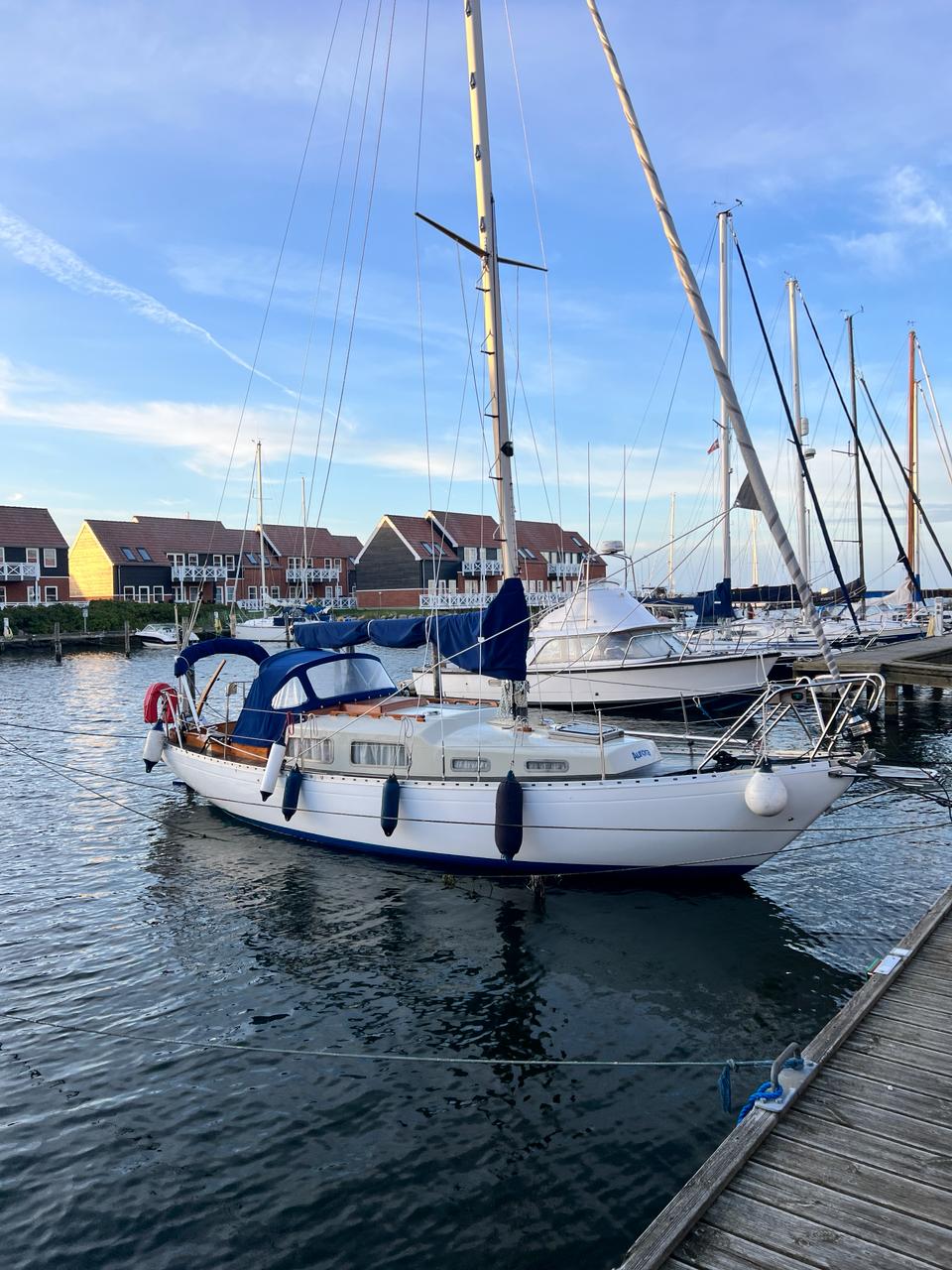
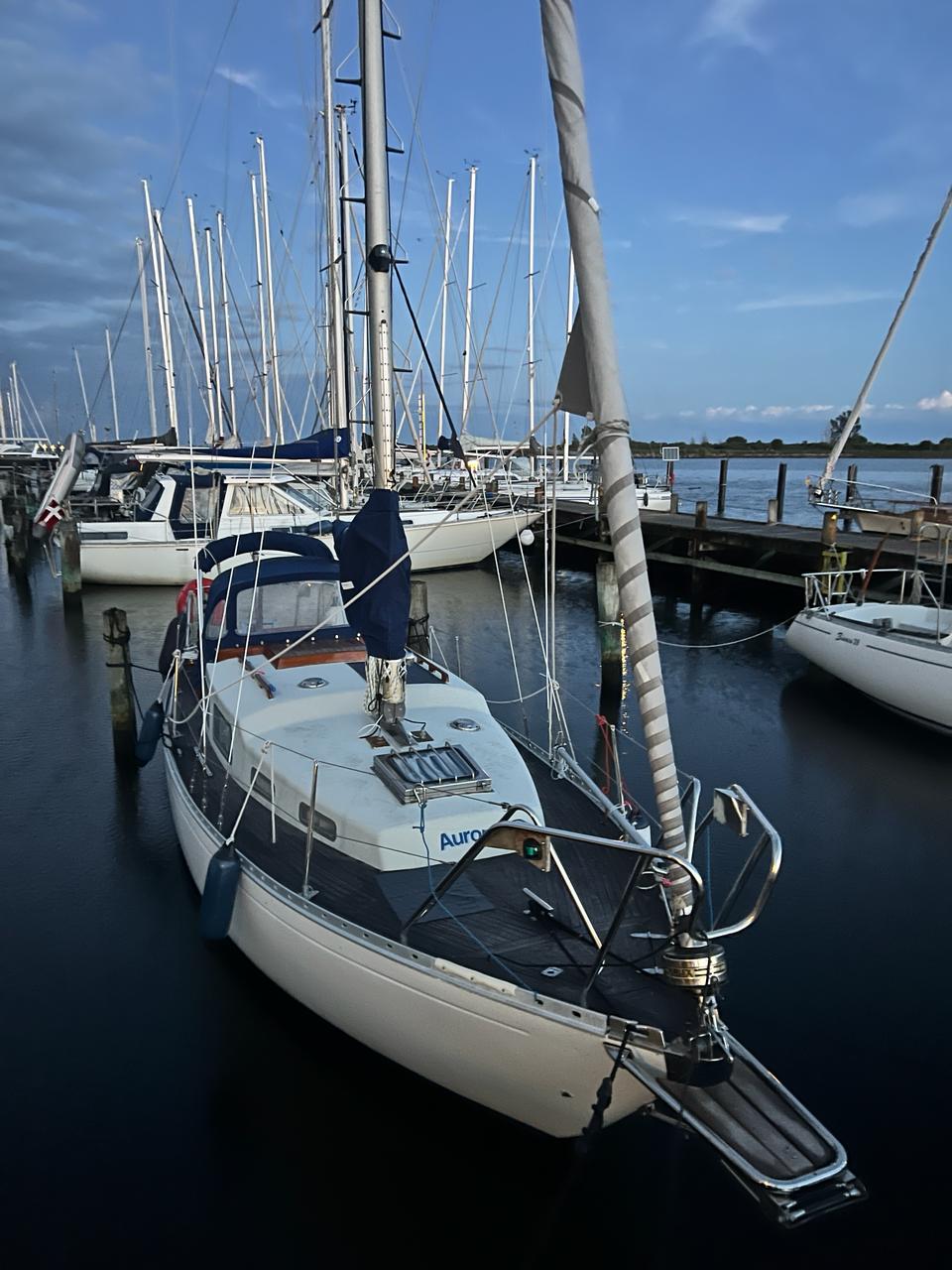
23 July 2026. After ten days in Copenhagen it was time to move. We cast off at 16:00 and headed south, 32 miles to Rødvig. I'd had this place on my list for two years: Grigory had spoken so enthusiastically about its museum that I couldn't sail past.
The smell of smoked fish greeted us before we reached the harbour. I'd only experienced anything similar at Marstal. Here they smoke fish all night so it's ready for the counter in the morning.
Two hours and 66 million years
The museum is about a kilometre east of the harbour. It's small, but two hours disappear without your noticing: it's devoted to the asteroid impact that wiped out the dinosaurs.
What makes Stevns Klint special is that you can literally see the boundary between two eras of Earth's history in its cliffs. Below is chalk formed while dinosaurs still lived. Above begins limestone from the next geological period. Between them runs a thin, dark, iridium-rich layer of clay.
Layers like this were among the key pieces of evidence that a huge asteroid struck Earth about 66 million years ago, causing a mass extinction. The boundary at Stevns is so well preserved that the entire cliff is now a UNESCO World Heritage Site.
The museum begins with what is practically a cross-section of the ground. Then come animations, meteorites, the story of the search for the crater, and a half-hour film tracing the development of life on Earth from its beginnings.
I stayed until closing time.
After two hours encompassing billions of years, it felt odd to walk back to the boat and start thinking about tomorrow's forecast again. White limestone cliffs stretched along the way, and now I saw their thin bands of rock quite differently.
Really, we should have stayed another day. Nearby are the underground Cold War fortress Stevnsfort, the old Højerup church and Stevns Fyr lighthouse. But you have to leave something for next time.
Beneath the white cliffs
On 25 July we sailed another 28 miles south to Klintholm.
What I really wanted was to anchor beneath the huge white cliffs of Møns Klint, a little to the north-east, rather than go into the marina. The chalk forms almost sheer walls, white beaches and water so blue that the place looks slightly unreal.
The wind wasn't in favour.
So we had to go into the little village of Klintholm. There's just one shop, in the marina, with a modest selection. We bought meat and had a barbecue: at a stop like this, that's the entire evening's programme.
Bogø
That morning I couldn't decide whether to leave. Headwinds and rain were forecast: the sort of passage you don't make for pleasure. We were rafted three out, alongside our neighbour, and the initial decision was simply to move into a berth that had become free.
We cast off.
But weather always looks worse from the pontoon than from the water. As we moved away and turned, Nastya, who'd wanted to stay, said she was ready to carry on. So we did.
That's how carefully prepared navigational decisions are sometimes made.
The funniest thing was that the forecast turned out to be almost completely wrong. The wind vanished.
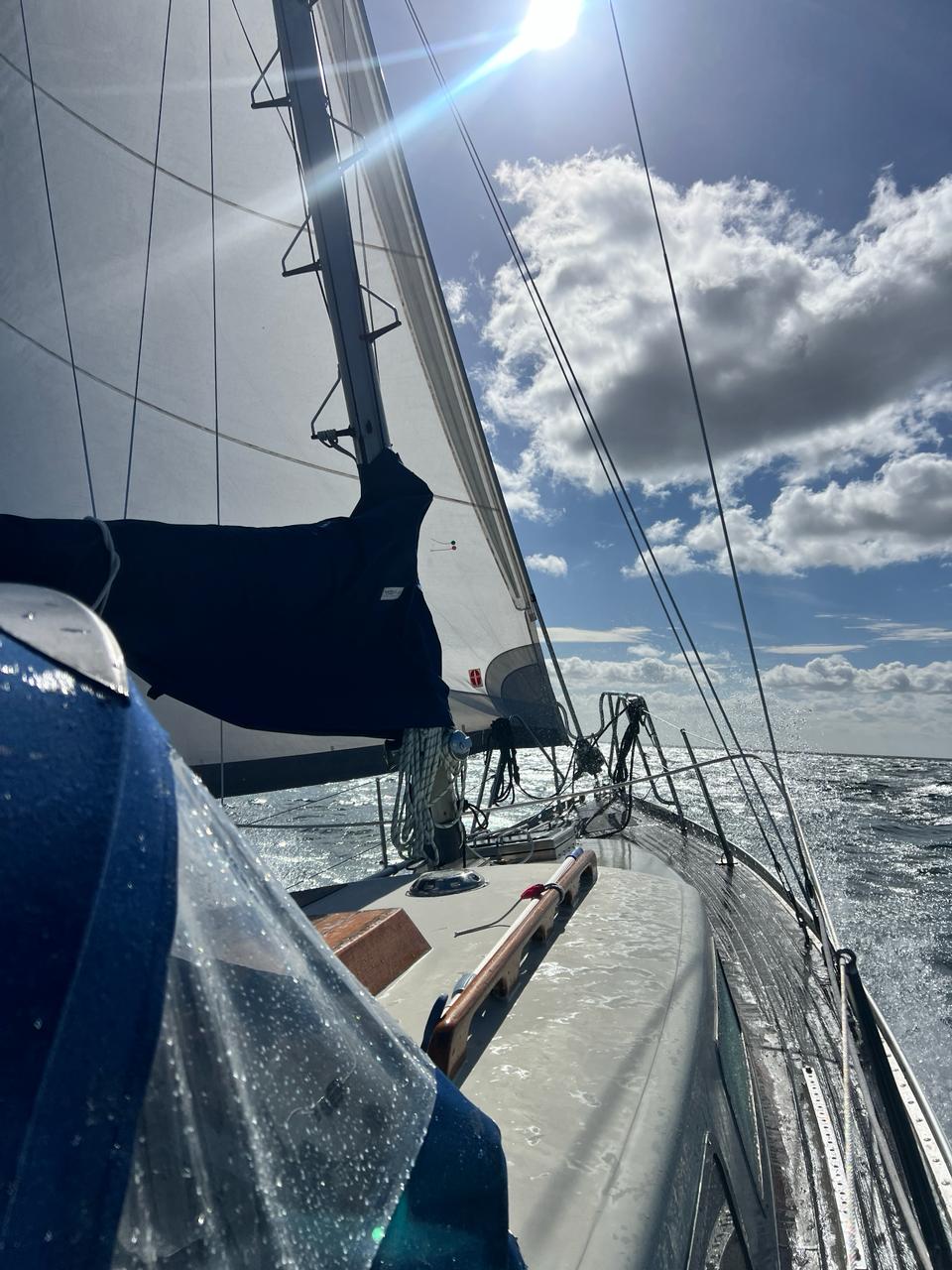
We hoisted the main to ease the rolling a little, started the engine and quietly covered another 20 miles to Bogø.
Over two days, first the wind denied me the anchorage beneath the white cliffs, then I prepared to fight a headwind that never materialised.
There's a trick that costs little on any boat: if you're unsure, leave the berth and spend ten minutes on the water. The decision feels quite different out there, and you can always come back.
#passage
Original and discussionOpen post in Telegram ↗