In this publication10 photos
Yacht woodwork became its own story. Two years ago, my first pressure wash stripped old exterior varnish. I chose to try teak oil instead of more varnish.
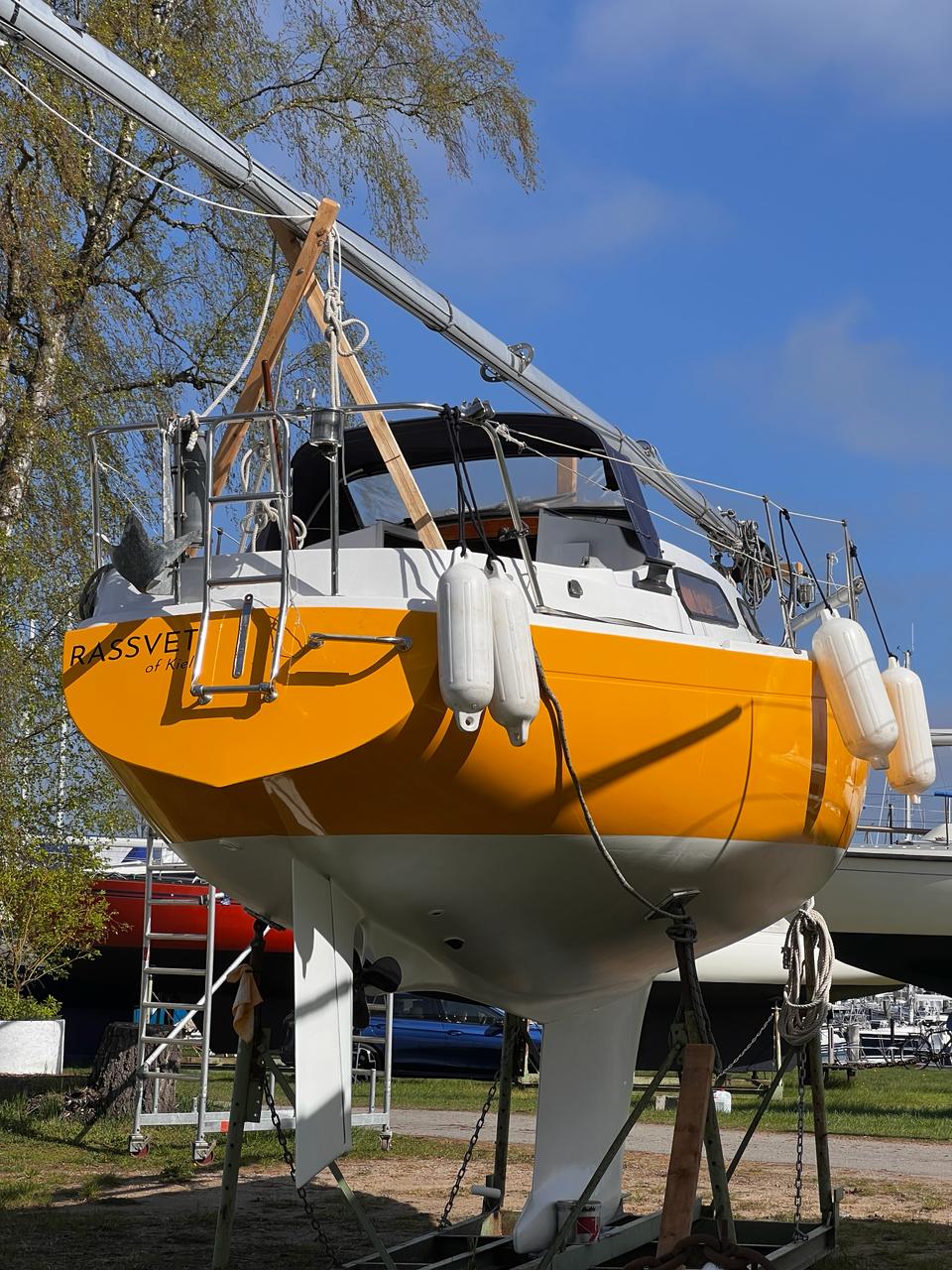
Instantly lovely: deep colour, water beading like on ceramic, matt and not too slippery. First lesson: drops on gelcoat wouldn’t come off. A year of stains, until repainting the deck. Perhaps their quiet argument helped persuade me to paint the whole boat.
Months later, oil’s lovely effect almost gone; gelcoat stains remained. Greying wood again. Regular oil maintenance meant more tins, rags and chances to spill something permanent.
Inside
Back to varnish this year. Exterior restoration and some new interior pieces. A wooden mattress-retaining strip had broken.
Bought birch of the right width and thickness, multitool-cut to length, P240-rounded edges.
To blend pale birch with old mahogany, three coats of Epifanes Mahagoni Beize stain each side with a foam brush. Then three coats of semi-matt Epifanes Seidenglanzlack Klar interior varnish, lightly keyed between with Scotch-Brite P320.
Fitted, better than expected. Not real mahogany, but quietly belonged beside the original surfaces. Almost a compliment for a new part.
Outside
Less decorative, more stubborn.
1. Removed removable parts; masked the rest.
2. Bonded cracks with syringe-dispensed two-part epoxy and clamped.
3. Tried teak cleaner and brightener. Unclear benefit: a whitish film that came off on fingers.
4. Back to sanding, P240 to fresh, even wood. Remove grey streaks: varnish makes them darker and more obvious. Little structural effect, poor appearance.
5. Epifanes Blanke Bootlak Vernis gloss yacht varnish with UV filter. One coat daily, lightly keyed before the next. Three coats.
6. Tiller hung separately for five coats: always in your hands.
I wasn’t after a resin-smooth surface. Sand every coat flat for a furniture finish if you like; I wanted the wood grain’s feel. Light keying, texture retained.
What I learnt
Varnish should theoretically be easier to maintain than oil, lasting longer. Local damage can be keyed and recoated without starting over.
Not difficult or heavy work, but slow. Coat, day’s wait, light key, next coat. Varnish dislikes hurry.
Worth waiting. Fresh varnish changes how the boat feels: cared for, beyond merely repaired. Thin layers bring protection and a feeling of everything belonging together again.
#maintenance
Original and discussionOpen post in Telegram ↗