(A supplement to the previous post)
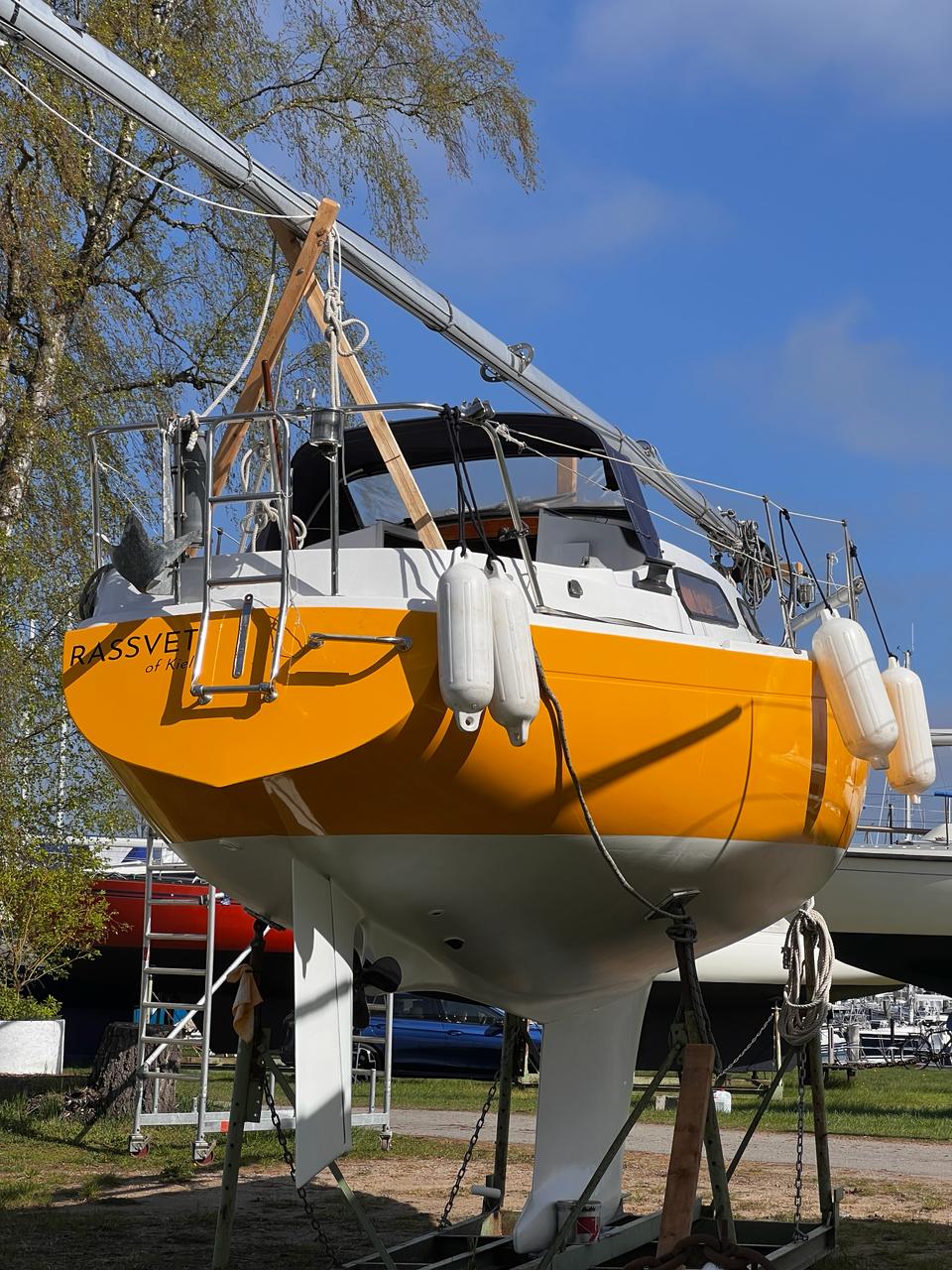
Over the last couple of years, working on the hull, watching neighbours, reading everything and listening to experienced owners, I’ve formed my own picture of what to do, why and in which order. Here it is, so I don’t forget — and perhaps it’ll help someone else.
🧼 Antifouling
Special paint that keeps marine organisms off the hull. The main types:
• Ablative (Ablative). Wears away like chalk, taking growth with it. Cheapest, but wears quickly, in four to six months, and unevenly, especially at the bow and rudder. Even gentle rocking wears it, not just sailing.
• Self-polishing (Self-Polishing Copolymer). Dissolves through hydrolysis as the boat moves through water. The most popular type for sailing yachts, but needs annual renewal and works poorly if the boat stays still for long periods.
• Hard (Hard). Contains high levels of biocides released through intense contact with flowing water. For faster boats, from ten knots. Old layers are difficult to remove and may crack.
• Silicone (Foul-Releasing). Creates a smooth surface from which growth slips off. Environmentally friendly but expensive, with exacting application and regular sailing needed to remain effective.
• Copper-based (CopperCoat). Copper powder mixed with epoxy, applied once a decade and virtually maintenance-free. But very toxic, banned in some countries, expensive and requiring particularly careful application.
🧱 Primer
Paint doesn’t adhere well directly to the hull. An intermediate layer is needed: either a compatible old coating — manufacturers usually publish compatibility tables — or primer, such as Hempel one-component Underwater Primer.
🧪 Epoxy barrier
Neither antifouling nor one-component primer protects against osmosis. For that, apply several coats, usually four to six, of two-part epoxy primer. Even that can eventually crack, so stripping right back and starting again every eight to twelve years is recommended. Labour-intensive, but cheaper in the long run than repairing osmosis damage.
🛠 Hull repairs
A fair surface helps reduce growth as well as improving speed. Once the epoxy is removed, inspect the bottom carefully, fill chips with epoxy filler, and remove and rebuild damaged laminate where necessary. Only then paint.
Perhaps in a couple of seasons, I’ll reread this and decide I had it all wrong. For now, it’s my way: slow, dusty and covered in epoxy from head to toe.
#maintenance
Original and discussionOpen post in Telegram ↗