In this publication10 photos
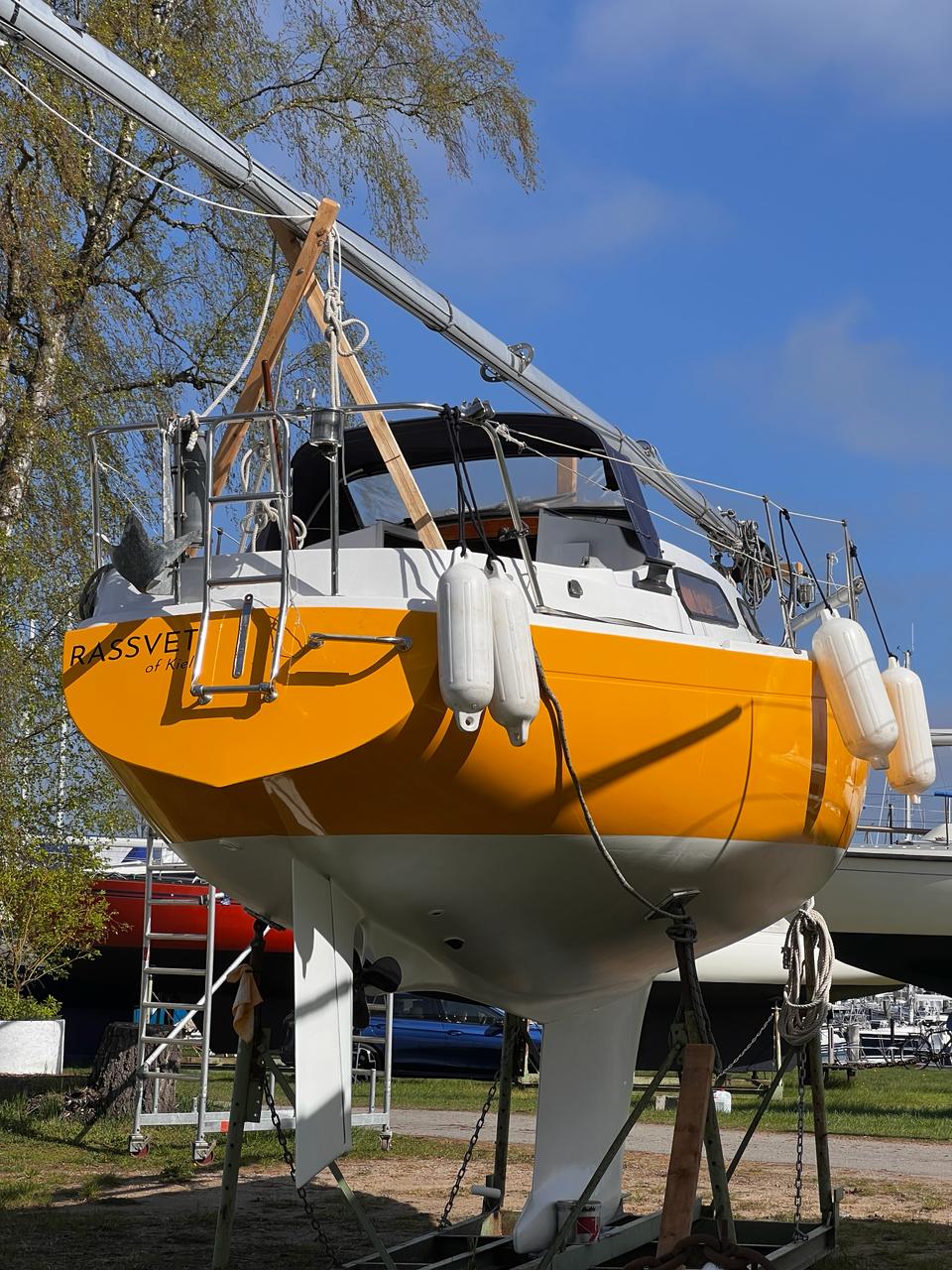
Boat afloat, season open. Except without mast and sails, she’s a floating cottage. The fun begins with stepping the mast and trying not to have a heart attack when a twenty-knot gust hits as you hoist the sails.
The mast
Back to the DavidWerft GmbH team for our second mast-stepping operation together. Straightforward:
1. Untangle the rigging and check nothing crosses.
2. One person lifts the mast with the crane, slings beneath the spreaders.
3. Another holds the heel, guides it to the yacht and into its step.
4. With the heel secured, attach shrouds and stays, the wires holding it upright.
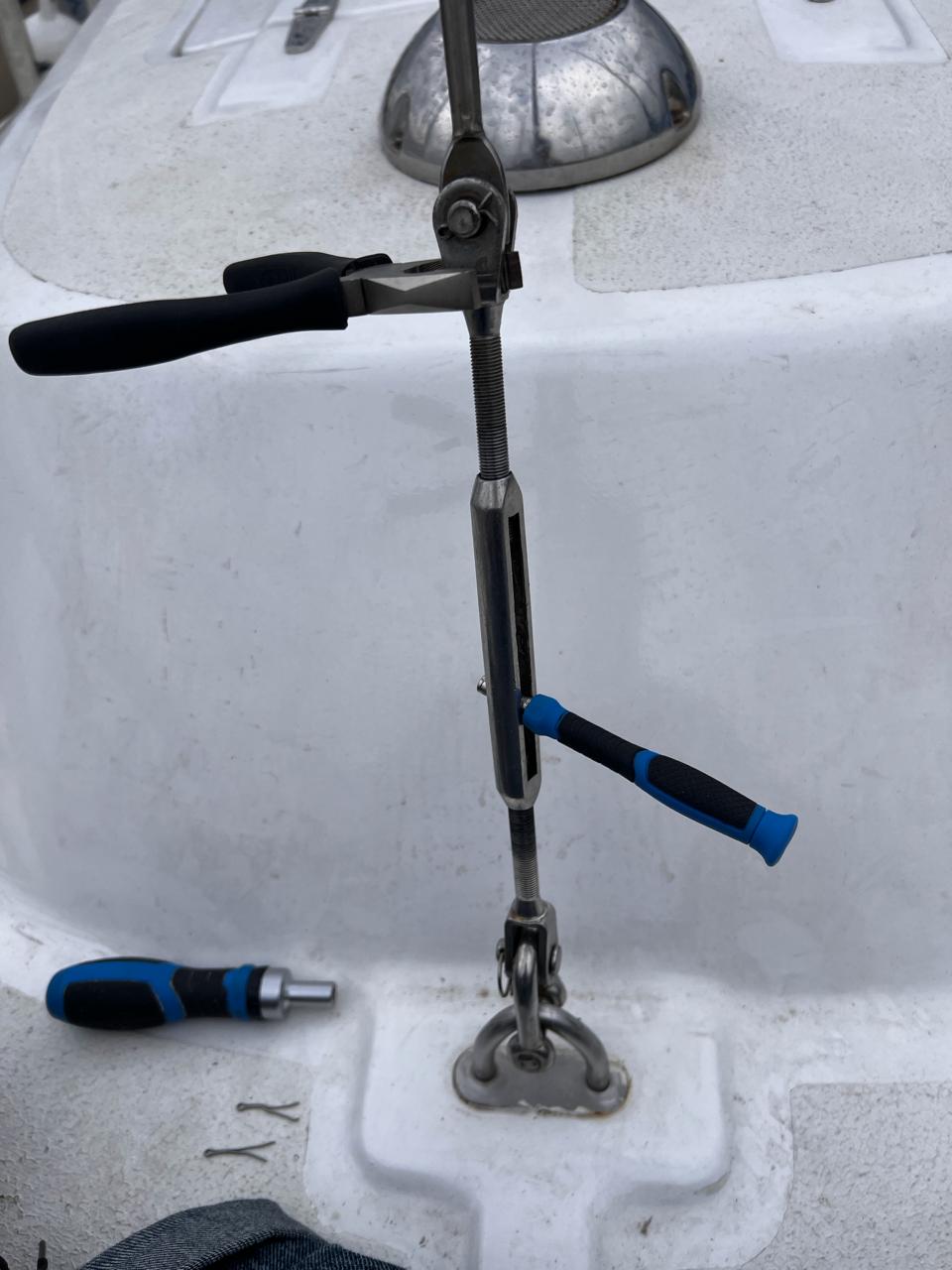
The key is even, tight tension, with the mast aligned in every direction. Fine adjustments to tension do the aligning.
I connected navigation lights, antenna and electronic wind sensor. Everything worked first time.
During lifting, the crane arm caught the wind vane and turned its indicators. The yard team seemed delighted, went up on the crane and adjusted it. Said they enjoyed it. Amusing, though they didn’t deduct the little ride from the invoice. That evening: €185 for an hour with two employees.
The sails
With the mast up, onto the sails. Last year, I’d found a good setup, even devised a rule for steady speed in different winds. This year, I bought telltales: fine threads attached to the sails, showing how effectively they work. Set correctly, they indicate smooth, laminar flow and maximum drive. I stuck them on beforehand, sail spread on the ground.
The mainsail goes on the mast. Best hoisted with wind ahead or abeam. I fitted it at the mast crane, as the wind was straight ahead.
1. Fit the boom, lazyjacks, kicker, topping lift and mainsheet.
2. Attach the sail’s foot to the boom, connect the halyard and hoist.
3. Close the stop to retain the mast slides, then stow the sail carefully.
4. Insert battens, fit telltales and lead reefing lines.
The genoa, the forward sail, is simpler:
1. Prepare the furling line.
2. Attach all three corners and hoist, ideally in under ten knots or flat calm.
3. Furl it and move on.
Unfortunately, the following wind was too strong, about twenty knots. It pulled the sail so hard my heart tightened at the thought of tearing it. A passing father and son helped: the son held the genoa against the stay while I hoisted. His dad enjoyed a chance to practise English with me. Together, we managed.
Finishing touches
With sails fitted, the main work was done. Small jobs left:
• Clean and fill the water tank
• Grease the stern-tube seal
• Check electronics and heating
• Check the VHF and AIS
• Buy water and dry provisions, bring warm clothing and bedding, and stow everything
Now truly ready. The boat was back in service. A week later, I cast off and headed north-east, on a trip I won’t forget. More soon.
#maintenance
Original and discussionOpen post in Telegram ↗