In this publication10 photos
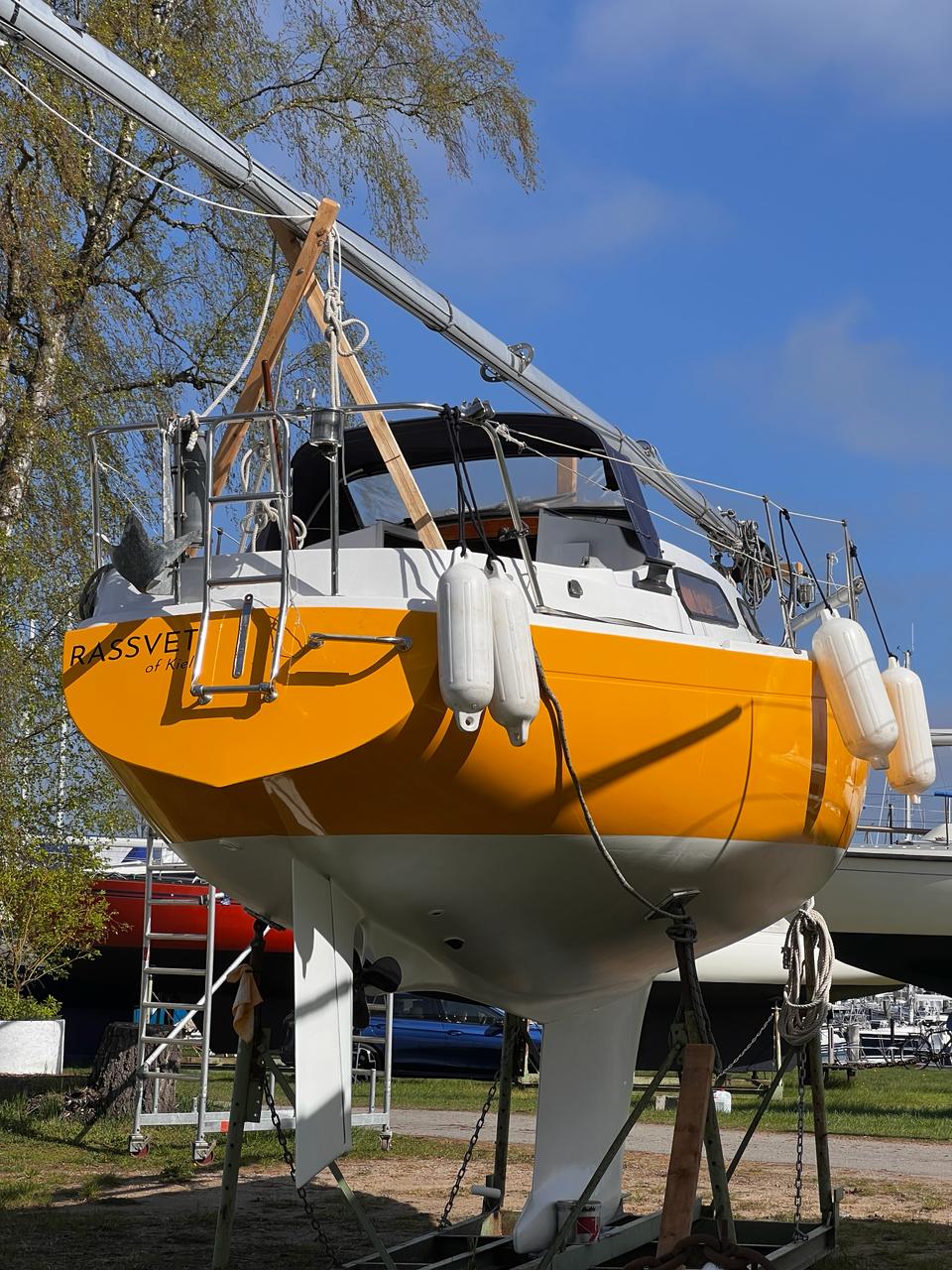
Perhaps the most important preparation for a new season is renewing the antifouling. It keeps marine life off the hull. A few shells or strands of weed hardly sound alarming, but they add weight and noticeably reduce speed. I’ve already described how hull and propeller fouling cut my yacht’s speed fivefold.
First, thorough preparation. The old paint had hardened unevenly, with barnacle marks and a yellow-green colour like slime. Sanding removes it. Last year I spent four days with a cheap Bosch sander amid clouds of toxic dust, which worked into my skin and past goggles and respirator.
This year, I made life easier with a more powerful Makita BO5041 and Bosch UniversalVac 15. Success: all sanded in one day, practically no dust. I sanded back to a smooth grey layer, the primer applied last season.
The steps
(Timings are for around 10°C. Check the instructions for other conditions.)
1. Mask transducers and sensors.
2. Sand with P80. Depending on the old coating and the tool — anything from hours to a couple of days.
3. Wash with Hempel Pre-Clean Cleaner. I mixed 50ml per litre of water, enough for about a third of the hull before the solution turned cloudy.
4. Optional, but recommended: prime damaged areas with epoxy primer. Once the cleaner and epoxy layer have dried completely, apply one-component primer. Focus on waterline edges, keel joint and projections that suffer most from sanding. Wait at least eight hours.
5. Apply two coats of self-polishing antifouling, no earlier than a month and no later than eight hours before launch, with eight hours between coats.
6. Remember to remove the tape.
Materials and costs
• 25 × €0.22: 125mm P80 ceramic-alumina sanding discs
• 0.15 × €23: Hempel Pre-Clean Cleaner, one litre
• 0.5 × €24.00: Hempel one-component Underwater Primer, 0.75 litres
• 1 × €130.00: Hempel Mille NCT self-polishing antifouling, 2.5 litres for two coats
• 3 × €2.25: paint trays
• 4 × €0.80: foam rollers
• 1 × €1.10: roller handle
• 1 × €14.50: telescopic extension pole
Total: €196.22
A minimum job, without which the boat can foul within a month or six weeks. Remember: antifouling works in water. Ashore, it gradually loses its properties and is virtually useless after a month. Where boats winter ashore, the bottom is treated annually. Where they stay afloat all year, it’s done every two years, lifting out for a few days.
The result
My second preparation for a season. Past mistakes accounted for, better tools, a much more efficient process. Apparently, everything under control. Yet despite experience and a clear plan, a little nervousness remained. Perhaps that reminds me the yacht is more than machinery: a living story that never repeats itself exactly.
#maintenance
Original and discussionOpen post in Telegram ↗