In this publication10 photos
On Friday, 24 January 2025, I visited the Düsseldorf Boat Show. My first boat show: I had no idea what to expect.
Practicalities
Two ICE tickets at €30 each, €21 admission and a €90 hotel room. That room would have cost €120 at the weekend, €70 a week before or after. Google Maps integrates public transport and accurately shows routes and times.
The exhibition centre has a cloakroom and plenty of food trucks and food courts. Schnitzel, rice, vegetables, bread and Coke cost €28. The same at the canteen near my work usually costs €8. At least the portions were large.
An astonishing amount for children to try: Optimist dinghies, kayaks, scuba diving in a pool, and a university talk on microplastics. Plenty of places to rest too.
The first hall
At the ISSA stand, I met people from Sila Vetra. A chat and an amusing souvenir. Then a big screen caught my eye, showing the Vendée Globe and Virtual Regatta. They invited me to race other players online in a virtual Kiel Fjord. I finished first! A pity there were no other players. A German weather lecture was taking place nearby. I also met the charming older gentleman Peter Reichelt, who’d built the plywood trimaran he’d brought in eighteen months.
Sailing yachts
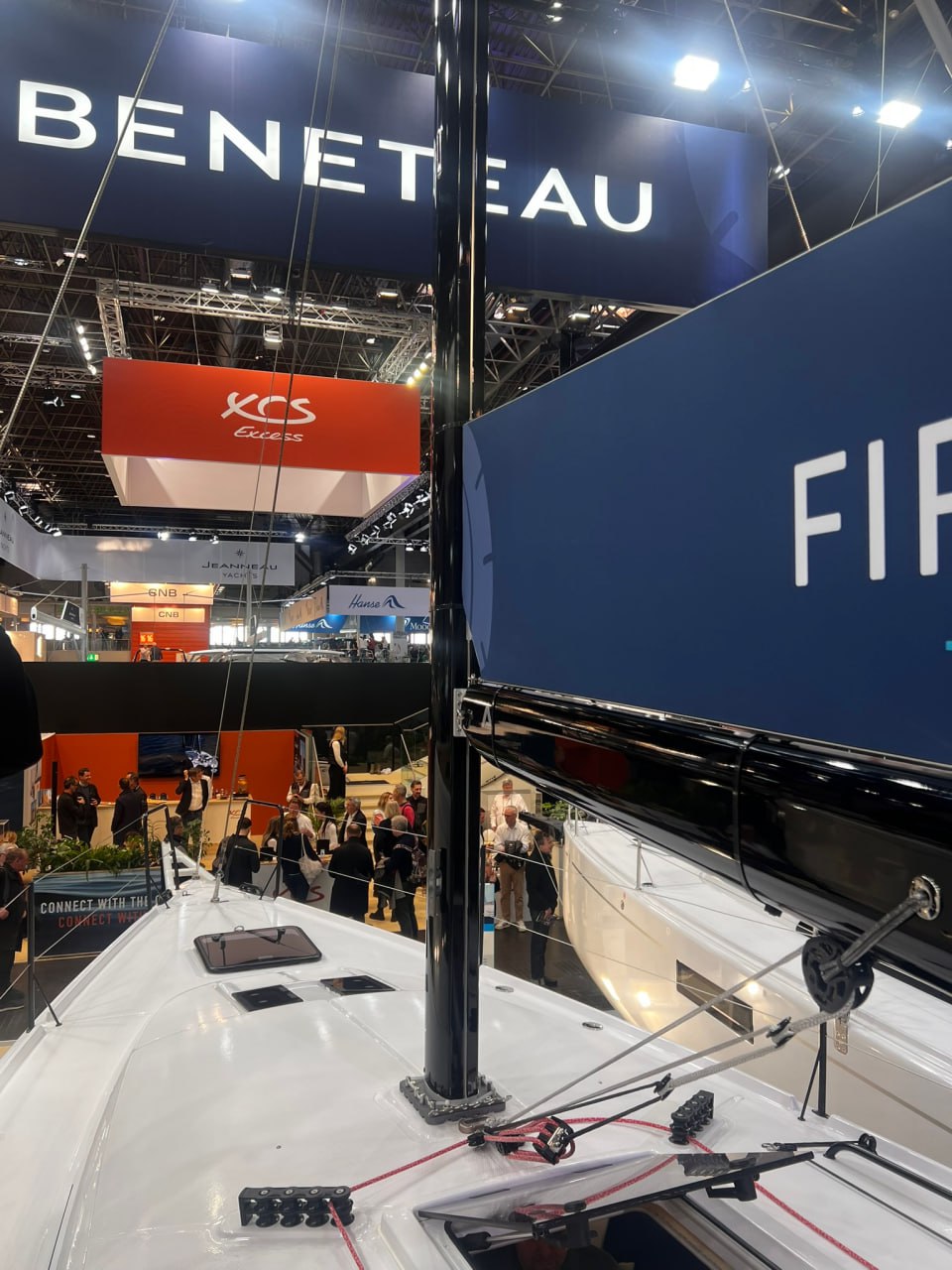
The next hall was full of yachts, and I got carried away exploring each. Outside: keel design, propellers, seacocks, water intakes. Inside: furniture, engine, electrics, plumbing, galley and heads. All in search of interesting engineering solutions. After about ten boats, they blurred together. My main conclusion was disappointing: almost all the ‘wood’ was poor-quality chipboard, worse-looking than IKEA’s and sure to swell when wet. Some models even had doors and cupboards made of heavy fabric.
Thirty-five-footers cost €120,000–200,000: half upfront, the rest over fifteen years. Mainly aimed at lakes and coastal sailing; hardly any ocean-category boats.
By noon, visitors had multiplied so much that yacht visits first required bookings, then were deferred until the next day. On a weekday! Arrive at opening and head straight to this hall to get aboard the new Hallberg-Rassys and X-Yachts.
Schools, charters and marinas
The next hall had charter companies and schools. I found Ardent Training and had a photo with Ed, whose lectures I’d watched online. Lovely to thank him in person. A woman at the Swedish marinas stand suggested a west-coast route and gave me their pilot guide. At ADAC, I tried berthing a sailing boat in strong wind using a VR headset.
(Continued in the next post)
Original and discussionOpen post in Telegram ↗