In this publication9 photos · 1 video
Canal, tea and a little panic: my first Kiel lock transit
Europe’s maritime artery
Kiel is known for regattas, its university and an engineering marvel: the canal between Baltic and North Sea. Built in 1895 on Kaiser Wilhelm II’s orders, the 98km Kiel Canal remains among the world’s busiest, saving ships the storms, time and fuel of rounding Jutland. Millions in revenue, hundreds of thousands of jobs.
At its completion, the Kaiser staged a parade of vanity, sailing through aboard Hohenzollern with warships, orchestra and guests. Naturally: music, flags and chants.
Rumour has it he personally decreed: ‘Every German must be able to cross this canal free, even by swimming!’ Ferries were the practical answer. Dozens still carry people, bicycles and even cows without charging a cent.
Sometimes it seems the Emperor’s last generous decision, surviving him, two wars, the Reichstag and Deutsche Bahn.
My first lock
A seventeen-day North Sea trip planned for August. I’d never used a lock and barely knew how it worked. What did it look like? How long? What should I do? Better try one first.
I did my homework:
• Online, you can buy a pass: €7 for one lock, €12 for both. You receive a code an inspector may request.
• There are also leaflets in German and English.
• One detailed first-hand account particularly helped: How to transit Kiel Canal on a pleasure craft?
I first planned to go alone, then remembered a piece of sailing wisdom: the hero is the one who knows when to call Grigory. He agreed immediately.
Through the lock
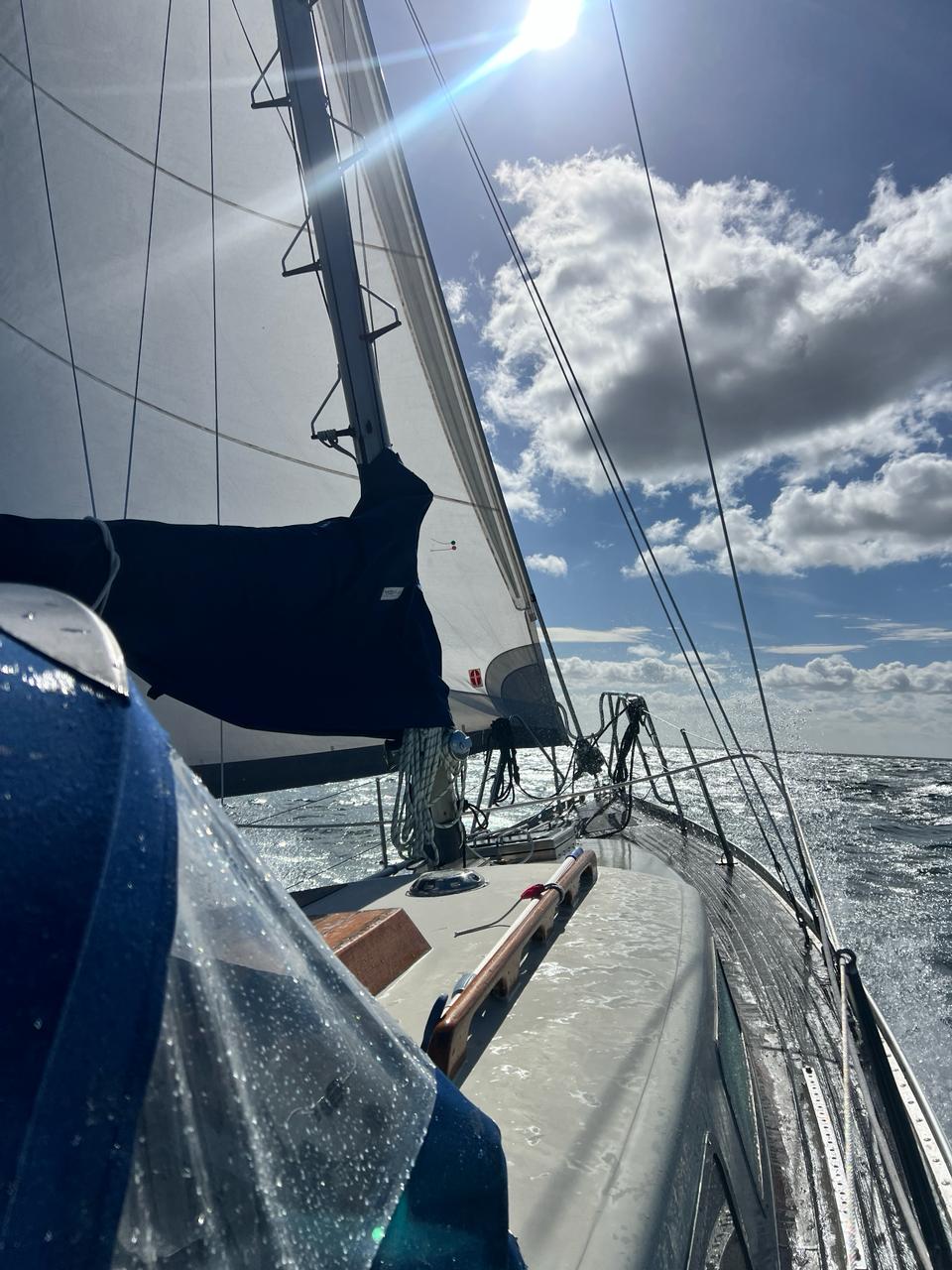
Saturday, 5 July 2025, ten o’clock. Lifejacket on, VHF channel 12, cast off. Gusts to 35 knots and heavy rain forecast, adding spice. We drifted at the entrance, watching the lights:
🔴 Red: closed, boats entering from the other side.
🔴⚪️ White added: prepare. Yachts and motorboats start coming out.
🟢 Both go out, green comes on. Large ships’ turn. Four giants appear from nowhere and fill the lock. We watch it turn red again.
⚪️ Still drifting. Over an hour, the cycle repeats: red, red-and-white, green. A radio announcement. Three useful words emerge from the German: Sportboote — pleasure craft — Süd — south lock — and Steuerbord — starboard. A single white light. Our turn!
Fifteen to twenty minutes to enter, staff waiting patiently. Room for a couple of dozen boats; walls keep the wind out. Alongside the northern pontoon, wooden platforms with rings. Lower fenders into the water, or the topsides will soon complain with creaks and knocks.
Gates closed, about ten minutes waiting. Sometimes an inspector checks payment. Water drops twenty or thirty centimetres, barely noticeable unless you watch the wall. Then a bell: exit permitted.
Tea break
At the pier by the terminal, tea and biscuits. We discussed everything, lights to pontoons. Goodbyes, then I continued alone.
The locks weren’t so intimidating. Understand the signals, listen to the radio, take your time. Call Grigory if necessary. Useful experience, and unexpectedly enjoyable.
#passage
Original and discussionOpen post in Telegram ↗